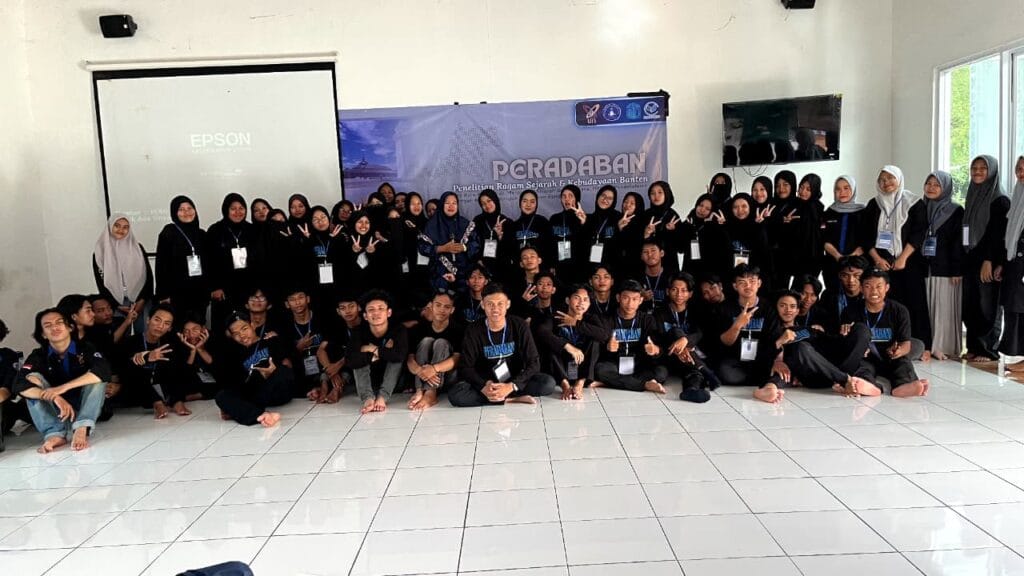
Serang, October 24-26, 2025 - Study Program Student Association History of Islamic Civilization (HMPS SPI) Faculty of Ushuluddin and Adab, UIN Sultan Maulana Hasanuddin Banten, again organized an annual activity titled CIVILIZATION 2025 (Research on Banten's History and Culture).
This activity took place over three days, from Friday to Sunday, October 24-26, 2025, and was attended by 54 new students of History of Islamic Civilization Study Program. This year, the ADVANCEMENT activity has the theme of “A New Era of Civilization: Tracing History with Taste, Researching Knowledge with Asa, Building Civilization with Mind.”
The civilization activity is an important agenda for new SPI students because it serves as an initial learning platform to understand the historical and cultural values of Banten directly in the field. In addition, this program is also a concrete form of implementation of research-based learning (research-based learning) which is a characteristic of the History of Islamic Civilization Study Program.
Opening: The Spirit of Historical Research and Service
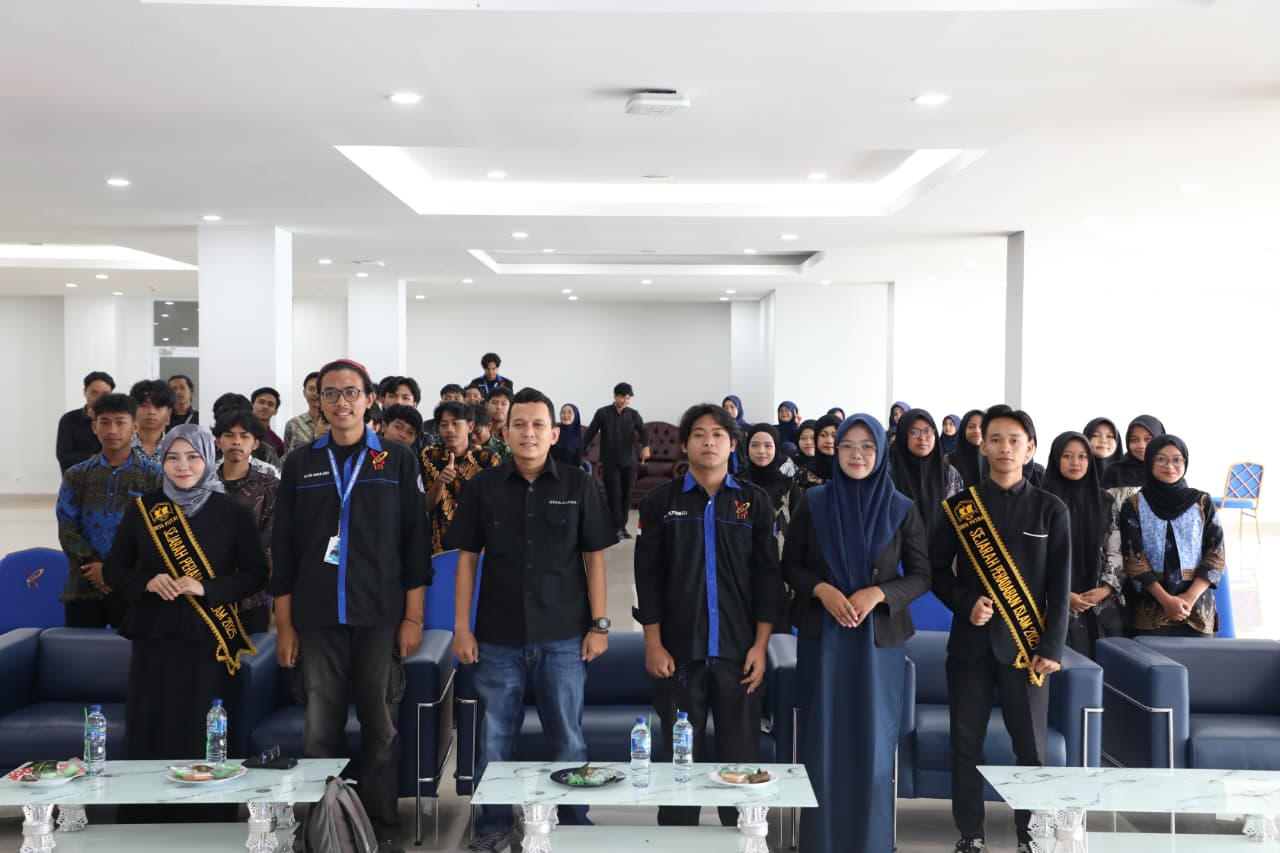
The event was officially opened on Friday morning, October 24, 2025, by Head of the History of Islamic Civilization Study Program, Muhamad Nandang Sunandar, M.Hum. In his speech, he conveyed the importance of this activity as an effort to foster the spirit of research among new students.
“SPI students must become young researchers who have high curiosity about the nation's history and culture. By understanding the past, we learn to build the future of civilization,” said Nandang Sunandar.
The next speech was delivered by Head of HMPS SPI, Alan Maulana, who emphasized that ADVANCEMENT activities are not just an annual routine program, but also a momentum for academic character building and a sense of love for local culture.
Activity report submitted by Chief Executive Officer, Aat Septiadinata, He explained that this activity was designed to hone students' observation, cooperation, and analysis skills through field research practices at historical sites.
Material Debriefing: Scientific and Historical Foundations
After the opening ceremony, participants received four important materials from resource persons who are experts in their fields.
Siti Fauziyah opened the first session with the material “A Brief Historical Introduction to the Old Banten Area.” He explained how the area became the center of government of the Banten Sultanate, as well as the center of economic, social, and religious activities in the 16th to 18th centuries.
He emphasized that understanding Old Banten means tracing the long journey of the Islamic civilization of the archipelago which is rich in tolerance and local wisdom.Aris Munjiat continued with the material “Research Systematics.” He provides practical guidance on the scientific steps in historical research, from collecting sources, analyzing data, to writing a valid and measurable report.
“History is not just a story, but the result of systematic and responsible research,” he said.Angga Pusaka filled the third session with the theme “Introduction to History.” He invited participants to understand the basic concepts of history, source tracking methods, and the importance of objectivity in writing history so as not to be trapped in myths and biases.
The last session was filled by Muhamad Nandang Sunandar, who presented the material “Civilization Debriefing.” He emphasized the basic values that students need to maintain during field research, such as critical spirit, solidarity, responsibility, and scientific ethics.
Day Two: Field Exploration at Banten Historical Site
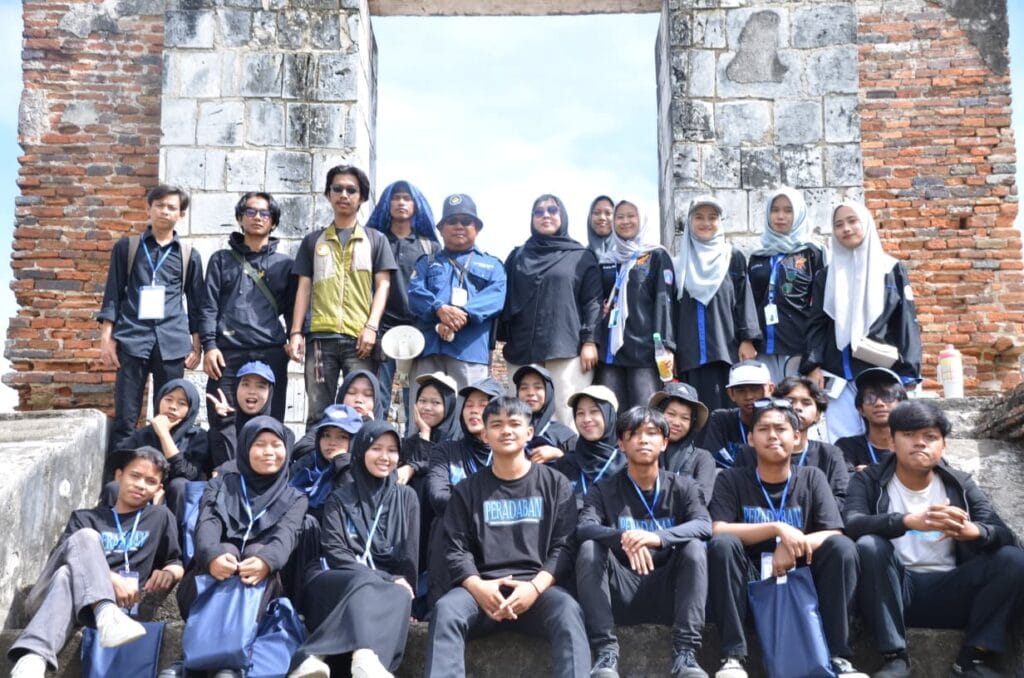
On Saturday, October 25, 2025, the activity continued with field research at three important sites of Banten's historical heritage: Surosowan Palace, Kaibon Palace, and Fort Speelwijk.
Students are divided into small groups and accompanied by organizers, lecturers, and local guides (tour guide) that provide in-depth explanations of the history of each site.
At Surosowan Palace, Participants explored the remains of the magnificent palace of the sultans of Banten, which was once the center of government and diplomacy with Europeans.
At Kaibon Palace, They learned the story of Ratu Aisyah - a strong female figure in Banten's history known for her wisdom and resilience.
Whereas in Fort Speelwijk, In this course, students study the dynamics of colonialism and how local communities maintained their identity amidst Dutch domination.
This observation activity trains students to recognize the context of space and time in history, as well as hone their ability to read the “silent traces” of historical sites. For some participants, this hands-on experience became a valuable moment that fostered a sense of pride and responsibility for Banten's cultural heritage.
Day Three: Discussion, Reflection, and Closing
Entering the last day, Sunday, October 26, 2025, the activities began with morning exercise together, This is a great way to not only keep fit but also strengthen relationships between participants. An atmosphere of enthusiasm and togetherness characterized the morning.
Afterward, participants took part in Focus Group Discussion (FGD). Each group presented their research results in front of other participants, the committee, and the accompanying lecturers.
The discussion was dynamic - students exchanged views on the historical, architectural and social value of the sites they had visited. Many creative ideas emerged, such as the idea of digitizing cultural heritage and involving communities in the preservation of historical sites.
Towards noon, the closing ceremony was officially held. In an atmosphere of warmth and gratitude, the organizers gave out the awards for the most active participants and groups during the activity.
Chairperson of HMPS SPI, Alan Maulana, in his speech expressed his pride and gratitude to all parties who have supported this activity.
“CIVILIZATION 2025 is not just about learning history, but about instilling character, building solidarity, and fostering love for Banten's cultural heritage. Hopefully this activity will be the beginning of a long journey for SPI students as guardians of civilizational values,” he said.
Cultivating a Love of History and Academic Spirit
Civilization 2025 activities are clear evidence that learning history does not have to be limited to the classroom. Through field experience, students learn to connect theory with reality, and understand that history is a mirror of life that must continue to be studied, lived, and passed on.
By the end of the program on Sunday afternoon, the participants took home more than just knowledge - they brought a new spirit to become young researchers who are critical, humanist, and have integrity.
CIVILIZATION 2025 is expected to be a foundation for students of the History of Islamic Civilization to continue to trace the past, research with a scientific spirit, and build a civilization with Banten's noble values.