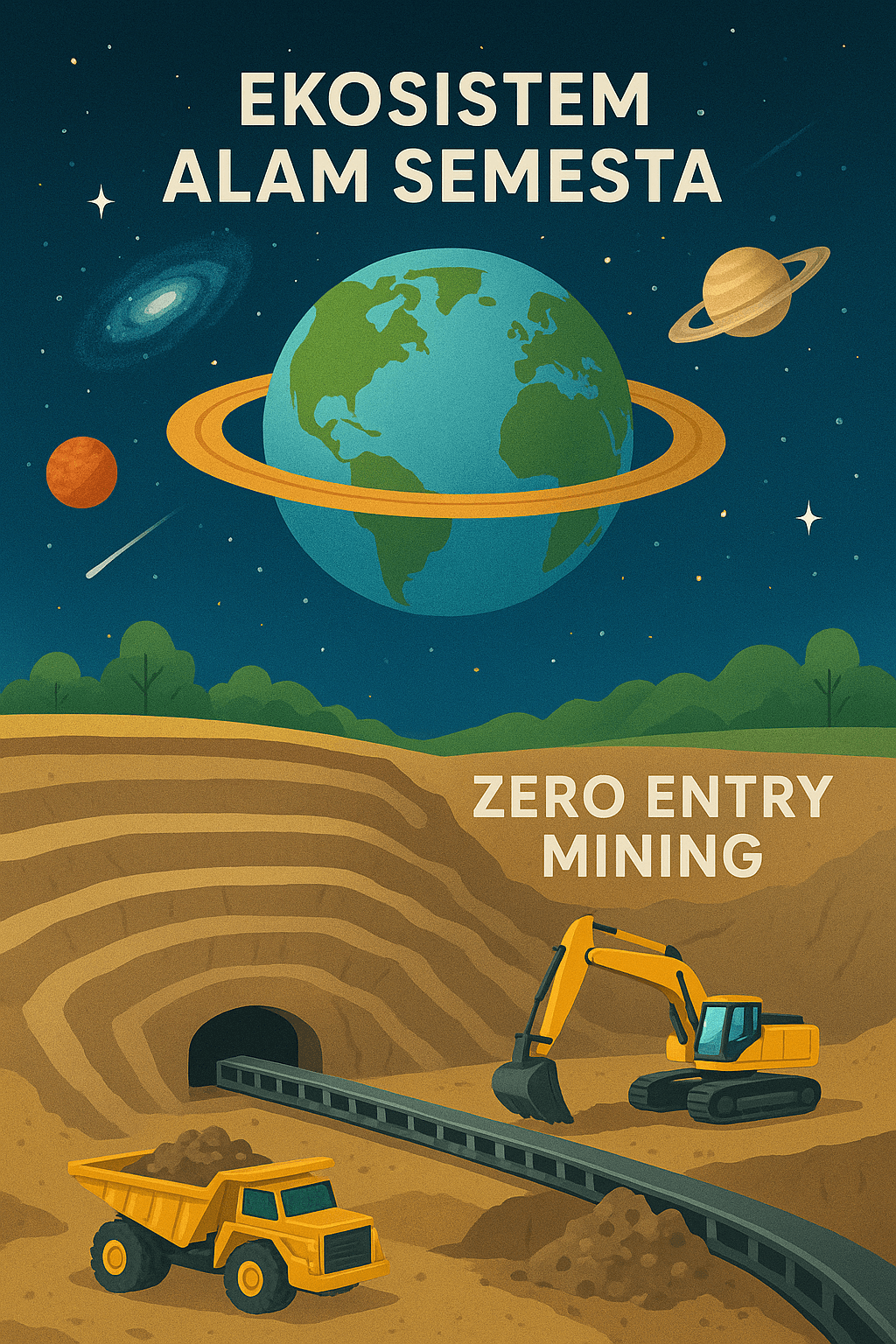
The digital era brings great changes in various aspects of life, including in the fields of Ushuluddin and Adab sciences. However, behind technological advances and innovations, there are serious challenges faced by the ecosystem of the universe, such as climate change, pollution, and environmental damage, including the practice of zero entry mining that damages the environment.
Recently, it has been debated what zero entry mining is for the Indonesian people, whose natural environment is constantly being destroyed and causing disasters, such as landslides and floods. Zero entry mining is a mining approach that minimizes or eliminates direct human presence in hazardous operating zones through automation, robotics and remote operations.
The concept aims to reduce workers' exposure to risks such as accidents, while increasing efficiency with autonomous machines such as large haul trucks, blast drills and underground loaders.
Sayyed Hossein Nasr, a Muslim philosopher and theologian, has developed the concept of ecotheology that emphasizes the importance of maintaining the balance of nature and respecting God's creation. Some of Nasr's works relevant to this topic are: “Man and Nature: The Spiritual Crisis of Modern Man” (1976), “Islam and the Environmental Crisis” (1992), “The Heart of Islam: Enduring Values for Humanity” (2002), and “Islamic Philosophy from Its Origin to the Present: Philosophy in the Land of Prophecy” (2006).
In his works, Nasr argues that the current environmental crisis is caused by a loss of spiritual and philosophical awareness of the relationship between humans and nature. Nasr emphasizes the importance of understanding nature as God's creation that has intrinsic value and must be respected.
In this context, the sciences of Ushuluddin and Adab must be developed to answer the challenges of zero entry mining and the environmental crisis. Intellectuals must play an active role in developing new methodologies and approaches in studying the sciences of Ushuluddin and Adab, such as using digital technology to analyze classical texts and developing AI-based applications to understand historical and cultural contexts.
Thus, we can realize the transformation of Ushuluddin and Adab sciences that are more relevant and effective in the digital era, with a focus on facing the challenges of the universe's ecosystem crisis, zero entry mining, and developing ecotheological thinking in line with Islamic teachings.