Serpong, February 14, 2026.
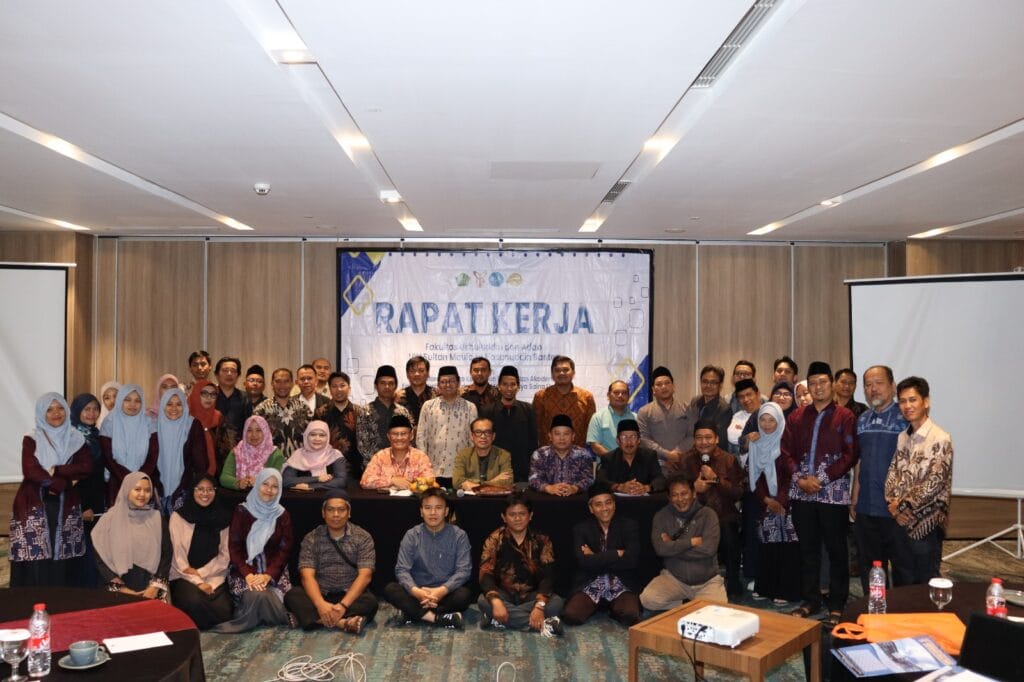
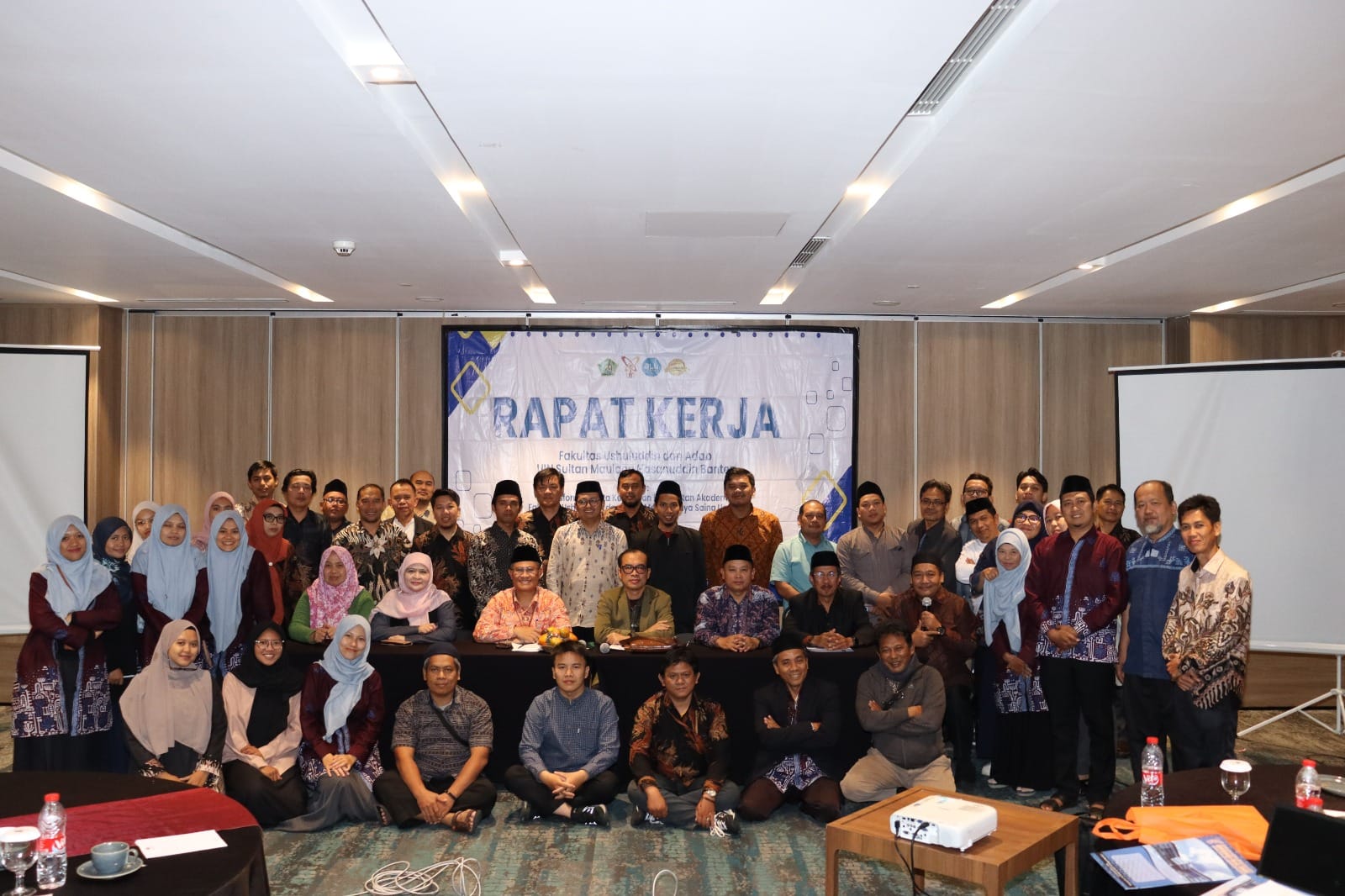
The Faculty of Ushuluddin and Adab UIN Sultan Maulana Hasanuddin Banten successfully held a Work Meeting (Raker) in 2026 which lasted for three days, from 12 to 14 February 2026. Located at Trembesi Hotel, Serpong, South Tangerang City, this activity carries a big theme:
“Transformation of Governance and Academic Strengthening of the Faculty of Ushuluddin and Adab with Superior Competitiveness and Impact.”
This strategic forum is an important consolidation event that brings together the ranks of faculty leaders, leaders of Institutions and UPTs throughout UIN Banten, Heads and Secretaries of Departments within FUDA UIN SMH Banten, FUDA Lecturers, related stakeholders and education personnel to harmonize policy directions towards the big vision of UIN Sultan Maulana Hasanuddin Banten as a globally competitive state Islamic religious university.
Strengthening the Akidah and Islamic Philosophy Study Program Towards Superior Accreditation
On the first day of the Work Meeting, it began with the strategic agenda of one of the Study Programs, namely the Development Strategy of the Aqidah and Islamic Philosophy Study Program, Faculty of Ushuluddin and Adab, which is scheduled to re-accredit in May 2026.
This special session presented a national speaker, namely the Chairperson of the Indonesian Islamic Philosophy Association (ASAFI), Prof. Dr. Kholid al-Walid, M.Ag. who provided conceptual and technical strengthening related to quality standards, scientific distinction, and strategies for achieving superior accreditation.
In his presentation, Prof. Kholid al-Walid emphasized several important points:
- Affirmation of AFI's Scientific Distinction
The study program must have a clear academic uniqueness, both in epistemological approaches, strengthening the study of turats, and developing contemporary Islamic philosophy.
- OBE Curriculum Consistency
Graduate Learning Outcomes (GLOs) must be integrated with the vision of the faculty as well as the needs of the academic world and society.
- Strengthening Research and Lecturer Publications
Scientific productivity is a key indicator in accreditation assessment, including research collaboration and reputable publications.
- Tracer Study and Partnerships
Data on graduates, alumni networks, and institutional cooperation must be documented systematically.
This session is also a reflective momentum to ensure that AFI Study Program is not only administratively ready, but also substantially mature in developing the science of Islamic belief and philosophy that is relevant to the challenges of the times.
Another fundamental agenda in the 2026 meeting was the formulation of the vision and mission of the Faculty of Ushuluddin and Adab for the period 2025-2029. Through comprehensive and participatory discussions across commissions, the forum succeeded in formulating FUDA's new vision as follows:
“To become a Faculty of Ushuluddin and Adab that excels in the development of Islamic science and humanities based on Banten's local wisdom with a global impact.”
This vision is not only a normative statement, but is set as a long-term directional compass and the main foundation in every strategic faculty policy making during the 2025-2029 leadership period.
As a reinforcement of identity and academic spirit, the meeting also gave birth to the official slogan of the faculty, namely: “FUDA: Critically, Locally, Globally.”
This slogan has a deep philosophical meaning:
- Critically: Encouraging the tradition of critical, reflective, and analytical thinking in the development of Islamic science and humanities.
- Locally: Rooted in Banten's local wisdom as an epistemological basis and academic praxis.
- Globally: Oriented towards scientific and social contributions at national and international levels.
Thus, the vision and slogan become an ideological as well as strategic foundation in running the wheels of faculty leadership in a progressive, adaptive, and sustainable manner.
During the meeting, discussions also focused on the five main pillars:
- Performance-based Governance through discussion of general administration, planning and finance. Administrative reform towards a system that is transparent, accountable, and based on measurable performance indicators.
- Academic Quality through the formulation of the Study Program's Scientific Vision and Implementation of Outcome Based Education (OBE) curriculum that ensures alignment between learning outcomes, stakeholder needs, and graduate competitiveness.
- Research and Publication. Increased lecturer productivity in accredited national publications and internationally reputable journals through the formulation of research and community service roadmaps.
- Student Affairs and Cooperation through Strengthening national and international collaboration in the fields of education, research, and community service using the Al-Jabbar, Al-Basith, Al-Bashir and al-Jami’ schemes.
- Formulation of Strategic Directions 2025-2029 through the preparation of medium-term planning documents as an operational derivative of the university and faculty vision through the FUDA Strategic Plan (RENSTRA) and Operational Plan (RENOP).
The Dean of the Faculty of Ushuluddin and Adab, Dr. Masykur, M.Hum., emphasized that 2026 is a phase of strategic consolidation and systemic transformation.
“The governance transformation that we are promoting is not just administrative changes on paper, but system improvements that are oriented towards excellent service to students. We want each work unit to move with clear, transparent, and accountable indicators. Academic strengthening is also a fixed price through the OBE curriculum so that our graduates truly have superior competitiveness and are relevant to the needs of the times.”
Meanwhile, Vice Dean II of the Faculty of Ushuluddin and Adab and Chairperson of the Committee, Dr. Hj. Eva Syarifah Wardah, M.Hum., emphasized the importance of collective participation in formulating the direction of faculty policy.
“We designed this meeting as a productive and reflective dialog space. Each commission dissects the Key Performance Indicators (KPIs) and aligns them with the new vision of the faculty. We ensure that all aspirations of study programs and work units are accommodated in the draft of a measurable work program. It is this collective spirit that will lead FUDA towards superior accreditation and a global reputation.”
The meeting was officially closed on February 14, 2026 by Vice Rector II of UIN SMH Banten, Dr. Ali Muhtarom, M.Pd. who gave appreciation as well as strategic direction.
“Faculty of Ushuluddin and Adab is one of the pillars of scientific strength at UIN SMH Banten. The results of this meeting must become a concrete road map. Make sure every program has a real impact on society and contributes to improving the university's reputation at the global level. Internal collaboration is key; no sectoral ego in achieving our big targets.”
As a concrete result, the FUDA 2026 Raker produced a number of strategic documents for the period 2025-2029, namely:
- Faculty Strategic Plan (Renstra) 2025-2029
- Operational Plan (Renop).
- Roadmap for Research and Community Service.
- Main Performance Indicators (IKU) of the Faculty 2025-2029. Measurable parameters that become instruments for monitoring and evaluating the achievement of academic performance, governance, and institutional reputation.
With the end of the 2026 Meeting, the Faculty of Ushuluddin and Adab affirmed its commitment to become a faculty that is adaptive to change, competitive in the development of Islamic science and humanities, and sustainable in professional governance.
The new vision, strategic slogan, and planning documents produced are not just administrative products, but transformative foundations for the leadership of the 2025-2029 period in realizing FUDA as a center of Islamic science that thinks critically, has local roots, and has a global impact. (ESAFA)