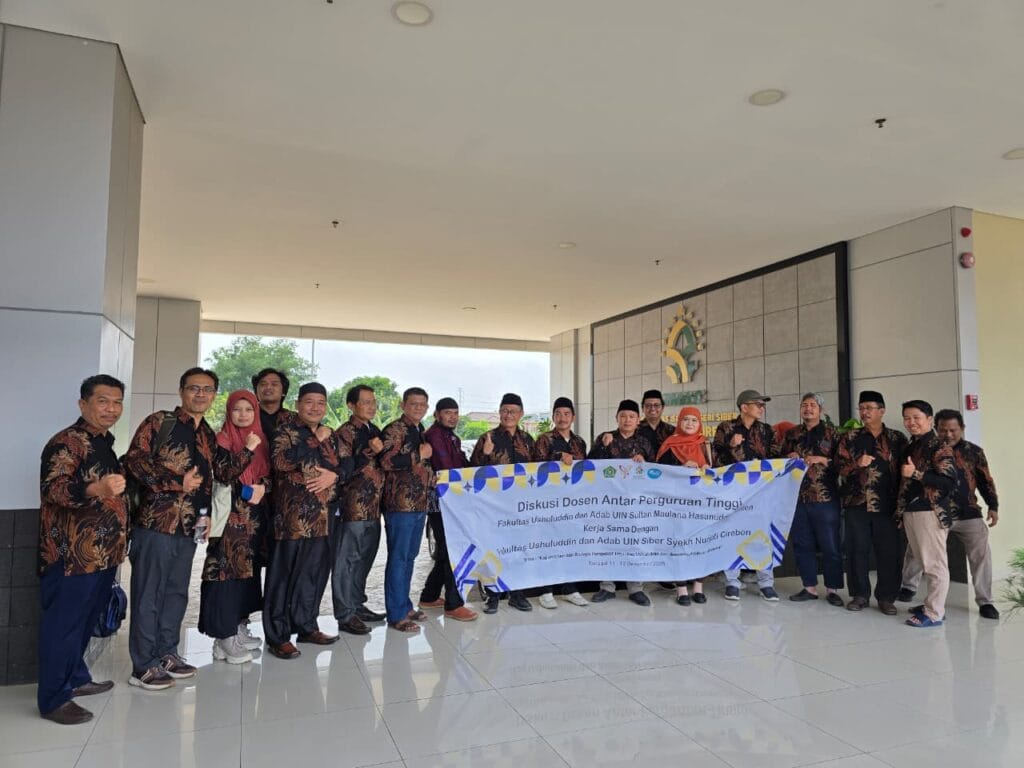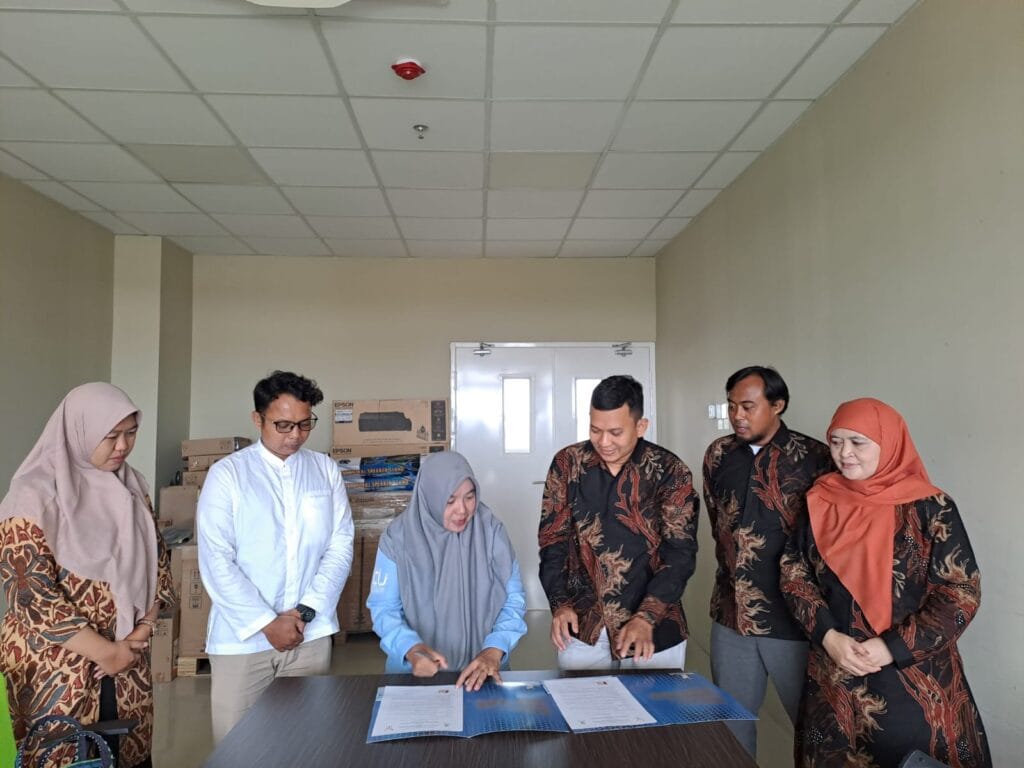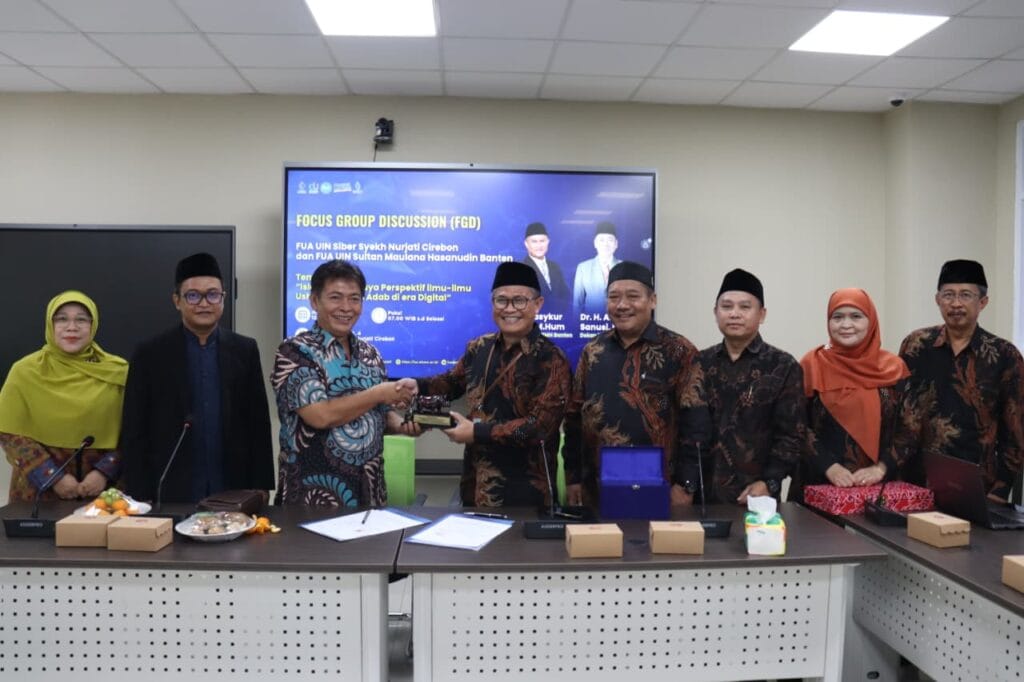
CIREBON, December 12, 2025 - The Faculty of Ushuluddin and Adab (FUDA) of State Islamic University (UIN) Sultan Maulana Hasanuddin Banten strengthens its commitment in improving the quality of education services based on digital technology through strategic cooperation with the Faculty of Ushuluddin and Adab (FUA) UIN Syekh Nurjati Cirebon.
This collaboration began with benchmarking activities carried out by the leadership and representatives of FUDA UIN Banten lecturers to the campus of UIN Siber Syekh Nurjati Cirebon. The main focus of this collaboration is on the exchange of information and best practices related to digital academic services and curriculum development. This meeting also pioneered the grand plan to form the ALJABBAR (Jakarta, Banten, Bandung, and Cirebon) Inter-University Cooperation Scheme.
Dean of FUDA UIN Sultan Maulana Hasanuddin Banten, Dr. Masykur, S.Ag., M.Hum., stated that this initiative is very important in facing the challenges of the Industrial Revolution 5.0 era.
“The collaboration with FUA UIN Siber Cirebon is a proactive step by FUDA UIN SMH Banten to adopt an educational model that is adaptive to technological developments. We get a lot of valuable input. This ALJABBAR scheme is our long-term vision to create a mutually supportive and competitive academic ecosystem in the western region of Java.”
Dean of the Faculty of Ushuluddin and Adab UIN Siber Sheikh Nurjati Cirebon, Dr. Anwar Sanusi, M.Ag., warmly welcomed this visit. He emphasized that the relationship between Banten and Cirebon is not only limited to the biological similarity of the names UIN Sultan Maulana Hasanuddin Banten, UIN Sunan Gunung Djati Bandung and UIN Siber Sheikh Nurjati Cirebon, but there is a common vision that must be strengthened.
“The relationship between Banten and Cirebon is more than just a biological relationship in name, but also a scientific vision. In the eight agreements signed by us with the Rector, the two things that are most emphasized are Internationalization and Digitalization, and this is our mainstay in Cirebon. We have been actively implementing the internationalization program, by bringing in 4-5 speakers from abroad for free for international seminars. In fact, in the near future, we have a cooperation partner from Al-Mushtofa University.”
Dr. Anwar Sanusi, M.Ag., also explained the real commitment of FUA UIN SSC Cirebon in supporting international mobility:
“We have a significant funding commitment. Our faculty allocates up to Rp400 million to send lecturers and students abroad. In the near future, we will send students to Thailand for three weeks with full funding from the Faculty,” he said.
“In Internal Resource Development, we also focus on finding presenters from abroad while maximizing the involvement of internal lecturers as resource persons,” he added.
Regarding the Digitalization pillar, Dr. Anwar Sanusi, M.Ag., added that FUA UIN SSC Cirebon has implemented almost fully digital services: “Our services in FUA are no longer paper-based. We are one of the Faculties that have implemented digitalization as a whole, where all student services are application-based, even student complaint lines can be directly submitted to the Dean.”
Meanwhile, Vice Dean III of FUDA UIN SMH Banten, Dr. Endang Saeful Anwar, M.A., highlighted the aspect of the impact of this collaboration on improving the quality of human resources and organizational governance.
“This collaboration opens up great opportunities for our lecturers and education personnel to learn first-hand about efficient and digital-based faculty governance, as practiced at FUA UIN SSC Cirebon. This increased competency will fully support the ALJABBAR Scheme program, especially in student and lecturer mobilization.”
This collaboration is expected to be a milestone for both faculties to continue to innovate, produce excellent graduates, and be able to compete in the global arena with full support from digital technology and ALJABBAR's regional network.
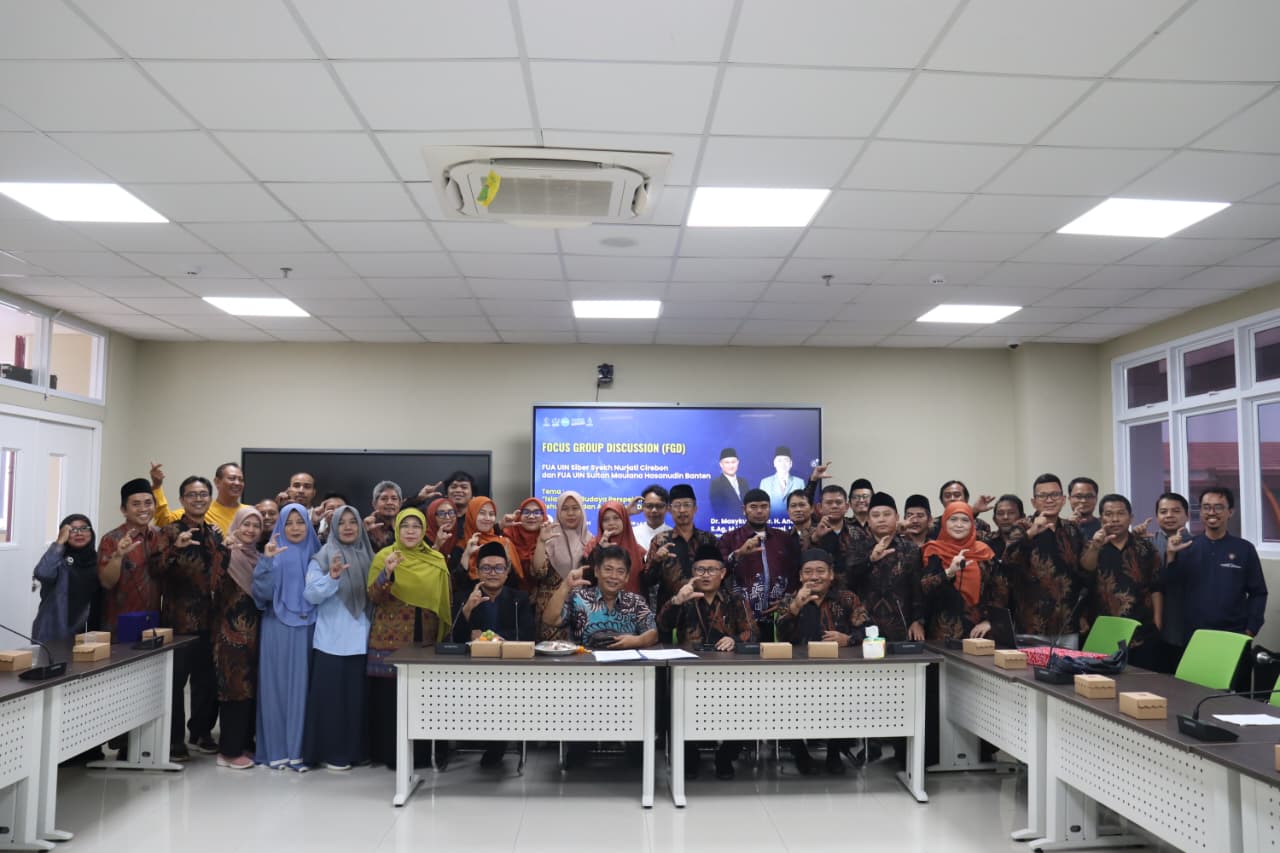
As a follow-up, implementation of the MoA, the two faculties organized a Focus Group Discussion (FGD) of Inter-University Lecturer Discussion which raised a central theme: “Islamic and Cultural Studies from the perspective of Ushuluddin and Adab Sciences in Indonesia.”
This FGD featured three main speakers: Mohamad Alif, M.Si., Dr. Endang Saeful Anwar, Lc., M.A.
Dr. Andi Rosa, M.A. Muhamad Alif talked about the idea of thematic hadith. He said that the term thematic hadith began to be echoed again since the offer of Al-Farmawi's method of interpreting the Qur'an which was not arranged thematically became a trend. Perhaps Al-Farmawi's offer was actually inspired by the thematic systematization of the books of hadith which contributed greatly to the growth of the science of fiqh and ushul fiqh. Classical thematic hadith studies have two purposes, two forms and two methods. The first is for the purpose of identifying and classifying the content of the hadith in the form of multi-theme (muwaṭṭa'āt, jawāmi’ and sunan) or monotheme (ajzā’ system) hadith books using content analysis; the second is for the purpose of verifying contradictory hadith using the methods of i'tibar and takhrij hadith. Unfortunately, the development of contemporary thematic hadith has mixed the two in contemporary thematic hadith studies, where i'tibar and takhrij hadith become the core part of the study. This is something that neither the authors of the multi-theme nor monotheme hadith books have done.
Endang Saeful Anwar talked about the opportunities and challenges of Artificial Intelligence and Quranic Linguistics. According to him, it is necessary to formulate Ethical Guidelines for the Use of AI in the Study of the Qur'an by involving scholars, academics, and technology experts to formulate digital adab rules for mushaf and tafsir, including issues of commercialization, privacy, and content moderation. Coupled with
Strengthening Digital Literacy and AI among Ulama and Students.
Andi Rosa highlighted the idea of holistic interpretation.
This activity is a strategic forum for lecturers of both institutions to exchange views, research methodologies, and develop curricula that are relevant to the socio-cultural dynamics of Indonesia, seen from the perspective of Ushuluddin (fundamentals of religion) and Adab (humanities and Islamic culture). (ESAFA)