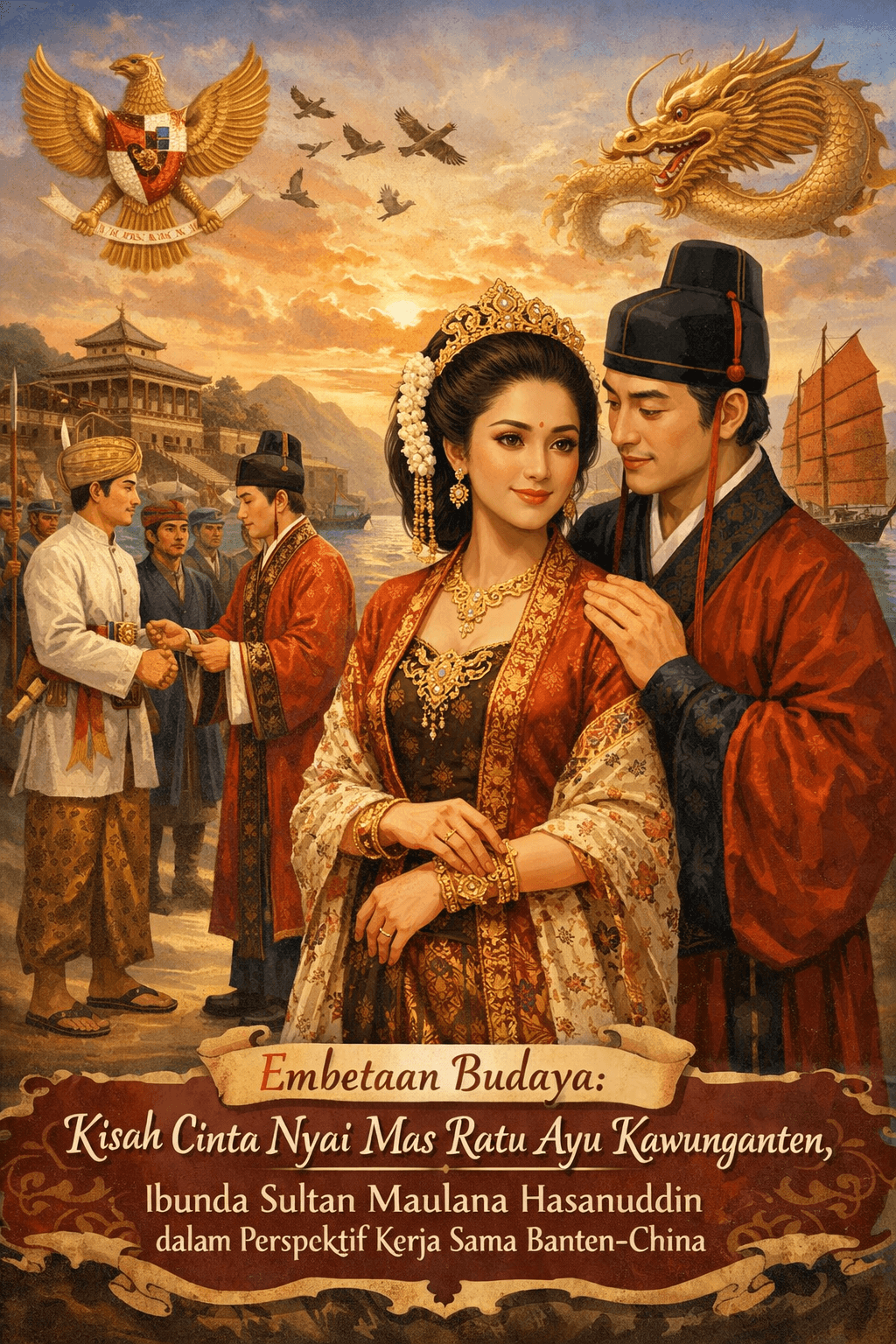
On February 2-6, 2026, the three of us, Dean (Dr. Masykur, M.Hum), Vice Dean III (Dr. Endang Saeful Anwar, Lc., M.A), and Head of Hadith Science Study Program (Dr. Andi Rosa, M.A), Faculty of Ushuluddin and Adab, UIN Sultan Maulana Hasanuddin Banten, would like to inform you that we will establish cooperation with Hainan College of Foreign Studies and Hainan Moslem Community, in an effort to enhance educational, cultural, and economic cooperation between Indonesia and China.
In the perspective of a love-based curriculum, the love story of Nyi Mas Ratu Ayu Kawunganten, the daughter of a Chinese merchant, who was the mother of Sultan Maulana Hasanuddin, the founder of the Sultanate of Banten, is a clear example of how Islam can be a bridge in enhancing cooperation between Banten and China. This paper will discuss how their love story shows the importance of educational, cultural and economic cooperation between two different countries, and how Islam can be a unifying factor in enhancing these relationships.
Islamic Traditions in China
China has a long and rich history of Islam, with significant Muslim communities in the country. Islamic traditions in China can be seen in mosque architecture, calligraphy art, and Islamic music. One example of Islamic traditions in China is the celebration of Eid al-Fitr, which is celebrated by the Muslim community in China in a unique and distinctive way.
Chinese Tradition in Banten
Banten also has a rich Chinese tradition, especially in the culinary and artistic fields. The Chinese tradition in Banten can be seen in Banten's specialties, such as siomay and bakpia, which have a strong influence from Chinese cuisine. In addition, the Chinese tradition in Banten can also be seen in the Chinese New Year celebration, which is celebrated by the Chinese community in Banten in a festive and distinctive way.
Links between Islamic and Chinese Traditions
The love story of Nyi Mas Ratu Ayu Kawunganten, the mother of Sultan Maulana Hasanuddin, shows how Islamic and Chinese traditions can come together to enhance cultural and economic cooperation. Nyi Mas Ratu Ayu Kawunganten brought the influence of Chinese culture and tradition to Banten, while Sultan Maulana Hasanuddin brought the influence of Islam into the lives of Nyi Mas Ratu Ayu Kawunganten and the Chinese community in Banten. This story shows that Islam can be a bridge in enhancing cooperation between Banten and China, not only in politics and economics, but also in education, culture and humanity.
The Influence of Islam in Chinese Culture and Vice Versa
Islam has had a significant influence on Chinese culture, especially in the fields of art and architecture. Mosques in China, such as the Great Mosque of Xi'an, are examples of the influence of Islam in Chinese architecture. In addition, the art of Islamic calligraphy has also had a significant influence in Chinese art.
Chinese culture also has a significant influence on Islamic culture, especially in the fields of culinary and art. Banten's specialties, such as siomay and bakpia, have a strong influence from Chinese cuisine. In addition, Chinese art, such as calligraphy and painting, also has a significant influence on Islamic art.
Thus, the love story of Nyi Mas Ratu Ayu Kawunganten shows how Islamic and Chinese traditions can come together to enhance educational, cultural and economic cooperation. This story can serve as an example for cooperation between other countries and cultures in promoting world peace and prosperity.
In the perspective of a love-based curriculum, the love story of Nyi Mas Ratu Ayu Kawunganten, the daughter of a Chinese merchant, who was the mother of Sultan Maulana Hasanuddin, the founder of the Sultanate of Banten, is a clear example of how Islam can be a bridge in enhancing cooperation between Banten and China. This paper will discuss how their love story shows the importance of educational, cultural and economic cooperation between two different countries, and how Islam can be a unifying factor in enhancing these relationships.
Islamic Traditions in China
China has a long and rich history of Islam, with significant Muslim communities in the country. Islamic traditions in China can be seen in mosque architecture, calligraphy art, and Islamic music. One example of Islamic traditions in China is the celebration of Eid al-Fitr, which is celebrated by the Muslim community in China in a unique and distinctive way.
Chinese Tradition in Banten
Banten also has a rich Chinese tradition, especially in the culinary and artistic fields. The Chinese tradition in Banten can be seen in Banten's specialties, such as siomay and bakpia, which have a strong influence from Chinese cuisine. In addition, the Chinese tradition in Banten can also be seen in the Chinese New Year celebration, which is celebrated by the Chinese community in Banten in a festive and distinctive way.
Links between Islamic and Chinese Traditions
The love story of Nyi Mas Ratu Ayu Kawunganten, the mother of Sultan Maulana Hasanuddin, shows how Islamic and Chinese traditions can come together to enhance cultural and economic cooperation. Nyi Mas Ratu Ayu Kawunganten brought the influence of Chinese culture and tradition to Banten, while Sultan Maulana Hasanuddin brought the influence of Islam into the lives of Nyi Mas Ratu Ayu Kawunganten and the Chinese community in Banten. This story shows that Islam can be a bridge in enhancing cooperation between Banten and China, not only in politics and economics, but also in education, culture and humanity.
The Influence of Islam in Chinese Culture and Vice Versa
Islam has had a significant influence on Chinese culture, especially in the fields of art and architecture. Mosques in China, such as the Great Mosque of Xi'an, are examples of the influence of Islam in Chinese architecture. In addition, the art of Islamic calligraphy has also had a significant influence in Chinese art.
Chinese culture also has a significant influence on Islamic culture, especially in the fields of culinary and art. Banten's specialties, such as siomay and bakpia, have a strong influence from Chinese cuisine. In addition, Chinese art, such as calligraphy and painting, also has a significant influence on Islamic art.
Thus, the love story of Nyi Mas Ratu Ayu Kawunganten shows how Islamic and Chinese traditions can come together to enhance educational, cultural and economic cooperation. This story can serve as an example for cooperation between other countries and cultures in promoting world peace and prosperity.
Islamic Traditions in China
China has a long and rich history of Islam, with significant Muslim communities in the country. Islamic traditions in China can be seen in mosque architecture, calligraphy art, and Islamic music. One example of Islamic traditions in China is the celebration of Eid al-Fitr, which is celebrated by the Muslim community in China in a unique and distinctive way.
Chinese Tradition in Banten
Banten also has a rich Chinese tradition, especially in the culinary and artistic fields. The Chinese tradition in Banten can be seen in Banten's specialties, such as siomay and bakpia, which have a strong influence from Chinese cuisine. In addition, the Chinese tradition in Banten can also be seen in the Chinese New Year celebration, which is celebrated by the Chinese community in Banten in a festive and distinctive way.
Links between Islamic and Chinese Traditions
The love story of Ratu Kawung and Sultan Maulana Hasanuddin shows how Islamic and Chinese traditions can come together to enhance cultural and economic cooperation. Ratu Kawung brought the influence of Chinese culture and tradition to Banten, while Sultan Maulana Hasanuddin brought the influence of Islam into the lives of Ratu Kawung and the Chinese community in Banten. This story shows that Islam can be a bridge in enhancing cooperation between Banten and China, not only in politics and economics, but also in education, culture and humanity.
The Influence of Islam in Chinese Culture and Vice Versa
Islam has had a significant influence on Chinese culture, especially in the fields of art and architecture. Mosques in China, such as the Great Mosque of Xi'an, are examples of the influence of Islam in Chinese architecture. In addition, the art of Islamic calligraphy has also had a significant influence in Chinese art.
Chinese culture also has a significant influence on Islamic culture, especially in the fields of culinary and art. Banten's specialties, such as siomay and bakpia, have a strong influence from Chinese cuisine. In addition, Chinese art, such as calligraphy and painting, also has a significant influence on Islamic art.
Thus, the love story of Ratu Kawung and Sultan Maulana Hasanuddin shows how Islamic and Chinese traditions can come together to enhance educational, cultural and economic cooperation. This story can serve as an example for cooperation between other countries and cultures in promoting world peace and prosperity.