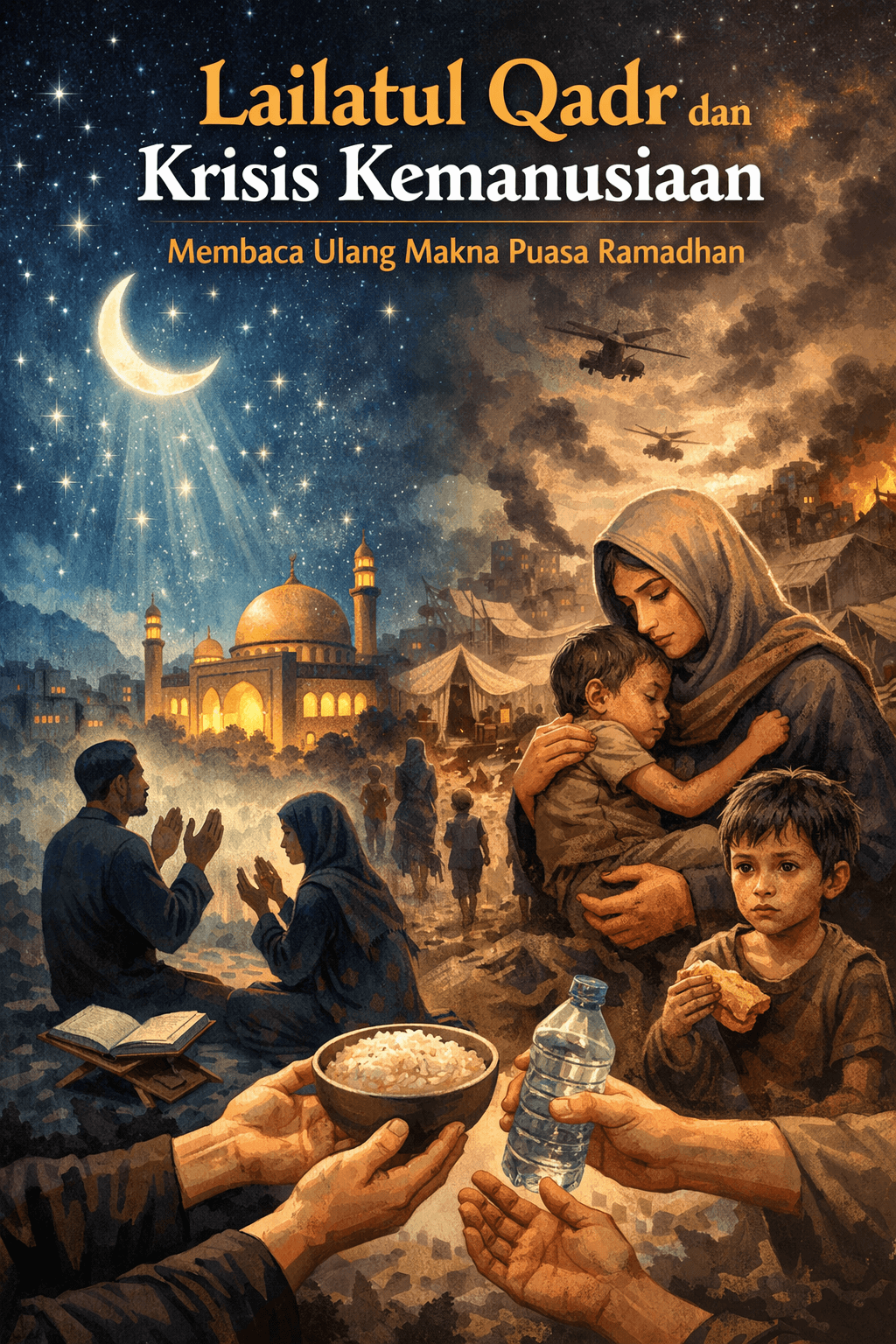
Ramadan has always been identified with spiritual practices, such as hunger, prayer, and respite from the busy world. However, Ramadan is also a season of moral reflection, especially when wars and human tragedies claim lives regardless of the time of year. In the midst of the escalation of the Israel-United States and Islamic Republic of Iran conflict in 2025-2026, which includes a spate of airstrikes, missile retaliation, civilian casualties and regional disruption, the urgency to reread the ethical message of Ramadan becomes inevitable. Many reports suggest that the joint US-Israeli strike on Saturday, February 28, 2026, even killed Iran's supreme leader Ayatollah Ali Khamenei and triggered a series of Iranian missile retaliations against Israel and US bases in the Gulf.
When the world is plunged into a spiral of violence, the lailatul qadr, لَيْلَةُ الْقَدْرِ خَيْرٌ مِّنْ ﺪفِ شَهْرٍۗ (a night better than a thousand months) in Surah al-Qadr verse 3, becomes an ethical interruption. Namely, a night that is theologically peaceful, but historically the world is filled with the cacophony of war.
Fasting as Piety Education: A Moral Foundation for Reading the Crisis
Allah says in Surah al-Baqarah verse 183 that “O you who believe, it is obligatory upon you to fast ... so that you may be pious.” In the book Tafsir Ibn Kathir, it is explained that the main purpose of fasting is to purify the soul, narrow the path of lust, and build self-control as a moral basis. In the context of warfare, this verse admonishes believers that “piety” is not just a matter of refraining from food, but also refraining from destroying life. Fasting trains moral sensitivity to suffering. Therefore, when the world is filled with suffering, this sensitivity should increase, not disappear.
In Tafsir al-Misbah, Quraish Shihab emphasizes that the Qur'an carries a message that is harmonious, relevant and contextual for modern humans. In addition, he emphasizes the importance of linking the teachings of fasting with social change and public responsibility. Therefore, fasting is not a private ritual, but a public ethic that demands care, including for victims of conflict and humanitarian misery.
Lailatul Qadr: A Night of Peace in a Turbulent World
In Surah al-Qadr verses 1-5, Allah says that “We revealed it on the night of glory. That night is better than a thousand months. On that night the angels descended ... carrying all affairs. It is a night of peace until dawn breaks.” In Tafsir Ibn Kathir, it is emphasized that the salam (peace) that fills the night is not only a metaphysical dimension, but also a moral message that lailatul qadr is a night that produces peace, not destroys life.
In addition, in Surah ad-Dukhan verses 3-6, it is affirmed that revelation descended on the “blessed night”, and on that night various divine provisions were established. The majority of mufasirs identify this night with lailatul qadr, reinforcing the idea that lailatul qadr is a moment of “reconstruction of destiny”, which should inspire moral reconstruction in the midst of war and violence.
When Lailatul Qadr Meets Global Humanitarian Crisis
In February-March 2026, the Middle East region experienced heightened tensions, direct US-Israeli strikes on strategic locations in Iran, followed by Iranian retaliation on Israel and the Gulf states. International testimonies cite serious impacts on civilian infrastructure, aid mobility and the risk of prolonged regional war. At least hundreds to thousands of civilians were directly or indirectly affected. This crisis illustrates how the value of “peace until dawn” has failed to be absorbed into global political policy.
Reports from Gaza show how people are fasting under rubble, praying in destroyed mosques, and breaking their fast with little food. Many mosques were destroyed, the call to prayer was not heard, and taraweeh was performed in makeshift tents. This phenomenon teaches that spiritual fortitude lives on, but it also reveals the darkest irony: the world has failed to preserve the human dignity that should be at the heart of Ramadan.
Ethical Hermeneutics: Rereading Ramadan and Lailatul Qadr
Based on the above reality, Fazlur Rahman offers two hermeneutical steps. First, returning to the context of revelation to find universal moral principles. Second, applying those principles to modern reality. With this ethical hermeneutic method, Ramadan's message of piety, justice and peace must be translated into a critique of war, aggression and civilian destruction.
In addition, fasting forms moral asceticism to restrain oneself, erase the crust of the ego, and wash away pride. If the state and political actors live this value, four changes will occur. First, indiscriminate attacks are not carried out. Second, civilian infrastructure is not destroyed. Third, diplomacy is prioritized. Finally, the protection of lives precedes any strategic interests. From this understanding, the meaning of lailatul qadr is the night of peace. In contrast, modern war is a network that breaks peace.
Thus, lailatul qadr is the night of revelation, the night of destiny, the night of peace. However, peace will never arise if humans ignore the ethical message of Ramadan and allow war to devour civilization. Rereading the meaning of Ramadan fasting means turning hunger into empathy, worship into humanitarian advocacy, and lailatul qadr into a global moral agenda. Only then will the promised dawn truly rise, not just in the sky, but in history. Allahu a'lam bis-Shawab.