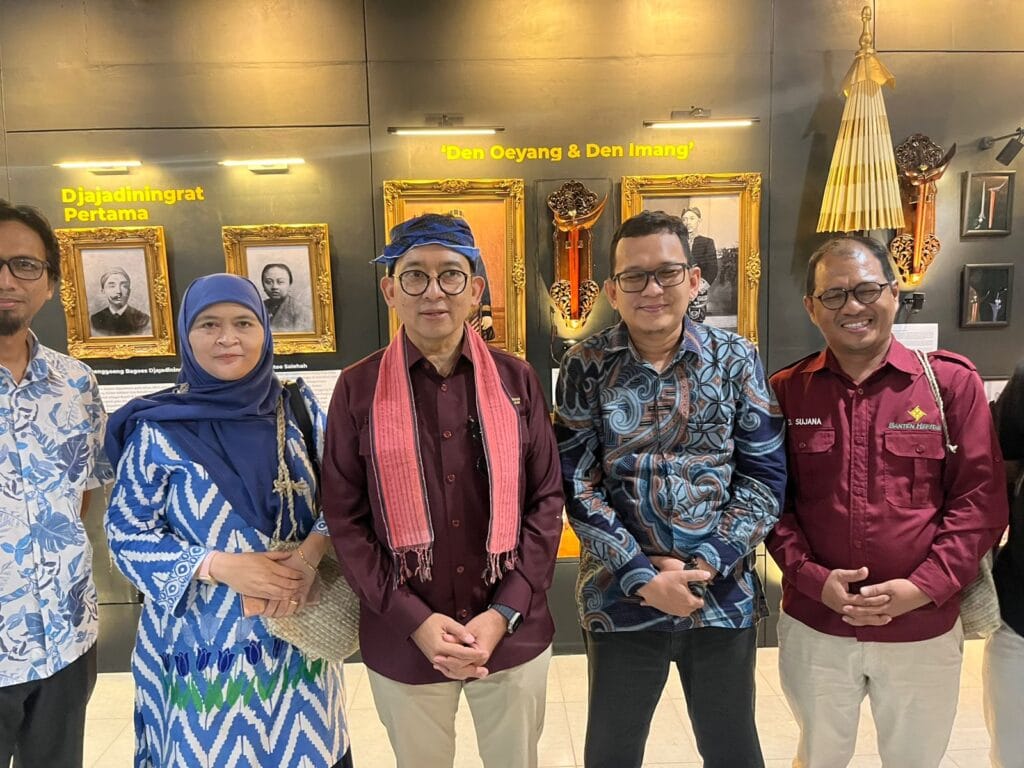
Banten Lama, October 26, 2025 - In an effort to strengthen public awareness of the importance of preserving the nation's cultural heritage, Cultural Preservation Center Region VIII held another activity Sasaka Banten 2025 at Old Banten Museum of Antiquities. Carrying a big theme “Caring for Culture and Values,” This activity is a collaborative forum between the government, academics, cultural experts, and the community to strengthen the commitment to maintain national cultural identity based on Banten's local wisdom.
Museum of Antiquities: Mute Witness of Banten's Glory
Selection Old Banten Museum of Antiquities as the location of the activity is not without reason. The museum has a high symbolic value, being a repository for various archaeological relics, classical manuscripts, artifacts, and historical objects that record traces of the glory of the city. Sultanate of Banten in the 16th to 18th centuries. The area was once a bustling center of maritime civilization and trade, and is known as a center for the spread of Islam and knowledge in the archipelago.
In this context, the implementation of Sasaka Banten in this place presents a reflective meaning: that cultural preservation cannot be separated from the awareness of history and local identity that has shaped the character of Banten people since the past.
The presence of figures and academics
This activity was attended by various cross-disciplinary groups. From academia, there were Dr. Eva Syarifah Wardah, M.Hum and Muhamad Nandang Sunandar, M.A from Department of History of Islamic Civilization, Faculty of Ushuluddin and Adab, UIN Sultan Maulana Hasanuddin Banten. Also participated Dr. Helmi Fauzi Bahrul Ulum, M.Hum from Bantenology, and Dadan Sujana from Banten Heritage, The two institutions have been consistently researching and archiving Banten's cultural wealth.
In addition, the event was also attended by cultural experts, historians, local government officials, as well as representatives from the local government. Directorate General of Culture, Banten Provincial Tourism Office, Banten Provincial Education and Culture Office, and indigenous communities such as Inner Baduy Tribe, It is a tradition whose presence reinforces the authenticity of Banten's traditions in a modern context.
Opening by Minister of Culture Fadli Zon
The event was officially opened by Minister of Culture, Fadli Zon, who was also the main speaker at the event. In his speech, Fadli Zon emphasized that cultural preservation should not be understood merely as an effort to preserve historical relics, but should also include the preservation of values, traditions and knowledge that live in the community.
“Cultural heritage tangible Cultural heritage such as ancient mosques, forts, tombs of scholars, classical manuscripts and archaeological artifacts are physical evidence of the nation's historical journey. However, cultural heritage intangible-such as oral traditions, religious rituals, debus art, rampak bedug, and the scientific practice of pesantren-are the cultural spirit that maintains the spiritual and social values of the Banten people to this day,” Fadli Zon said in his speech.
He also emphasized the importance of building a healthy and productive cultural ecosystem by involving various parties, ranging from cultural activists, academics, art communities, to local communities. With this approach, cultural preservation is not only ceremonial, but also a sustainable movement that contributes to the development of a culture-based creative economy.
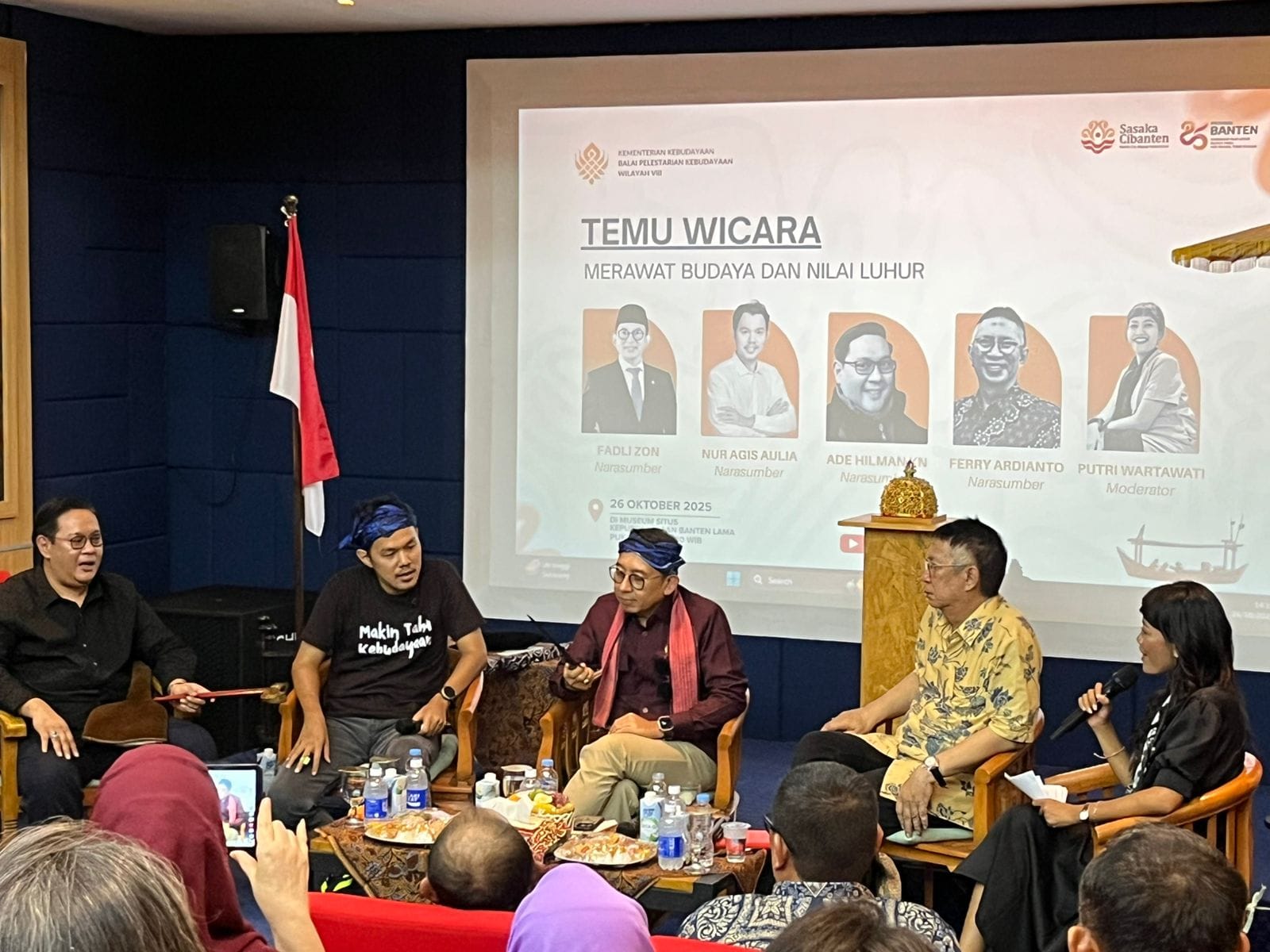
Interactive Presentation and Discussion Session
In the main session, there were a number of speakers who enriched the perspective of the event, including Nur Agis Aulia (Deputy Mayor of Serang City), Ade Hilman Djayadiningrat, and Ferry Adrianto, with Putri Wartawarti as moderator.
Deputy Mayor of Serang City, Nur Agis Aulia, in his presentation invited the entire community to play an active role in developing Serang City while upholding local customs and culture. He emphasized that the progress of the city should not be at the expense of traditional values that have shaped the character of Banten society for centuries.
Meanwhile, Ade Hilman and Ferry Adrianto present a historical perspective from the family. Djayadiningrat, one of Banten's noble families who played an important role during the colonial administration. Both highlighted the importance of understanding local history as part of the grand narrative of Indonesian history, so that the younger generation has an awareness of the roots of their identity.
The interactive discussion that took place after the presentation session brought high enthusiasm from the participants. Academics, students, and cultural activists engaged in a critical dialogue on adaptive cultural preservation strategies in the digital era, including the idea of utilizing technology to document and promote local cultural heritage.
Cultural Ecosystem and Creative Industry
In the closing session, Fadli Zon emphasized the importance of developing creative culture industry based on regional cultural wealth. According to him, cultural preservation will be stronger if it is supported by an independent and creative economic ecosystem, where historical sites, museums and local traditions can be processed into educational and cultural tourism destinations that are attractive to the younger generation.
“Our cultural heritage must be preserved, but it must also be revived in a form that is relevant to the times. With collaboration between the community, academics, and the government, Banten can be an example of a province that is able to care for ancestral heritage while making it an economic resource and national pride,” he added.
Symbolic Meaning of Sasaka Banten 2025
More than just an annual event, Sasaka Banten 2025 symbolizes the collective awareness of the importance of preserving cultural heritage in its entirety-both tangible and intangible. This activity represents the collaborative spirit between the government, academics, and the community to maintain the continuity of the nation's history and culture in the midst of accelerating globalization and modernization.
Through this activity, the community is reminded that preserving culture is not nostalgia for the past, but an active act of caring for the nation's identity, knowledge and noble values. Sasaka Banten 2025 shows that A civilization can only survive if its people keep its heritage alive with shared awareness and responsibility.