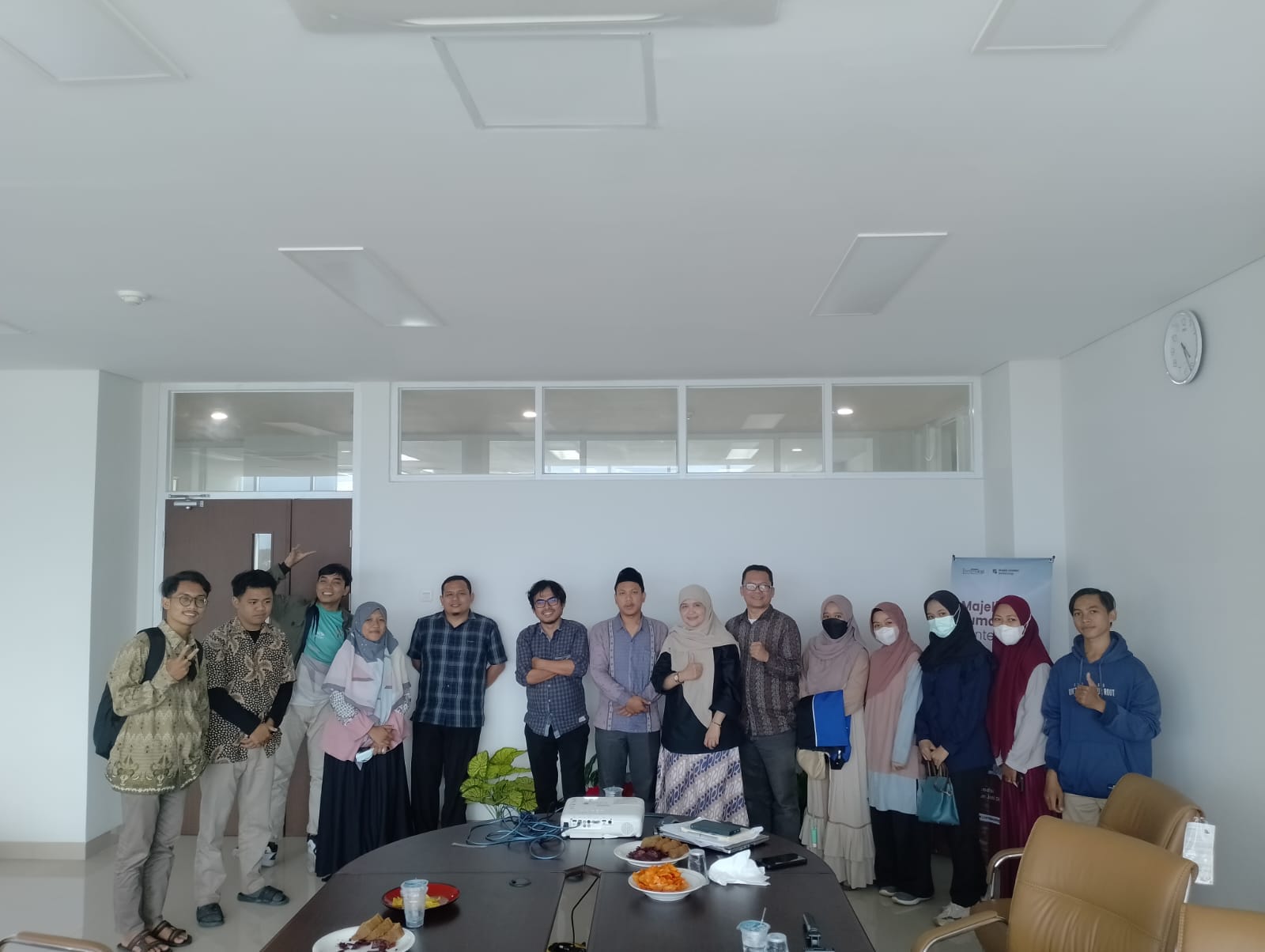
FUDA | Friday (03/31/2023) - The Faculty of Ushuluddin and Adab held a lecturer discussion part-3 of the Ramadan edition. The lecturer discussion was held offline in the FUDA conference room on the 2nd floor of the FUDA building. Under the direction of the Dean of the Faculty of Ushuluddin and Adab Dr. Mohamad Hudaeri, M.Ag., the Faculty of Ushuluddin and Adab successfully held this Ramadan edition of the lecturer discussion. Of course also with the support of all the academic community of the Faculty of Ushuluddin and Adab which also involves lecturers from the Faculty of Ushuluddin and Adab, lecturers from other faculties as presenters.
The speakers for this session consisted of Dr. K.H. Saepullah, M.A. with the material “Contextuality of the Apostle's Ijtihad in Islamic Legal Thought (Studies from the Perspective of Fiqh Siyasah)” and Hafidz Taqiyuddin, MA.Hk. with the material “Philosophy and Sharia: Study of Islamic Inheritance Law.” The event started at 08.00-11.00 WIB guided by Dr. Sholahuddin Al Ayubi, M.A. as the moderator.
The first speaker, Dr. K.H. Saepullah, M.A. he explained, “in relation to the context of the siyasah of Islamic legal thought, the ijtihad of the Apostle PBUH. provides a fresh methodological offer in understanding the universal message of shari'ah.” he explained.
“The text of the Constitution is very interesting. It contains points of view which, from a modern point of view, are admirable. The Constitution for the first time formulates the ideas that are now the world's modern worldview. But it also affirmed the existence of a general obligation, namely participation in joint defense efforts against external enemies.” Dr. K.H. Saepullah, M.A. continued.
The second speaker, Hafidz Taqiyuddin, MA.Hk conveyed about understanding the wisdom or justice of Islamic law can not only be examined from a theological point of view but also from a philosophical point of view. Hafidz also explained that philosophy has a close relationship with Islamic law. For example, when reason is used to analyze and understand the value of justice in the concept of ‘Aul in Islamic inheritance law.
“So the conclusion is that the concept of ‘Aul reflects the value of justice, with several arguments, including that the concept is a rule that implements the acceptance of God's destiny in the form of death and the existing family structure (heirs),” he said.
After the speakers delivered their material, the moderator gave the opportunity to the discussion participants to ask questions.This activity took place successfully and smoothly. A number of discussion participants were active and enthusiastic throughout the discussion.Author: Erom Su'udatul Mukaromah