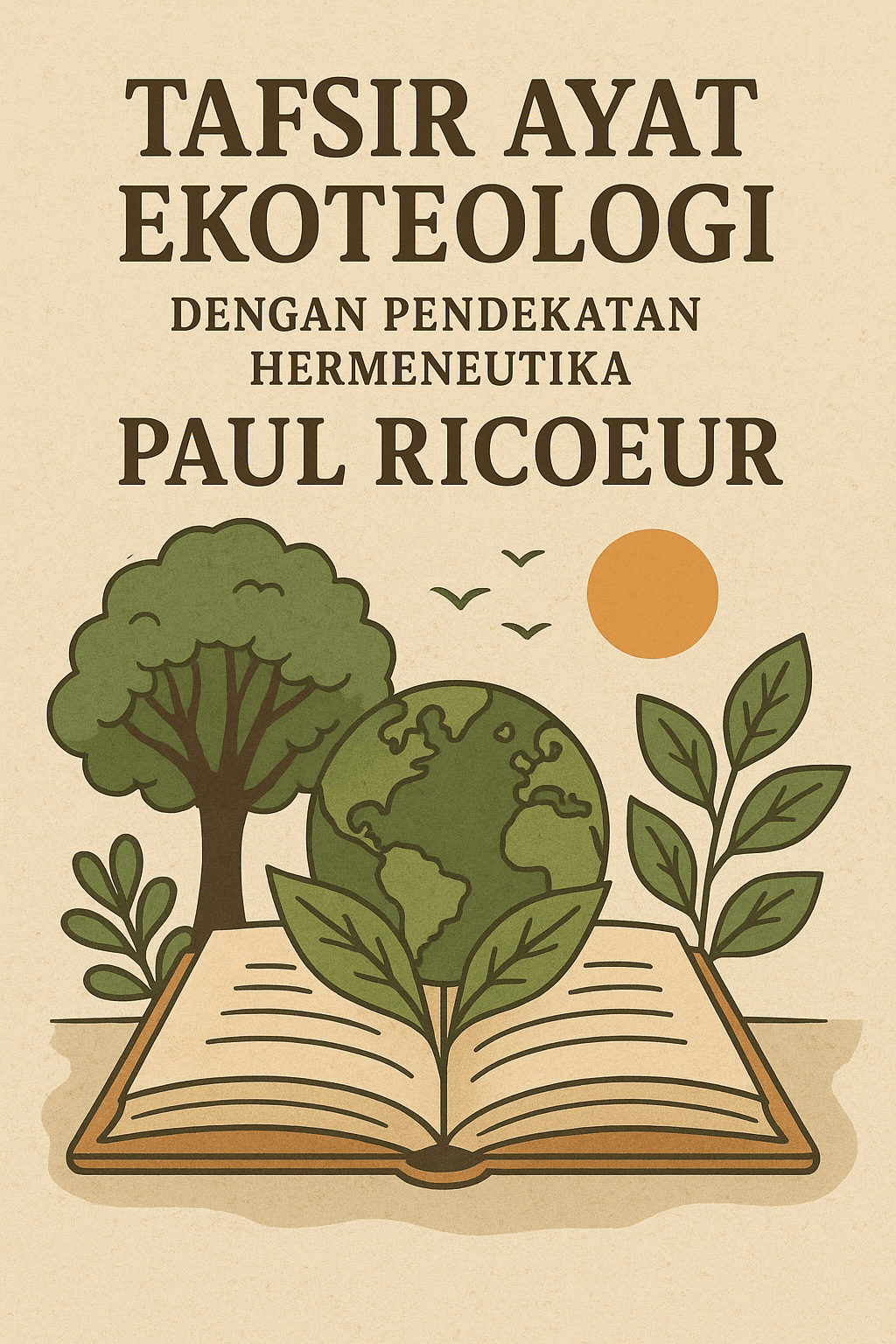
The Qur'an as the holy book of Muslims has a deep and complex meaning. To understand this meaning, an appropriate hermeneutical approach is needed. One of the hermeneutical approaches that can be used to understand the Qur'an is Paul Ricoeur's hermeneutics. In the Dean's Weekly Opinion (OPEN) on Monday, November 3, 2025, it discusses how Paul Ricoeur's hermeneutics can be used to understand the meaning of the Qur'an, especially in the context of ecotheology.
Paul Ricoeur's Hermeneutics: An Approach
Paul Ricoeur is a French philosopher who is famous for his work on hermeneutics. According to Ricoeur, hermeneutics is the science of text interpretation. Ricoeur argues that texts have autonomy and can be understood independently of the original author's intentions. In the context of the Qur'ān, this means that the meaning of the Qur'ān is not only limited to the historical and cultural context in which it was revealed, but can also be understood and interpreted in the present context.
Distanciation and Appropriation
Ricoeur introduced the concept of “distanciation” which means that a text can be understood independently of its original context. In the context of the Qur'ān, this means that the meaning of the Qur'ān can be understood without being tied to the historical and cultural context in which it was revealed.
Ricoeur also introduced the concept of “appropriation” which means that the reader or interpreter of the Qur'ān must relate the meaning of the Qur'ān to their own experience and context. Thus, the meaning of the Qur'ān can be understood and applied in everyday life.
Tafsir Ayat Ekoteologi
One example of a Qur'anic verse that can be interpreted with an ecotheological approach is Surah Al-A'raf verse 56: “And do not cause corruption in the earth after it has been created good. Pray to Him with fear and hope. Verily, the mercy of Allah is very near to those who do good.”
In the interpretation of ecotheology, this verse can be understood as a call to preserve nature and the environment. The words “do no harm on earth” can be interpreted as a prohibition to carry out activities that can damage the environment and ecosystems.
By using the concept of distanciation, we can understand that this verse does not only apply to the historical and cultural context at the time the Qur'an was revealed, but can also be understood in the present context. In the context of ecology, this verse can be interpreted as a call to preserve nature and the environment, and avoid activities that can damage the ecosystem.
Using the concept of appropriation, we can relate the meaning of this verse to our own experience and context. For example, we can understand that this verse calls us to reduce the use of plastic and reduce greenhouse gas emissions, as well as promote a more environmentally friendly lifestyle.
Conclusion
Thus, Paul Ricoeur's hermeneutics can be used to understand the meaning of the Qur'an in the context of ecotheology. By using the concepts of distanciation and appropriation, we can understand the meaning of the Qur'an in the current context and apply the values of the Qur'an in everyday life to preserve nature and the environment.