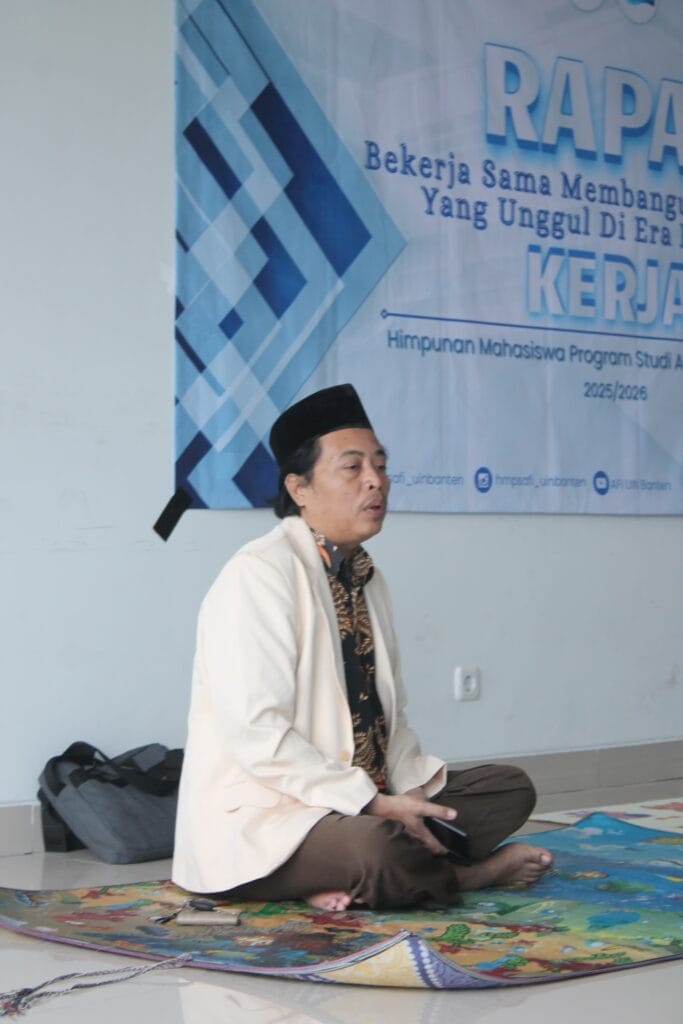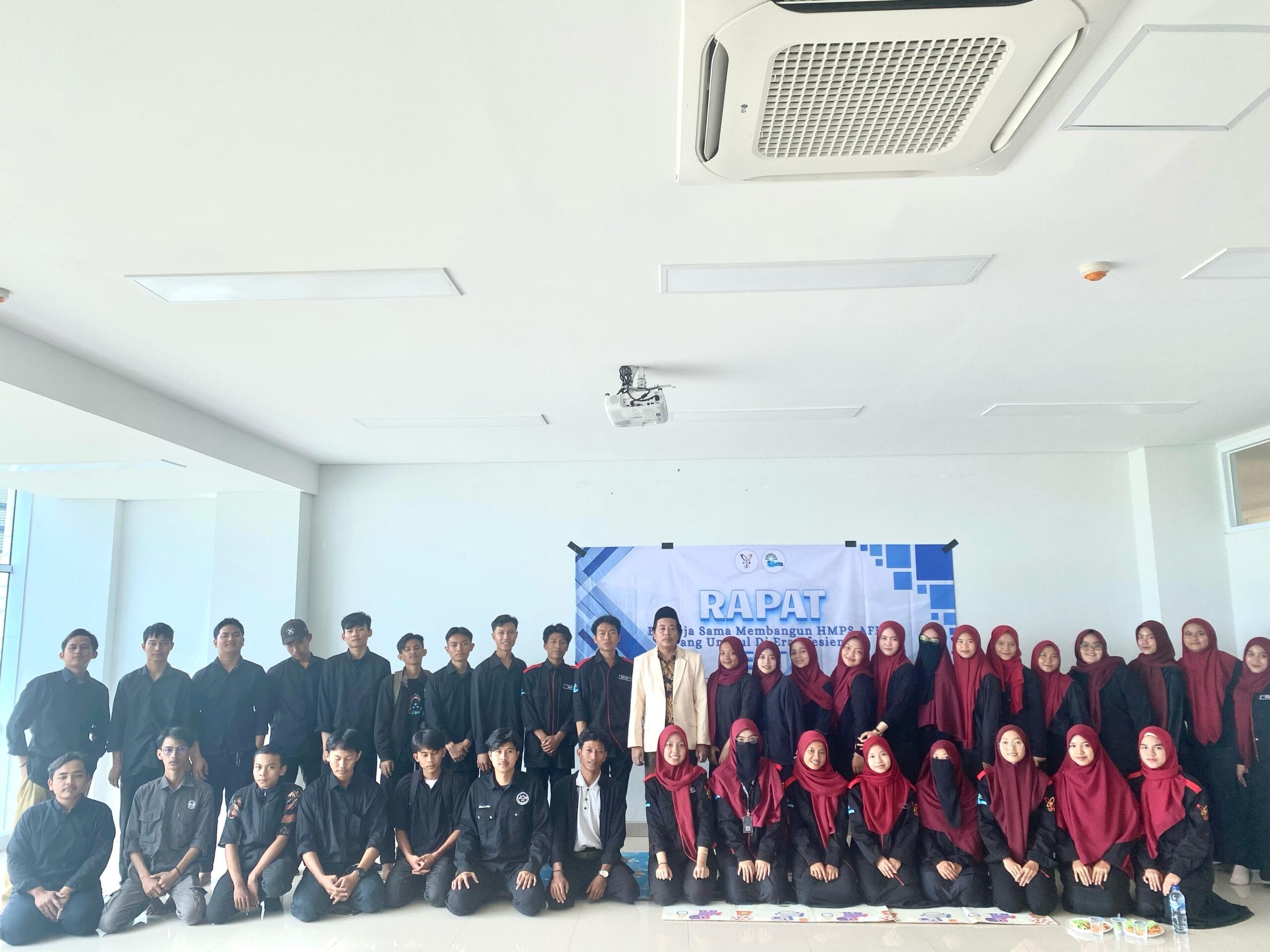
FUDA I Friday (February 28, 2025) -The Student Association of the Aqidah and Islamic Philosophy Study Program (HMPS AFI) of Sultan Maulana Hasanuddin State Islamic University Banten successfully held Work Conference (MUKER) at FUDA Hall 3rd Floor, Room 10, Campus 2 UIN SMH Banten. With the theme “Working Together to Build an Excellent HMPS AFI in the Era of Efficiency” This event is an important momentum to strengthen organizational capacity, as well as to design work strategies that are sharper, more effective, and able to encourage sustainable innovation.
Theme Meaning
Working Together to Build an Excellent HMPS AFI in the Era of Efficiency
Working together in building a superior HMPS AFI in the era of efficiency is a strategic step to create an organization that is not only adaptive to changing times, but also able to optimize existing resources to the maximum. With solid collaboration and mutual commitment, HMPS AFI can develop various innovative programs that are relevant, efficient, and have a positive impact on its members. This excellence is not only seen in terms of achievement, but also in the ability to respond to challenges and opportunities that arise amid the demands of a fast-paced and dynamic era.
Work Conference
A forum or activity held to discuss and formulate work plans, policies, and strategic steps in running an organization or institution. In work meetings, members or administrators of the organization gather to discuss, exchange opinions, and agree on matters relating to work programs, division of tasks, budgets, and goals to be achieved in a certain period.
Work meetings have the purpose of:
- Establish a Work Program: Discuss and determine the work program that will be implemented by the organization in a certain period. This program must be in accordance with the vision, mission, and goals of the organization.
- Coordination and Collaboration: Provide opportunities for all members or administrators to coordinate and work together in planning and implementing organizational activities.
- Identifying Problems and Solutions: Work meetings are also used to analyze problems faced by the organization and find effective and efficient solutions.
- Maintaining Consistency and Sustainability: Through work meetings, organizations can ensure that every step and decision taken remains in line with the long-term goals and sustainability of the organization.
The process of work deliberation is usually carried out with the principle of deliberation for consensus, where every opinion and proposal will be considered wisely to reach a mutually agreed decision. Thus, work deliberation is an important step in transparent, inclusive, and accountable decision-making in organizations.
Work meetings have various important benefits for organizations, including:
- Promotes Collaboration and Cooperation: Work meetings bring together different parties in the organization to discuss, share ideas, and work together in planning activities. This can strengthen team bonds and increase a sense of community.
- Resulting in Appropriate Decisions: By involving various parties in deliberations, the decisions taken will be more mature, based on more complete considerations and a variety of different perspectives, making them more appropriate and effective.
- Clarifying Goals and Objectives: Work meetings help to formulate and clarify the goals and objectives that the organization wants to achieve. This provides a clear direction in every activity undertaken.
- Identifying Problems and Solutions: In work deliberation, problems facing the organization can be identified together, and the best solutions can be sought by involving various ideas and opinions of members.
- Increases Participation and Ownership: Through deliberation, every member has the opportunity to participate in the decision-making process. This can increase their sense of ownership of the decisions taken, so they are more motivated to implement the agreed plans.
- Increases Transparency and Accountability: Work deliberation opens up space for open discussion, which increases transparency in decision-making and makes all members of the organization more accountable to the results achieved.
- Creating a Democratic Environment: Work deliberation emphasizes the principle of democracy, where every member can voice their opinions freely. This helps create a more open and respectful atmosphere.
- Optimizing Resources: With work deliberation, planning of activities and division of tasks can be done more efficiently, so that existing resources can be optimally utilized.
Overall, work meetings provide an opportunity for organizations to plan and execute tasks in a more structured, transparent, and effective manner, as well as strengthen relationships between members.