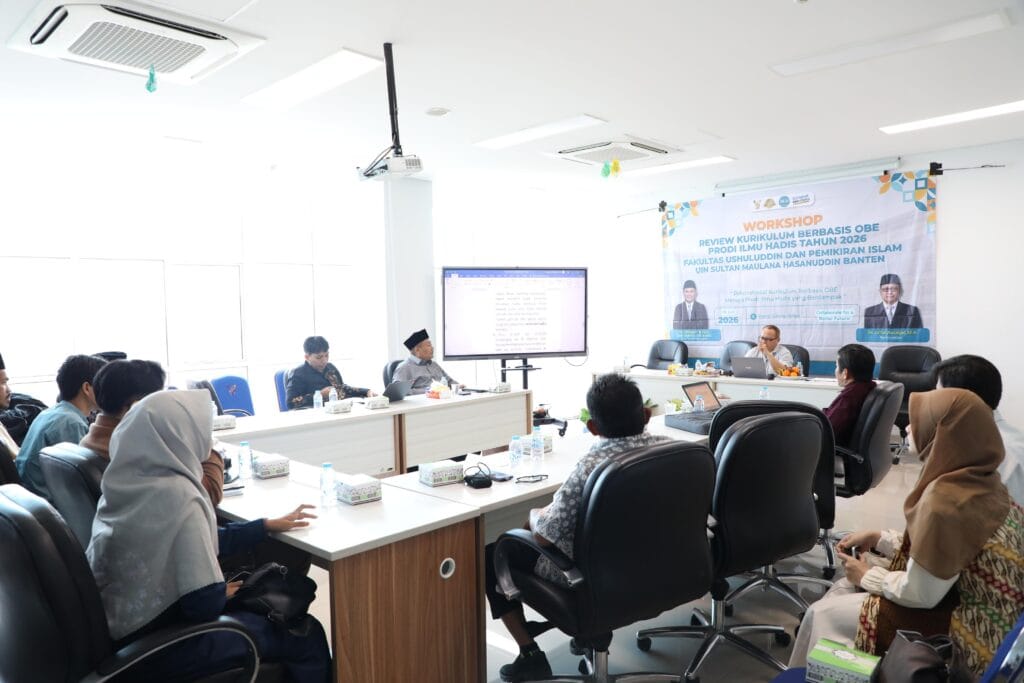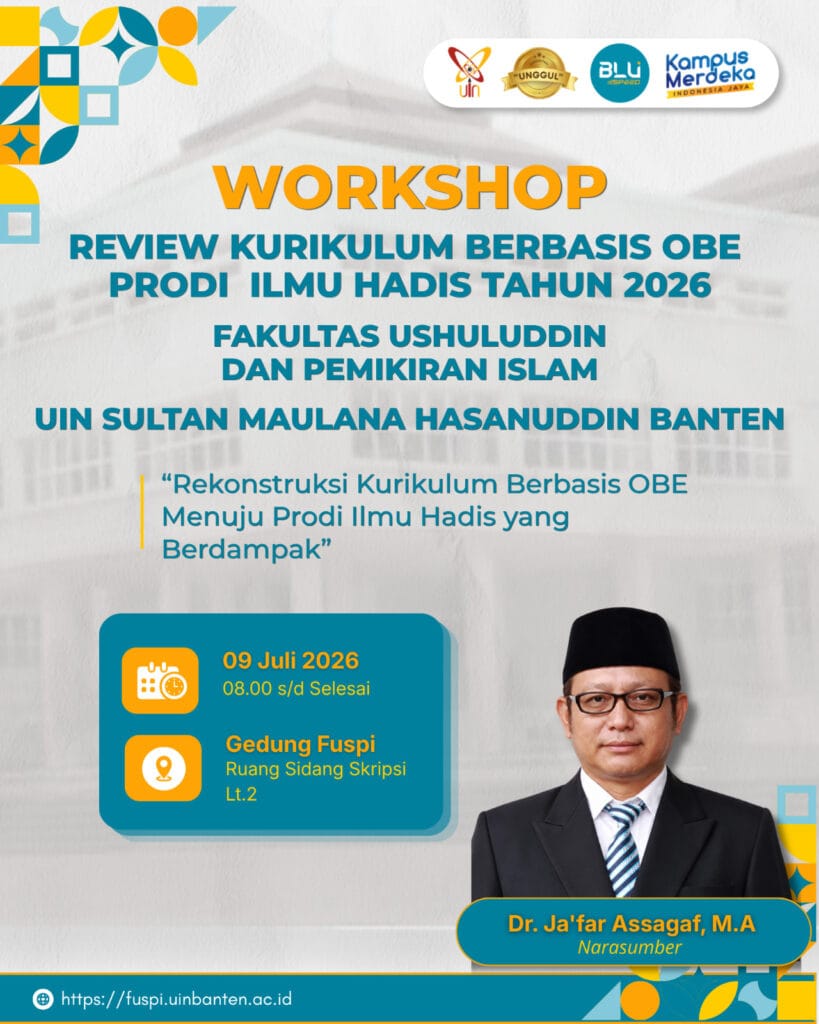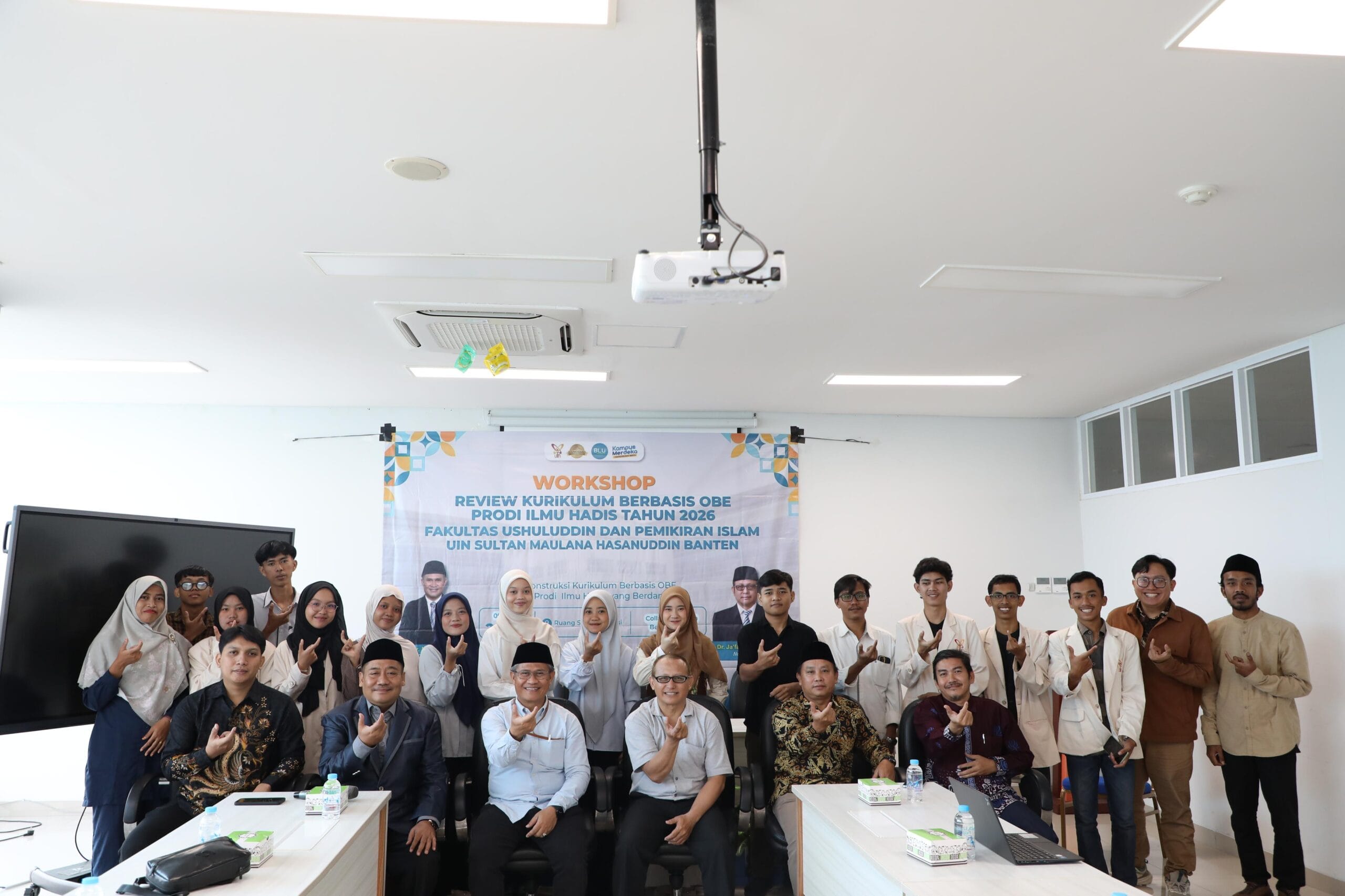
Serang, July 9, 2026 – The Hadith Studies Program at the Faculty of Ushuluddin and Islamic Thought (FUSPI) at UIN Sultan Maulana Hasanuddin Banten is organizing Workshop on Reviewing the Outcome-Based Education (OBE) Curriculum on Thursday, July 9, 2026, located at Thesis Presentation Room, FUSPI Building, 2nd Floor. This initiative is part of an ongoing effort to improve the quality of the curriculum so that it aligns with advances in science, the needs of the workforce, and the demands of society.
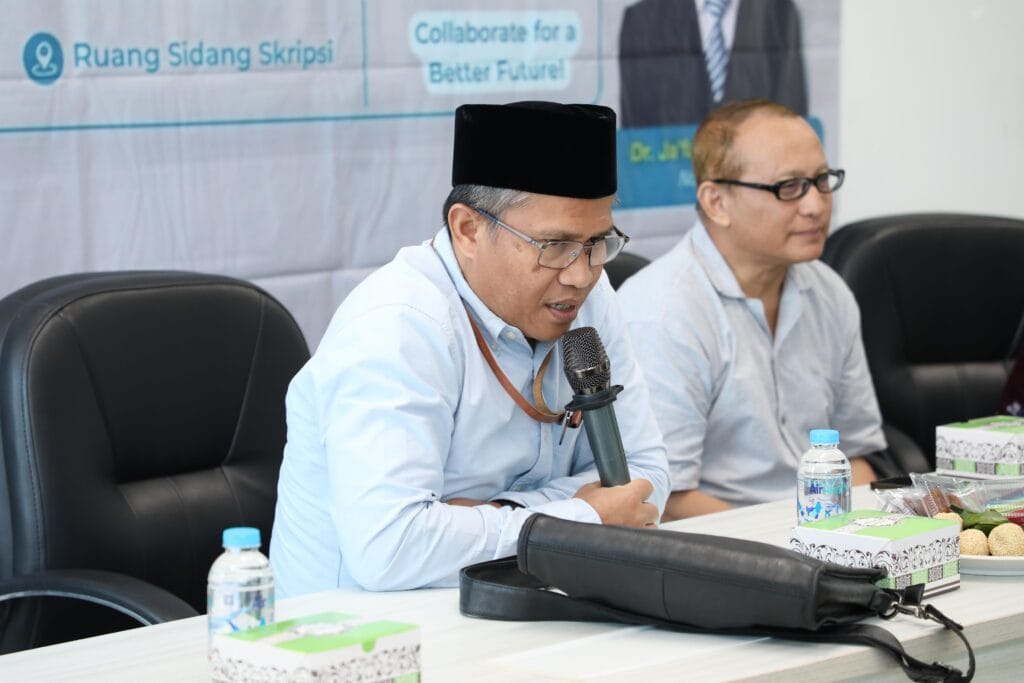
The workshop opened with remarks from the Dean of the Faculty of Ushuluddin and Islamic Thought, who emphasized the importance of developing a curriculum based on Outcome-Based Education (OBE). In his remarks, the Dean stated that the curriculum of the Hadith Studies program at UIN Sultan Maulana Hasanuddin Banten must be able to make a tangible impact. According to him, the success of a study program is not only measured by the quality of its graduates but also by the extent to which the academic benefits it fosters can be directly felt by students and the broader community.
“The OBE curriculum must be able to produce graduates with tangible competencies so that the Hadith Studies program at UIN Banten can make a tangible contribution and provide benefits not only to students during their studies but also to the community through community service, research, and the various strategic roles played by its graduates,” said the Dean in his address.
During the main session, the workshop featured Dr. Ja’far Assegaf, M.A. as a guest speaker. In his presentation, he explained that the development of the curriculum for Hadith Studies courses needs to be adapted to the changing times and the ever-evolving needs of society. However, this adaptation process must not compromise the depth of scholarly content that characterizes the discipline of Hadith Studies.
According to him, each course must maintain its academic and methodological rigor while integrating relevant contemporary issues so that graduates are equipped to address various challenges in society. Thus, the curriculum is expected to produce graduates who are adaptable to change, competitive, and at the same time remain experts with in-depth knowledge in the field of Hadith Studies.
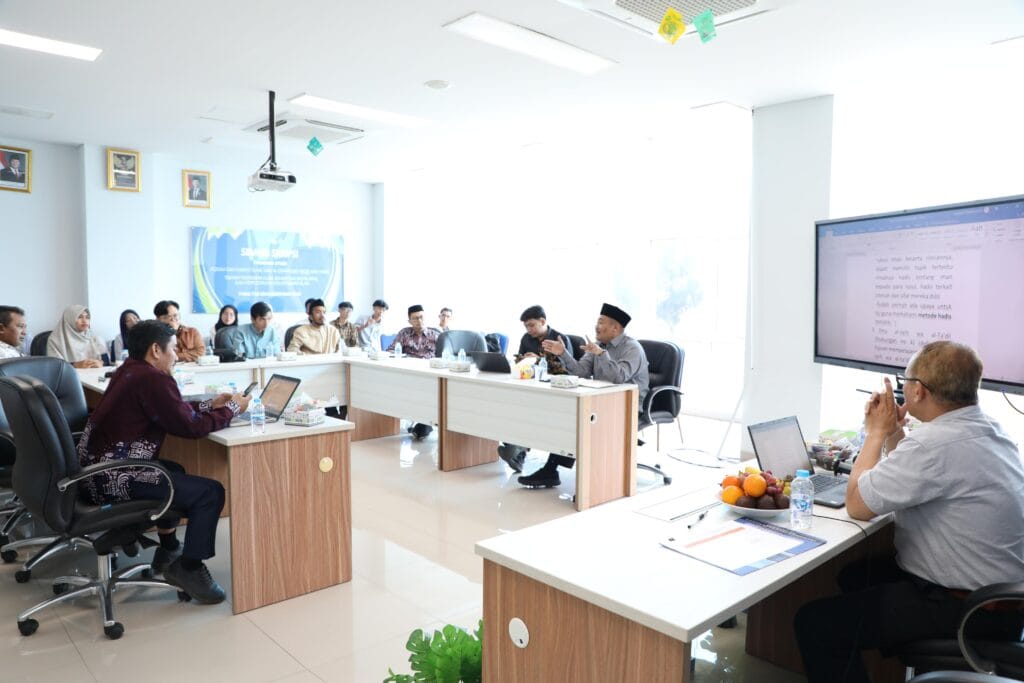
The event was a bit different because it wasn’t a one-way presentation of material, but rather a two-way discussion, so the audience was given the opportunity to respond directly or ask questions related to what the speaker presented. This was because the speaker, Dr. Ja’far Assegaf, (a graduate-level lecturer at UIN SUKA Yogyakarta) wanted to hear directly from faculty members, students, or alumni about what had been taught in various courses within the Hadith Studies program; from there, he could analyze the material and provide evaluations or suggestions for future improvements.
The workshop was conducted interactively through discussions and reviews of the curriculum structure, graduate learning outcomes (GLOs), course learning outcomes (CLOs), and the relevance of courses to the expected graduate profile. All faculty members of the Hadith Studies Program actively participated by providing input to refine the OBE-based curriculum so that it is more responsive to academic, professional, and social needs.
Through this initiative, the Hadith Studies Program at FUSPI, UIN Sultan Maulana Hasanuddin Banten, hopes to develop a curriculum that not only meets national higher education standards and supports program accreditation but also produces outstanding, adaptable, and professional graduates who make tangible contributions to the advancement of Islamic scholarship and the welfare of society.