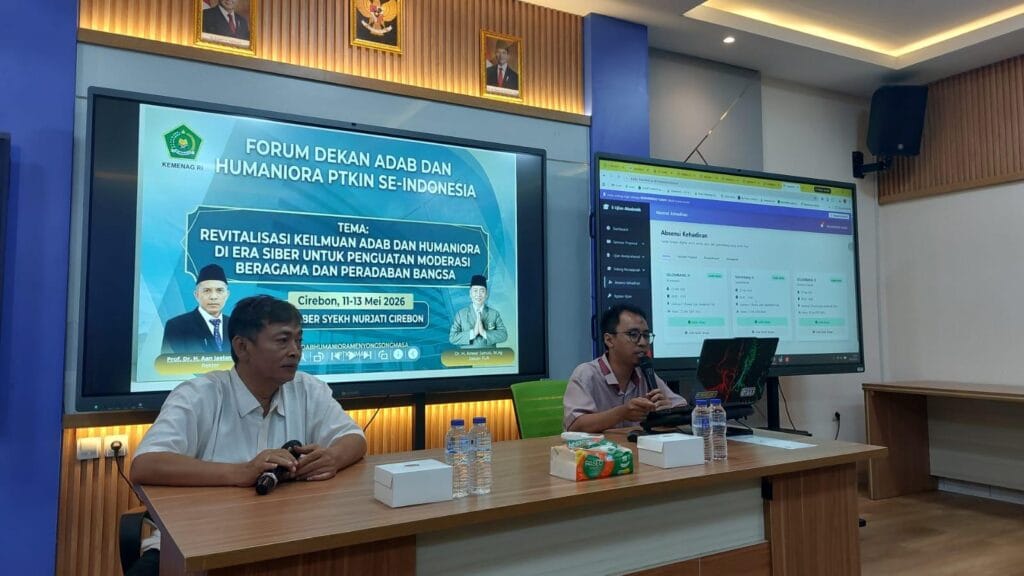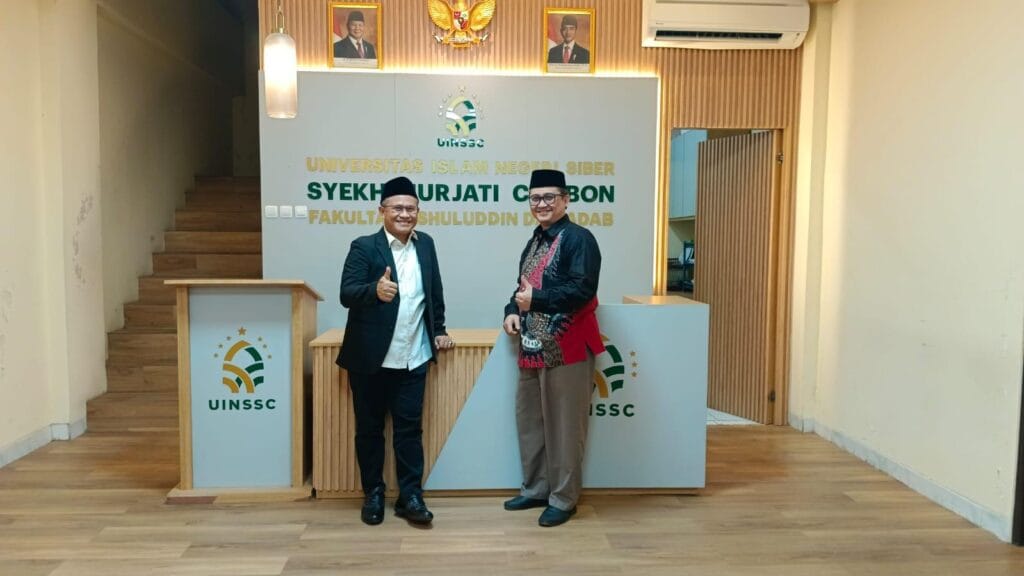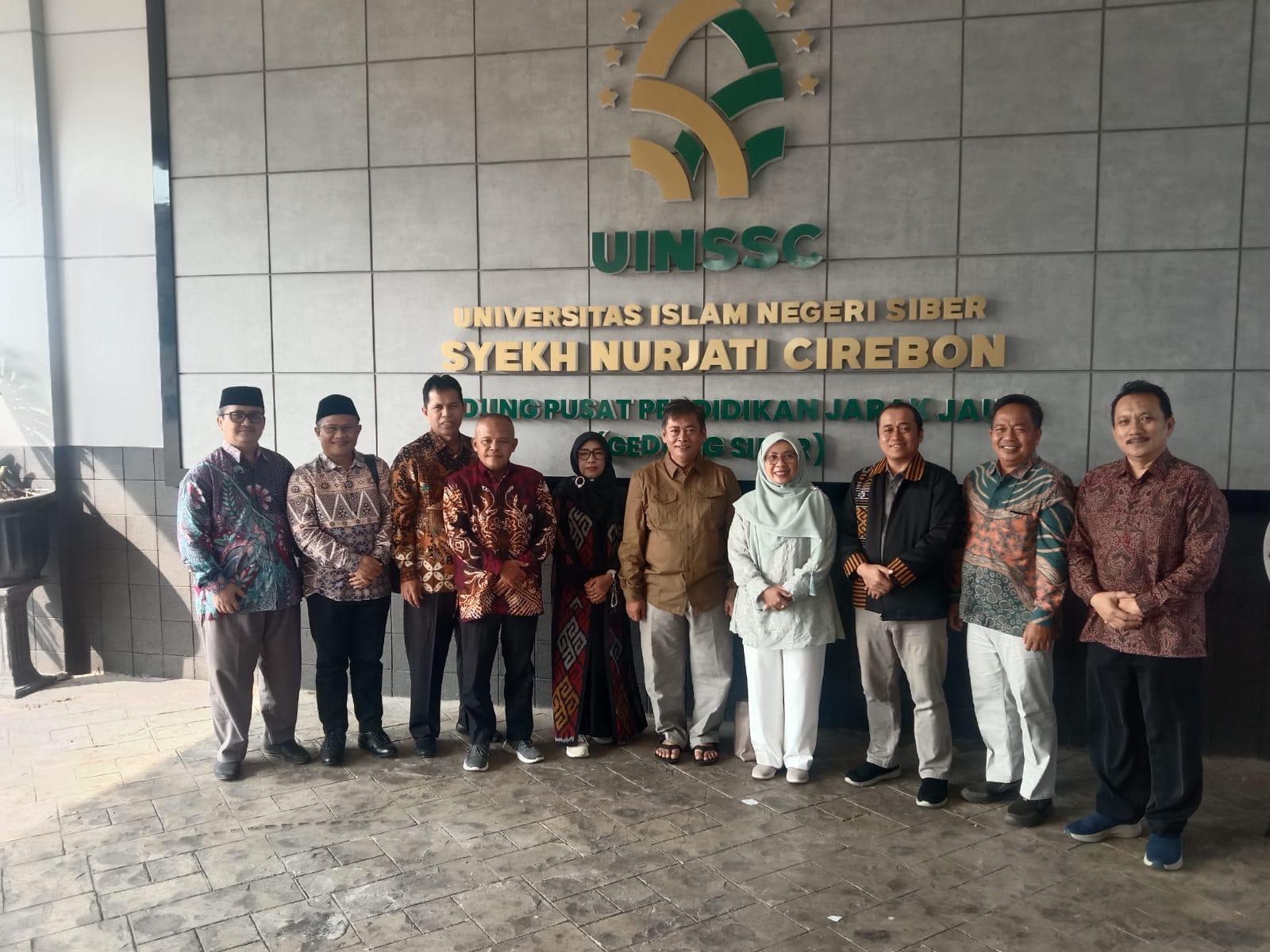
The Dean of the Faculty of Ushuluddin and Adab (FUDA) UIN Sultan Maulana Hasanuddin Banten attended the Pre-Forum Coordination Meeting of Deans of Faculty of Adab and Humanities (FAH) throughout Indonesia held at UIN Sheikh Nurjati Cirebon (UIN SSC), on May 11-13, 2026.
This forum is a strategic space for deans, study program managers, scientific associations, and lecturers in the field of adab-humanities to formulate a new direction for the development of the science of adab and humanities in the midst of major changes in the world of higher education. This activity is not only a coordinative agenda, but also an important academic forum to re-read the position of the science of adab, humanities, ushuluddin, language, history, civilization, and librarianship in the face of digital transformation and global challenges.
Based on the activity agenda, this pre-national deliberation forum discussed a number of important agendas, ranging from Pre-International Seminars, Deans Forum Meetings, to the Adab Student International Competition. The invitation also emphasized that this activity was directed at increasing academic synergy and strengthening institutional networks in the field of Adab and Humanities at the national and international levels.
In the forum, there were several important points that were determined as the basis for the implementation of further activities. First, the forms of activities that will be held include International Seminars, International Scientific Competition for Adab and Humanities Students (KI-IMAH), FAH Deans Forum, Forum of Associations of Arabic Language and Literature Study Programs (BSA), English Language and Literature (BSI), History of Islamic Civilization (SPI), Islamic Library and Information Science (IPII), and Association of Adab and Humanities Lecturers (ADIA).
Second, the main activity is planned to take place on May 22-25, 2026 at UIN Sheikh Nurjati Cirebon. This timing is a follow-up to the pre-forum coordination meeting which took place over three days, May 11-13, 2026. Thus, the pre-activity forum did not stop at technical coordination, but became an arena for maturation of substance, strengthening networks, and consolidating ideas between Faculties of Adab and Humanities throughout Indonesia.
Third, the forum set the big theme of the activity, namely “Revitalization of Adab and Humanities in the Cyber Era for Strengthening the Curriculum of Love, Ecotheology, and National Civilization.” This theme is important because it connects three major issues: the development of cyber technology, the ecological crisis, and the need to build a national civilization based on human values. In the midst of digitalization that often moves fast without ethical depth, the science of adab and humanities is challenged to be present as a counterweight: maintaining reason, strengthening cultural literacy, and building ecological awareness based on religious values.
For FUDA UIN Banten, the theme has a strong relevance to the faculty's vision in developing Islamic science and humanities based on Banten's local wisdom with global impact. Strengthening the humanities in the cyber era cannot be separated from the local context. Banten has a rich heritage of scholars, manuscripts, scientific traditions, languages, history, culture, and socio-religious practices. This local wealth needs to be re-read with a critical, digital, and globally oriented academic approach.
Fourth, the Adab and Humanities Student International Scientific Competition branch is divided into three main categories, namely Writing Competition, Reading Competition, and Digital Product Competition. This division shows that it is no longer enough for adab and humanities students to master conventional texts, but also to have the ability to write academically, read critically, and produce digital works that are communicative, creative, and internationally competitive.
Critically, this forum also reminded that the faculties of Adab and Humanities within PTKIN need to move beyond the ceremonial agenda. The main challenge of adab and humanities today is not only to maintain the existence of study programs, but to ensure that the curriculum, research, publications, service, and competence of graduates truly respond to changes in society. The cyber era demands graduates who are able to think critically, understand text and context, master technology, and remain grounded in ethical values, spirituality, and nationality.
In a global context, the revitalization of the humanities is becoming increasingly urgent. The world is currently facing a crisis of meaning, technological disruption, social polarization, climate change, and weakening human sensitivity. Therefore, strengthening the curriculum of love and ecotheology is not just academic jargon, but an important offer from Islamic religious universities to present a more humane, ecological, and benefit-oriented education.
The Coordination Meeting of the Pre-Forum of Deans of FAH and ADIA in 2026 was officially closed after discussion of the plenary and commission agendas. To conclude the series of activities, participants continued the pilgrimage agenda to the maqbarah of Sunan Gunung Djati or Syarif Hidayatullah, one of the important figures in the history of Islam in Cirebon and West Java. This pilgrimage has a strong symbolic meaning because it connects the academic agenda of the humanities with the spiritual roots, history, and scientific traditions of the Islamic archipelago.
The presence of the Dean of FUDA UIN Banten in this forum is part of the faculty's commitment to strengthen national and international academic networks. More than that, this participation is a momentum for FUDA UIN Banten to continue to develop curriculum, research, and service based on Islamic science, humanities, Banten local wisdom, and global challenges in the digital era.