

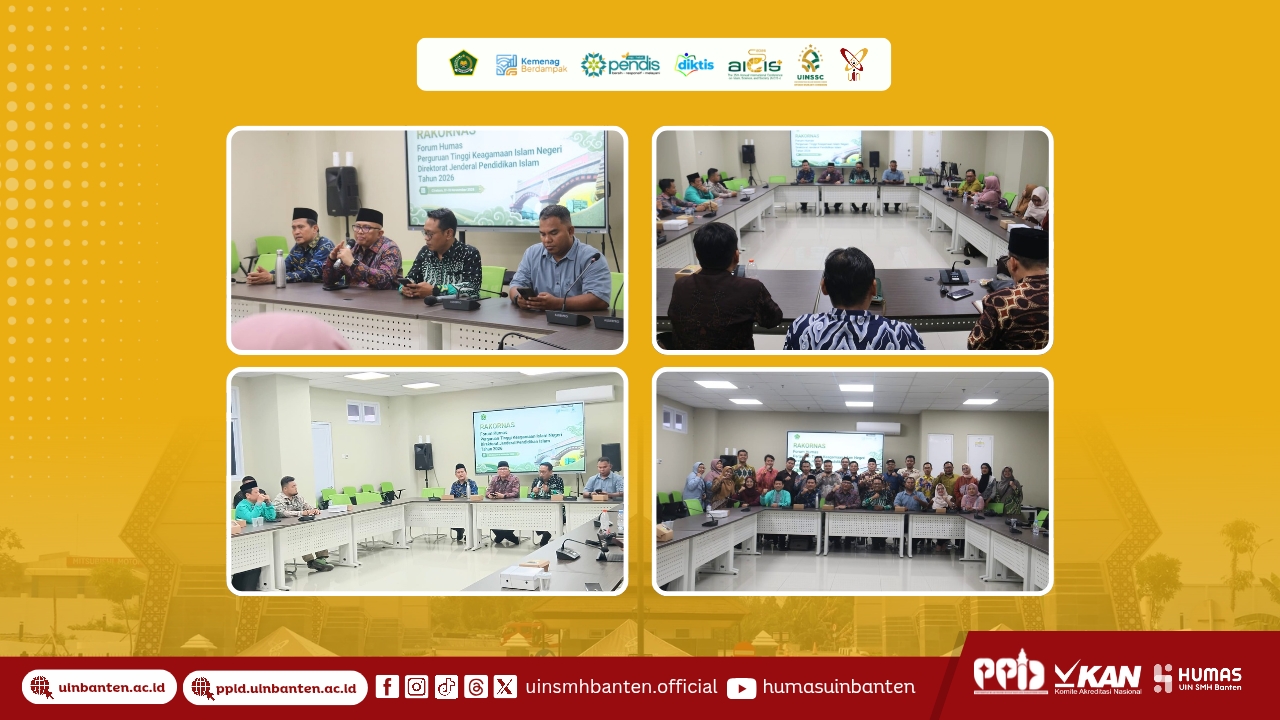
UIN Public Relations – State Islamic Religious Universities (PTKIN) play a strategic role in building a positive image and maintaining the institution’s reputation. The public relations office serves not only as a conduit for information but also as a strategic partner to leadership in managing communications, building public trust, and strengthening institutional identity.
This was conveyed by the Secretary General of Islamic Education at the Indonesian Ministry of Religious Affairs, Prof. Dr. Arskal Salim GP, M.Ag, in his remarks to the public relations staff of PTKINs. He emphasized that the development and progress of a university cannot be separated from the contribution of the public relations department in communicating the institution’s various achievements and activities to the public.

According to him, the campus is always in the news. Various activities—ranging from new student admissions (PMB), student and faculty achievements, academic activities, to institutional partnerships—are sources of information that need to be managed and publicized effectively.
“The public relations office bears a great responsibility for safeguarding the image of the leadership and the institution. A university’s positive image is largely determined by how the public relations office manages information, builds a positive narrative, and responds to and neutralizes negative media coverage,” he said on Tuesday (November 17, 2026).
He also emphasized the importance of the public relations role—not merely as a publisher, but as a communications partner who must be able to assess the situation, understand policy directions, and translate the leadership’s various strategic programs into information that is easily understood by the public.
Furthermore, Prof. Arskal Salim likened the public relations office to a party that plays a crucial role in shaping the image of a university. Every piece of information and news report conveyed to the public helps shape the public’s perception of an institution’s quality, character, and reputation.
Therefore, enhancing the capacity and skills of public relations professionals has become an urgent need, particularly in terms of mastering digital communication strategies. The evolution of social media and the digital information ecosystem requires public relations professionals at PTKIN to be more creative, adaptable, responsive, and capable of delivering messages that effectively reach their target audience.
He also urged that the profiles and work of professors at PTKINs be featured more frequently in the news. The academic expertise, research findings, ideas, and contributions of these professors need to be shared with the public as a way to strengthen academics’ personal branding while also enhancing the institutions’ reputations.
On that occasion, he also emphasized the need for a joint action plan among PTKIN public relations offices for the coming year. This plan is expected to serve as a concrete step toward building collaboration, strengthening communication networks, and collectively promoting a positive image of PTKIN.
He hopes that each PTKIN can build networks based on their respective strengths and unique characteristics, so that the diversity of each institution’s identity, flagship programs, and academic achievements can become a collective strength in reinforcing the position of PTKINs at both the national and international levels.
“Moving forward, the public relations offices of PTKIN institutions need to work together. We must build networks, strengthen collaboration, and highlight the strengths of each institution. In this way, we can collectively and sustainably build a positive image for PTKIN,” he said.
The post Deputy Director General of Islamic Education: Emphasizes the Need to Jointly Build a Sustainable, Collective Positive Image for PTKINs first appeared on Spirituality, Intellectuality, Professionalism.