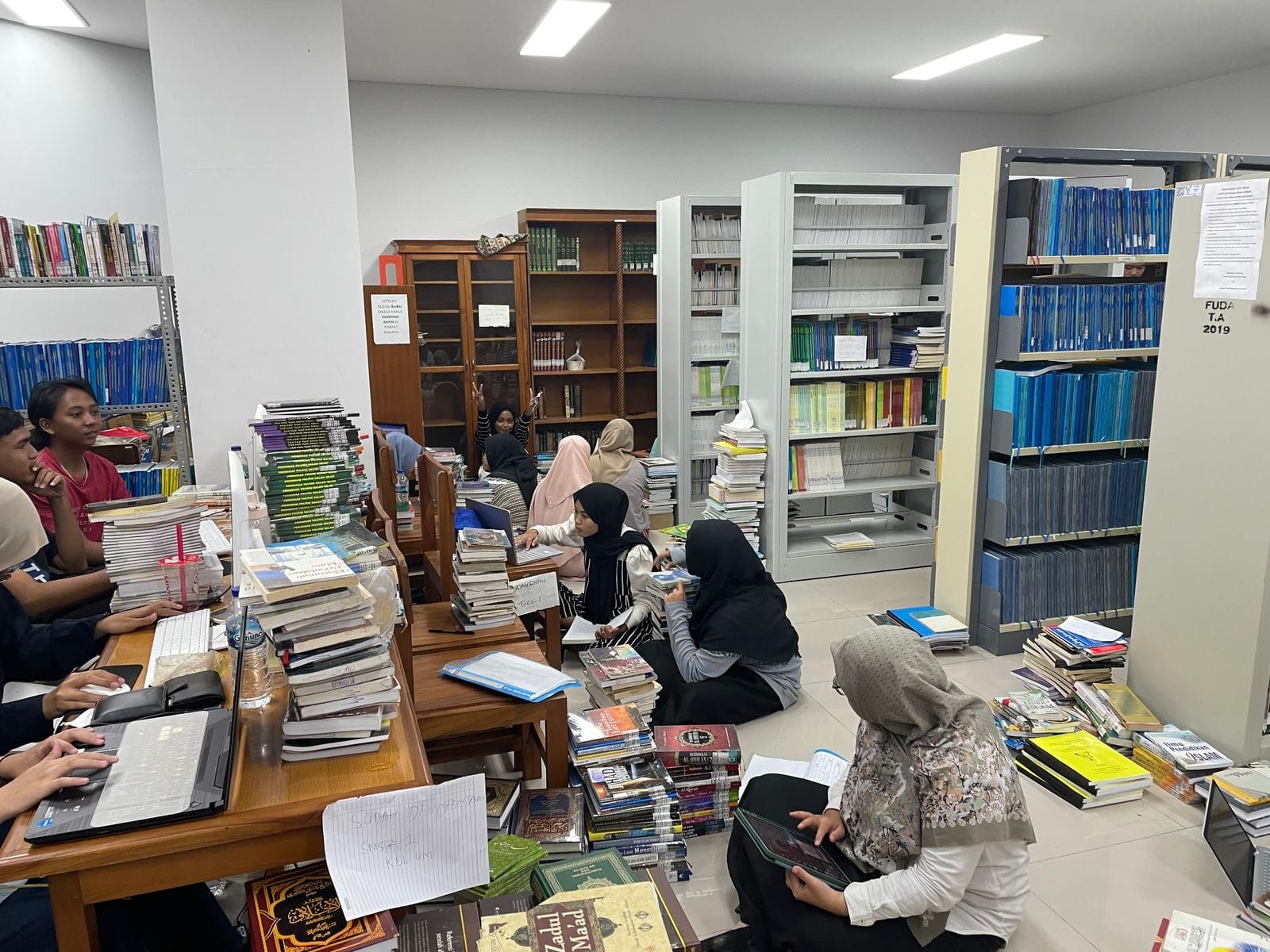
FUDA I (Friday, December 05, 2024) - October - November 2024, to be precise on October 14 - November 14, all students and students of the Islamic Library and Information Science Study Program were involved in the Fuda Library re-management activities.
For one month, Fuda Library became the focus of practicum activities for students of the Islamic Library and Information Science Study Program. In this activity, they carry out various processes of re-managing library collections with direct guidance from an expert lecturer, Mrs. Ursa Aghnia.
Stages of Library Management
The library management process includes several key stages, namely:
- Book Sorting
Students sort out book collections based on physical condition, relevance, and content appropriateness. This process aims to ensure that the collection available is really in accordance with the needs of the users. - Inventory
Every book that passes the sorting process is inventoried again to update the physical and digital data. This step is important to maintain the accuracy of the library's collection records. - Book Data Management into SLiMS
After the inventory, students input the book data into SLiMS (Senayan Library Management System), an open-source software specifically designed to manage library collections. The use of SLiMS allows collection management to be more systematic and efficient. - Collection Arrangement Based on DDC
Collections that have been managed are then reorganized onto shelves based on the Dewey Decimal Classification (DDC) classification system. DDC, first developed by Melvil Dewey in 1876, divides science into 10 main classes (000-900). This system aims to make it easier for users to find books according to the subject.
Purpose and Benefits of the Activity
This activity aims to reactivate the Fuda Library management system so that it can provide better information services to users. With systematically organized and recorded collections, access to information becomes easier and faster.
The implementation of this activity not only benefits the library but also the students. Students can apply the theories learned in class into real practice, as well as improve their abilities in modern library management.