

UIN Public Relations – Amid the torrent of information on social media, people are not only vying for attention, but also vying for influence over the minds of others.
We live in an age when popularity is often seen as a measure of truth, the number of followers is seen as a sign of a viewpoint’s legitimacy, and anything that goes viral is treated as if it were trustworthy.
In fact, Ali ibn Abi Talib taught a very relevant lesson: “Do not look at who is speaking, but look at what is being said.”
This message reminds us that truth is not determined by who is speaking, how famous a person is, or how many people agree with it. Truth must be tested through reason, knowledge, and clarity of heart.
First, don’t judge truth by popularity.
Social media often traps us in the cult of personality. A person’s opinion is considered correct simply because they have many followers, while the ideas of ordinary people are often ignored.
There is an Arabic proverb: “al-hubb al-mufarrith yastur al-aql” (excessive love can cloud the mind). We must learn to distinguish between the figure and the substance, between popularity and the quality of thought. Do not surrender your reason to a figure, but use your reason to evaluate every statement.
Second, don’t use the size of a crowd as a measure of truth.
Just because something goes viral doesn’t mean it’s true. Just because something is popular doesn’t mean it’s based on sound reasoning. Even the majority can be wrong when they stop thinking critically. After all, truth isn’t determined by how many people believe it, but by the strength of the evidence supporting it.
Third, control your emotions before others control your thoughts.
Narratives on social media often play on anger, hatred, fear, and prejudice. When emotions take over the mind, people are more likely to react than to understand. Use reason to weigh things out, rather than simply following your feelings. Defending the truth must always be accompanied by clear thinking and good manners.
Fourth, knowledge must foster humility.
Don’t think you know it all just because you’ve read a few posts or watched a few videos. Knowledgeable people aren’t afraid of criticism, aren’t ashamed to admit their mistakes, and don’t always feel they have to win an argument. The broader your knowledge, the more you should realize that there is still so much you don’t know.
Fifth, uphold fairness in evaluation.
Do not condone wrongdoing simply because it is committed by a group we support. Nor should we reject the truth simply because it is presented by someone with a different point of view. Justice demands that we apply the same standards to everyone.
Ultimately, the biggest problem with social media isn’t simply the sheer volume of misinformation, but rather people’s loss of willingness to think for themselves.
Don’t become a slave to algorithms, a prisoner of narratives, or a follower of the crowd. Be a person who dares to ask questions, check facts, accept criticism, and acknowledge the truth—even when it comes from a different perspective.
Social media may capture our attention, but we should never let it take control of our thoughts.
This is because a free person is not someone who always thinks they are right, but rather someone who never stops seeking the truth.
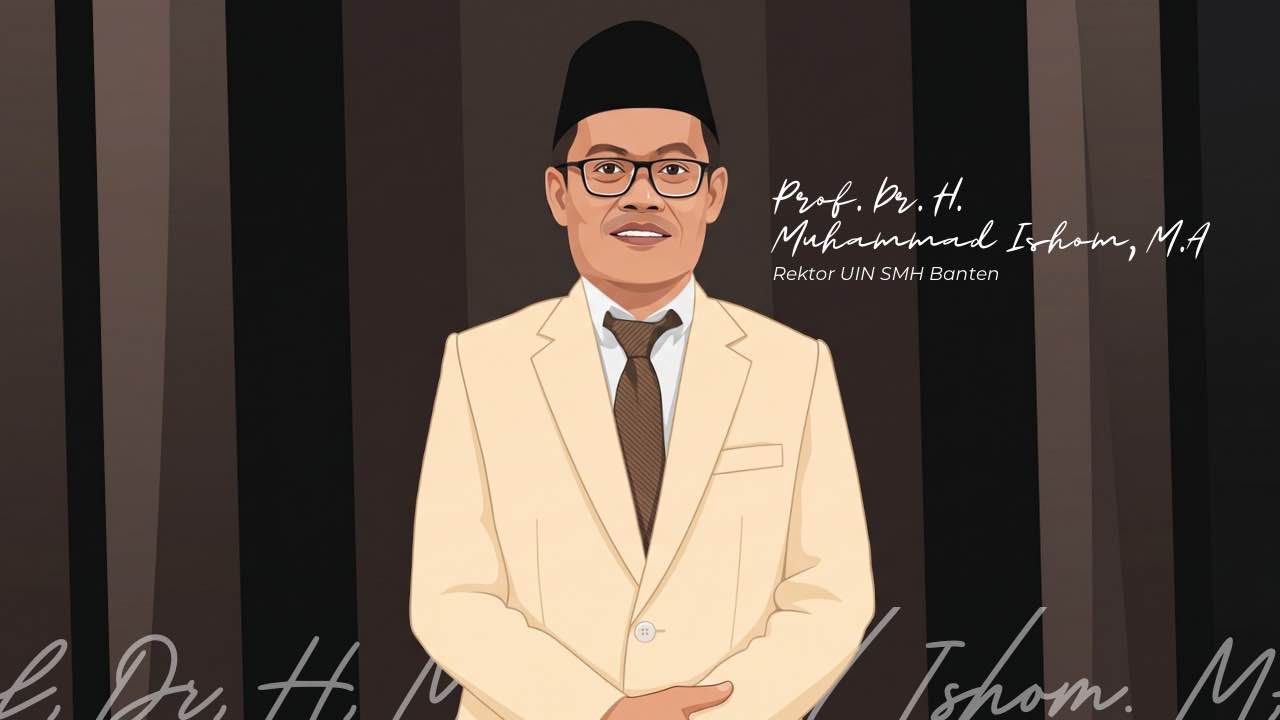
Prof. Dr. H. Muhammad Ishom, M.A. (Rector of UIN SMH Banten)
The post Free Your Mind—Don’t Become a Slave to Public Opinion first appeared on Spirituality, Intellectuality, Professionalism.