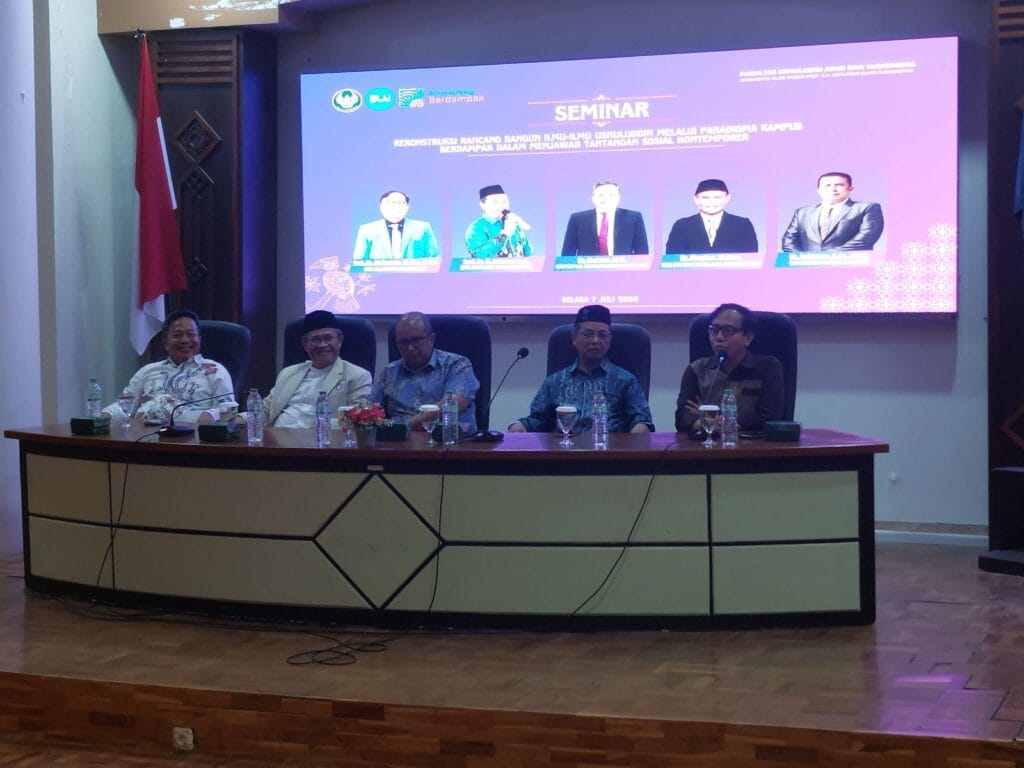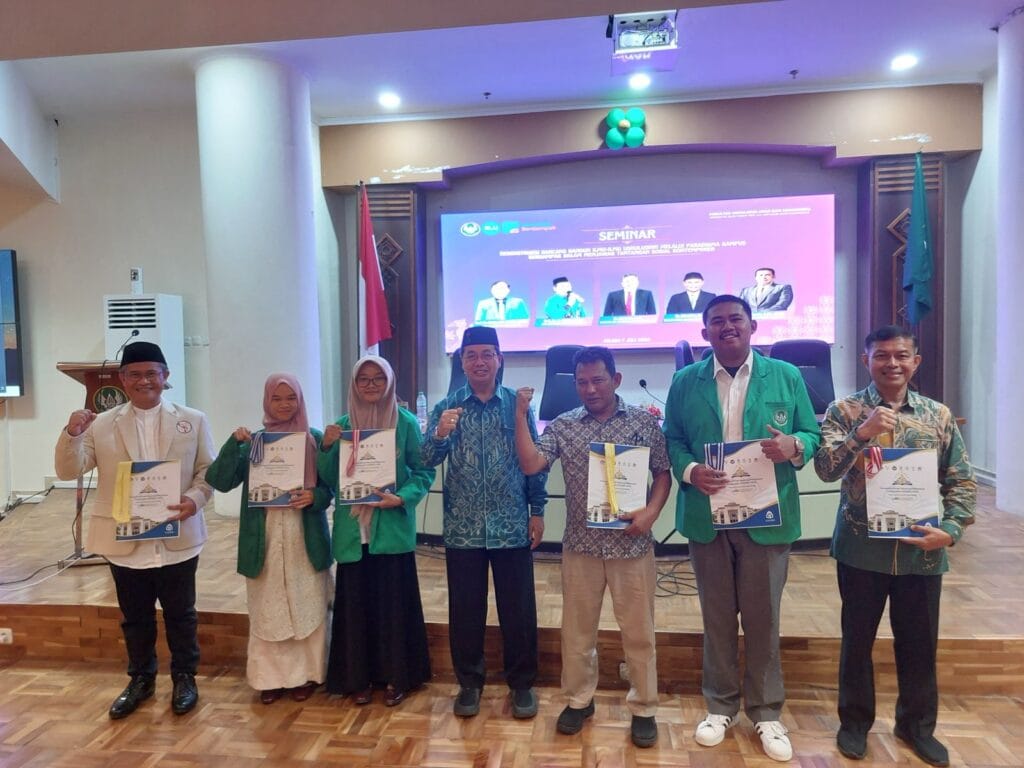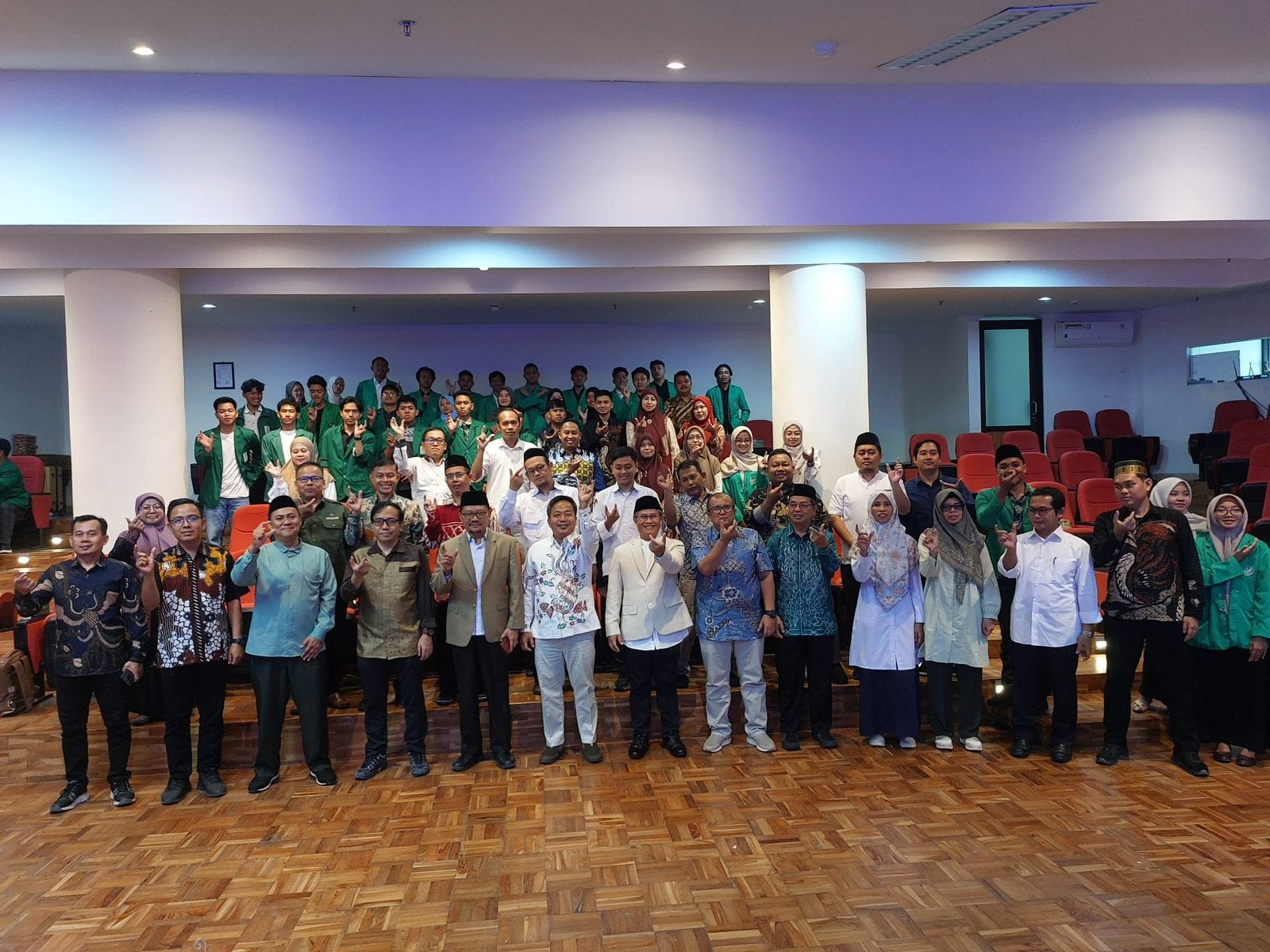
**Purwokerto** – The Faculty of Ushuluddin, Adab, and Humanities at UIN Prof. K.H. Saifuddin Zuhri Purwokerto held an academic seminar titled **”Reconstructing the Framework of Ushuluddin Sciences Through the Paradigm of an Impactful Campus in Responding to Contemporary Social Challenges”**. This event brought together academics from various State Islamic Religious Universities (PTKIN) as part of an effort to strengthen the direction of Ushuluddin scholarship development so that it remains adaptable to societal dynamics and the changing times.
The seminar featured five speakers: **Dr. Hartono, M.Si.** (UIN Prof. K.H. Saifuddin Zuhri Purwokerto), **Prof. Dr. Muhaemin, M.Th.I., M.Ed.** (UIN Alauddin Makassar), **Prof. Dr. Akhmad Sagir** (UIN Antasari Banjarmasin), **Dr. Masykur, M.Hum.** (UIN Sultan Maulana Hasanuddin Banten), and **Dr. Sefriono, S.Ag., M.Pd.** (UIN Imam Bonjol Padang). Each speaker shared their views on the importance of transforming the field of Ushuluddin to ensure it remains relevant in addressing various social, cultural, and religious issues, as well as developments in science and technology.
One of the speakers (Dr. Masykur, M.Hum.) explained that ”The study of Ushuluddin needs to shift from a focus on textual interpretation to the ability to revitalize social life,” said Masykur, citing the guidelines from the Ministry of Education, Culture, Research, and Technology.
The Philosophy of Religion as a Bridge for Conflict Transformation. Masykur proposes the use of the philosophy of religion as an ethics of reconciliation. Through a transdisciplinary approach that engages with the study of peace, human rights, trauma psychology, and public policy, the philosophy of religion is positioned to shape the way people live together amid differences. This idea is rooted in the thought of world-renowned figures such as Levinas (ethical responsibility), Ricoeur (forgiveness and memory), Galtung (positive peace), and Lederach (relational transformation). As a practical application, this analytical model is used to examine patterns of domestic conflict—such as in Papua—as well as cross-border conflicts—such as the Israel-Lebanon conflict—based on the fundamental principles of rejecting the sacralization of violence and upholding human dignity.
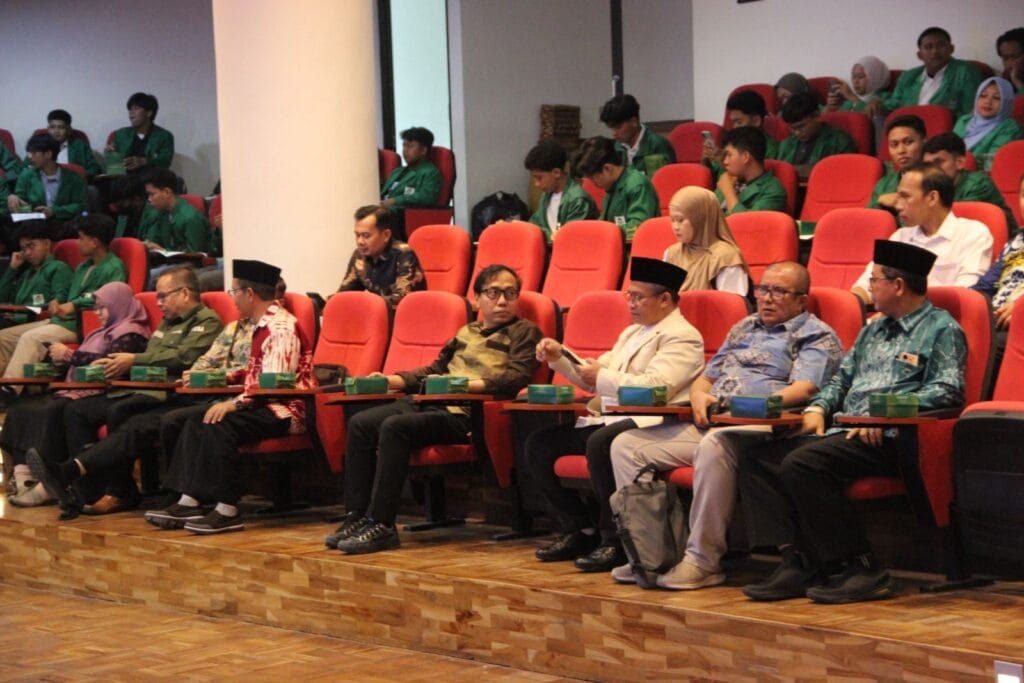
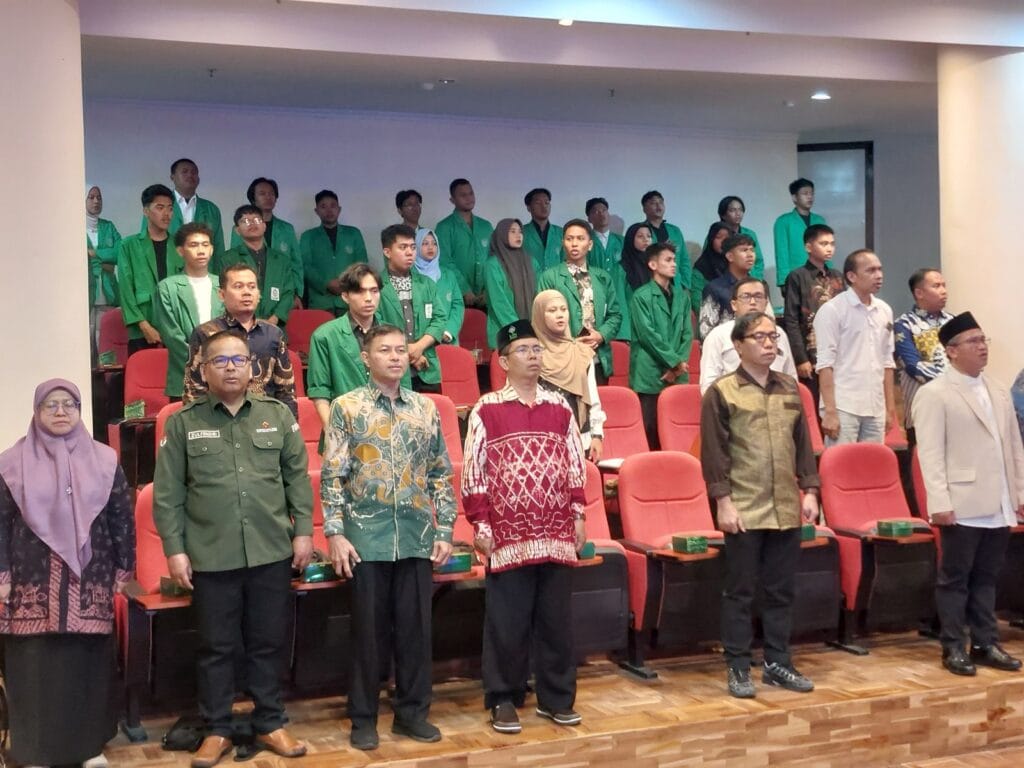
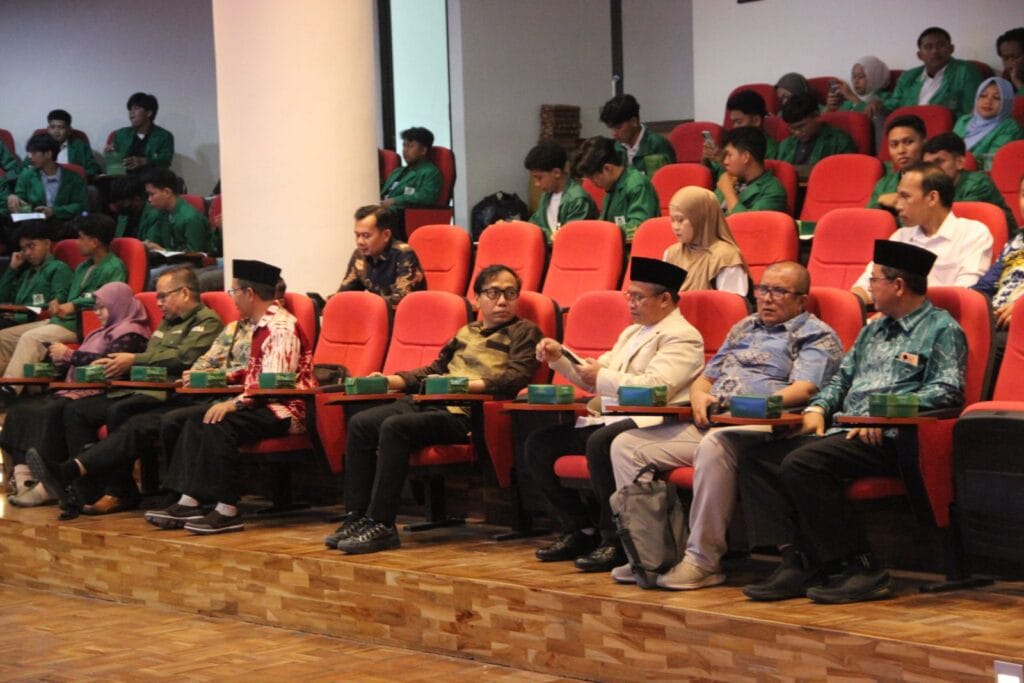
The discussion was dynamic, with high enthusiasm from the participants, who included faculty members, students, researchers, and academics. The various questions and ideas that emerged enriched the discussion on the future of the development of Ushuluddin studies in Indonesia.
It is hoped that this seminar will foster synergy among the Ushuluddin faculties within PTKIN institutions in formulating a new direction for the development of Ushuluddin studies that is relevant to the needs of society. The “Impactful Campus” paradigm serves as a strategic momentum to strengthen the role of Islamic universities as centers for the development of knowledge, research, and community service capable of making tangible contributions to the nation’s progress.