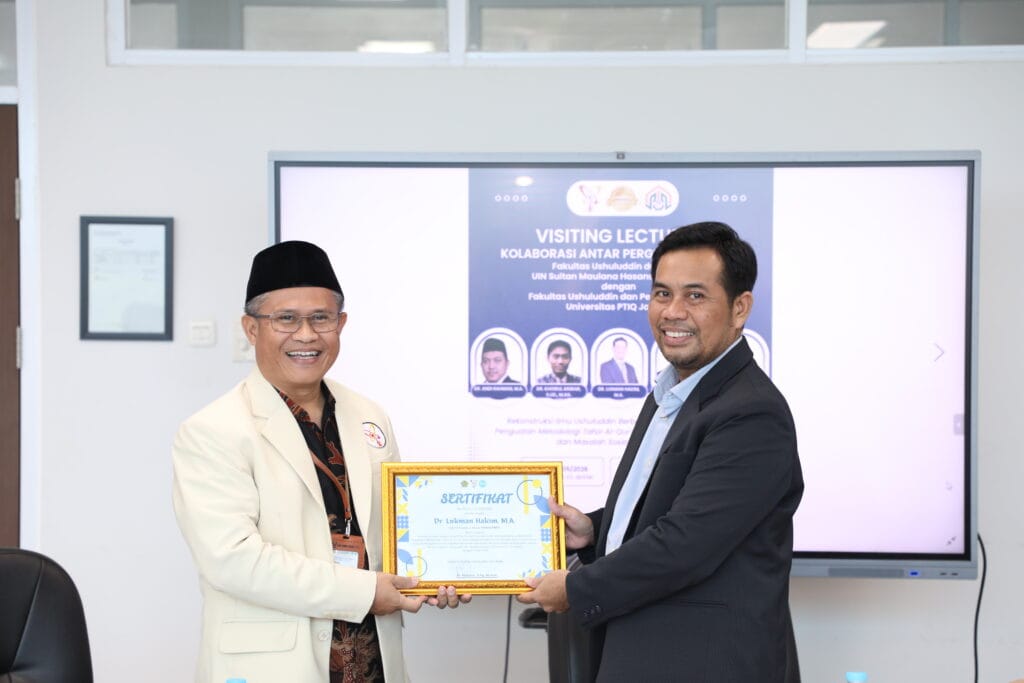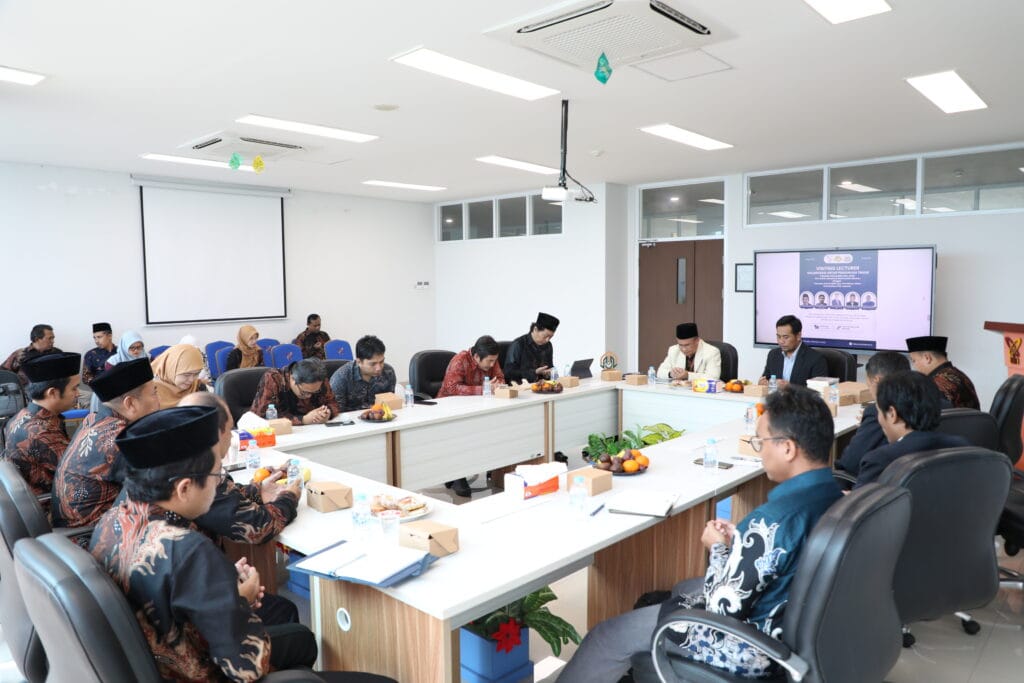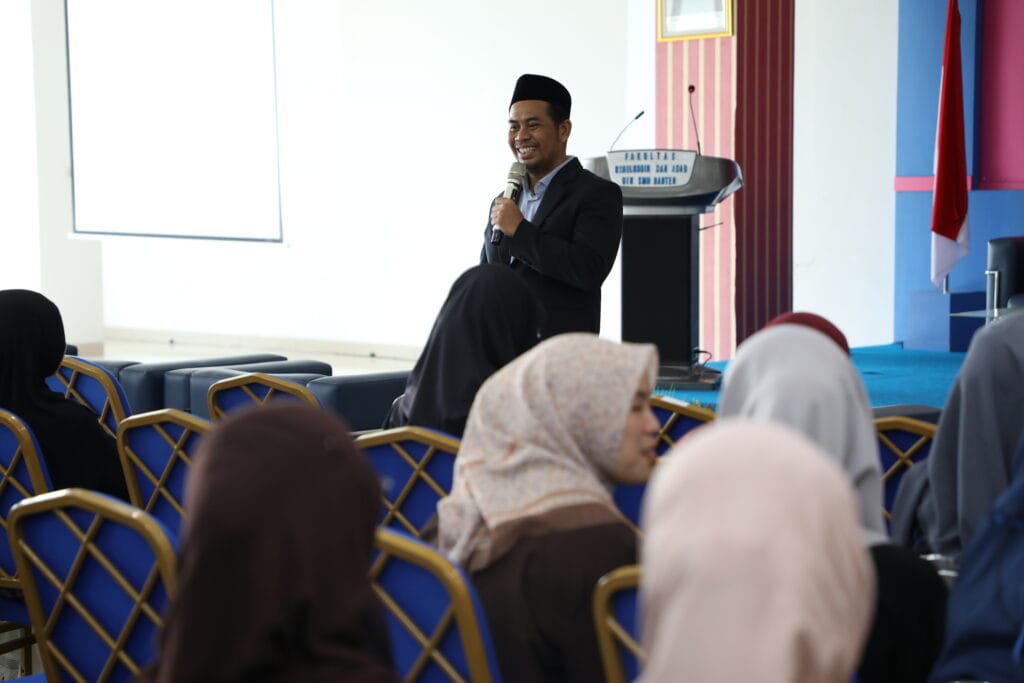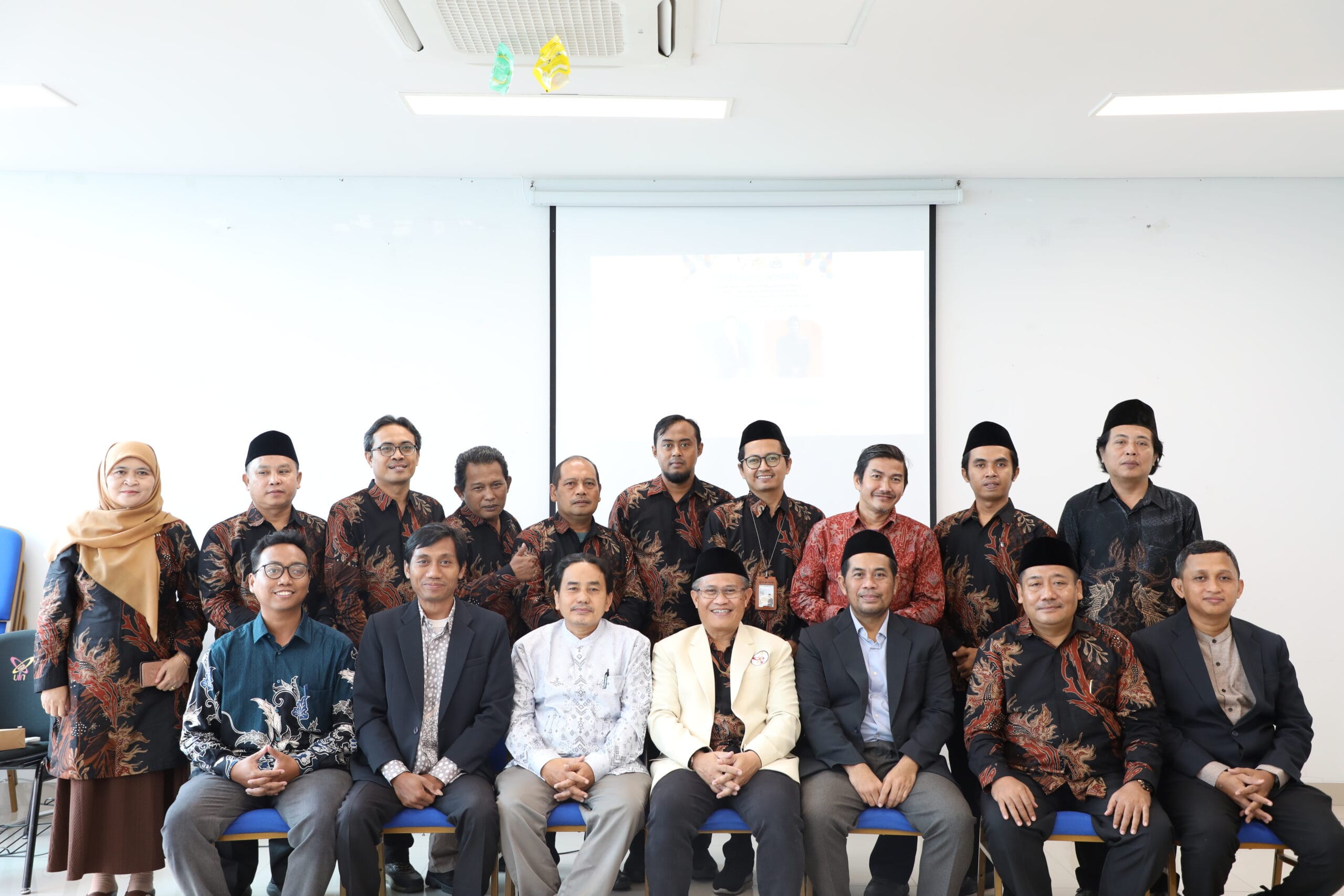
SERANG - In order to improve academic quality and expand scientific networks, the Faculty of Ushuluddin and Islamic Thought (FUPI) PTIQ University Jakarta carried out activities Visiting Lecturer to the Faculty of Ushuluddin and Adab (FUDA), State Islamic University (UIN) Sultan Maulana Hasanuddin (SMH) Banten, May 21, 2026. This activity is an important momentum in strengthening the cooperation relationship between Islamic higher education institutions that are members of the Al-Jabbar scheme, namely the cooperation network of Islamic Religious Universities in Jakarta, Bandung, Banten and Cirebon.
The delegation from FUPI PTIQ University Jakarta was led directly by the Dean of FUPI, Dr. Lukman Hakim, M.A. Also present accompanying him were a number of expert lecturers who were scheduled to lecture as guest lecturers.visiting lecturerThe speakers were Dr. Khoirul Anwar, S.Ud., M.Ag., Ansor Bahary, M.A., Hidayatullah, M.A., and Amien Nurhakiem, M.A., among others.
The arrival of the group was warmly welcomed at the UIN SMH Banten campus by the Dean of FUDA UIN SMH Banten, Dr. Masykur, M.Hum. The welcoming ceremony was also attended by faculty leaders, including the Vice Deans, Head of Study Program (Kaprodi), Secretary of Study Program as well as all lecturers and education staff in FUDA UIN SMH Banten.
In his remarks, the Dean of FUPI PTIQ University Jakarta, Dr. Lukman Hakim, M.A., said that the agenda was Visiting Lecturer This is a concrete step in realizing the pillars of the Tridharma of Higher Education, especially in the field of education and teaching.
“This academic visit is not just an institutional gathering, but a concrete manifestation of our commitment to share expertise and enrich Islamic discourse. We hope that the presence of our lecturers can provide fresh and in-depth perspectives for students at FUDA UIN SMH Banten, as well as pave the way for future research collaborations,” said Dr. Lukman Hakim.
In line with this, the Dean of FUDA UIN SMH Banten, Dr. Masykur, M.Hum., appreciated and welcomed the academic initiative from PTIQ University Jakarta. According to him, the exchange of ideas through the Visiting Lecturer is essential amidst the dynamics of contemporary Islamic studies.
“We are very grateful and honored for the presence of the Dean of FUPI PTIQ and the guest lecturers. This program is very valuable for our academic ecosystem because it can open students” thinking horizons to be more comprehensive. We hope that this scientific synergy does not stop in the classroom today, but can continue in research cooperation, journal publications, and community service," said Dr. Masykur.
Lecturer Collaboration Discussion: Measuring the Opportunities and Challenges of the Quran and Tafsir Science Curriculum
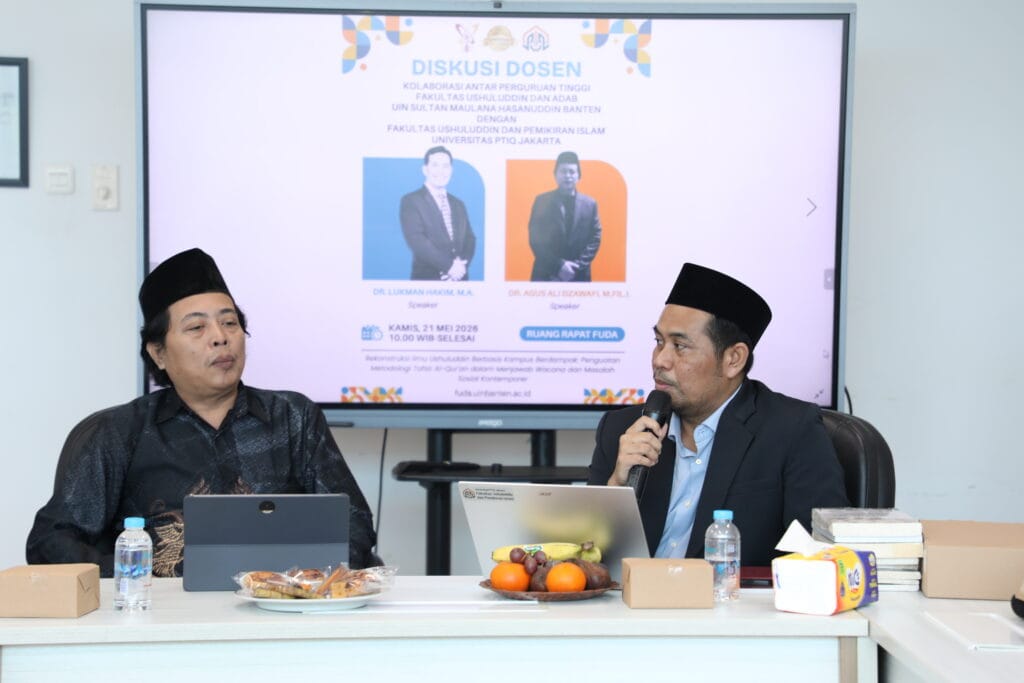
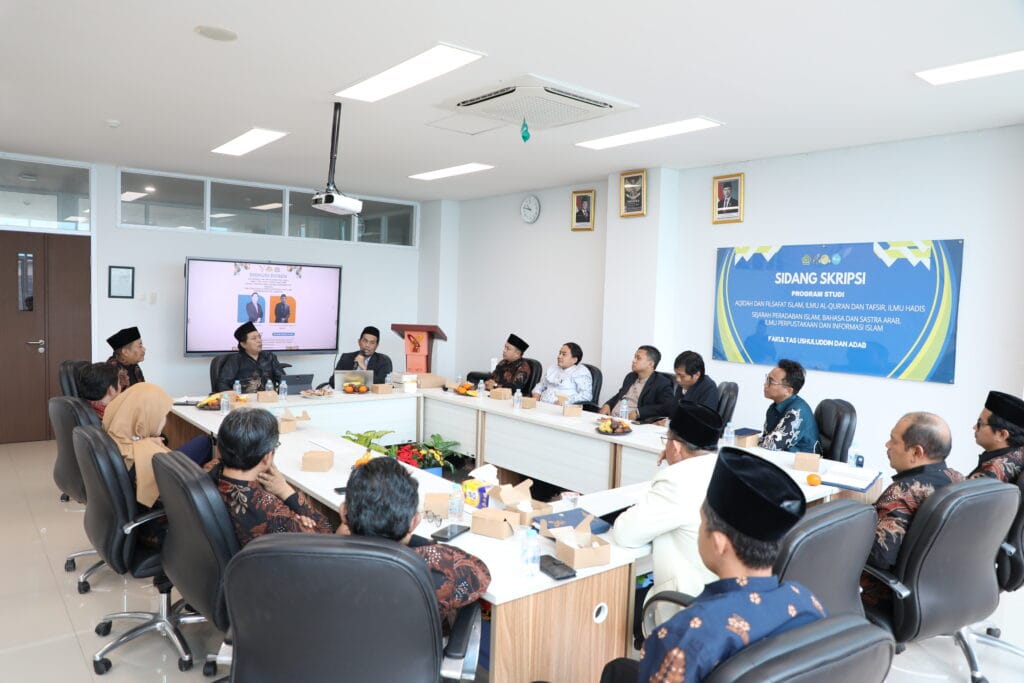
Before implementation visiting lecturer In the classroom, this academic activity first began with a collaborative discussion forum between lecturers from both faculties. This discussion session presented speakers from FUDA UIN SMH Banten, namely Dr. Agus Ali Dzawafi, M.Fil.I., who presented in-depth material on the Challenges and Opportunities of Tafsir Isyari and Dr. Lukman Hakim, M.A. who talked about the IAT curriculum based on Outcome Based Education (OBE).
In the forum, Dr. Agus Ali Dzawafi discussed the dynamics of the Sufistic (esoteric) approach in the interpretation of the Qur'an. “Tafsir Isyari has an extraordinary depth of spiritual meaning to touch the inner dimension of the people. However, in the modern era, the biggest challenge is to maintain methodological boundaries so that interpretation does not get out of the corridors of sharia,” he explained.
He also added that this collaboration forum is the right place to respond to these challenges. “Through the academic synergy between FUDA UIN Banten and FUPI PTIQ, there is a great opportunity to reformulate the framework of Tafsir Isyari studies that are more measurable, academically accountable, but still do not lose their spiritual spirit,” concluded Dr. Agus Ali.
Variety of Study Themes from Experts in Visiting Lecturer
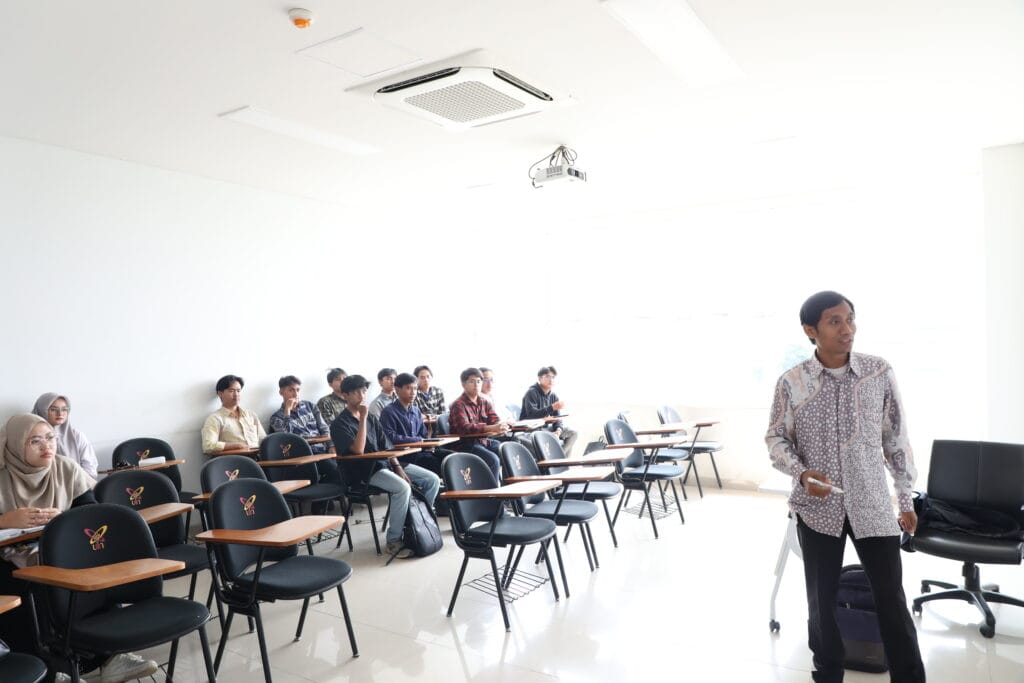
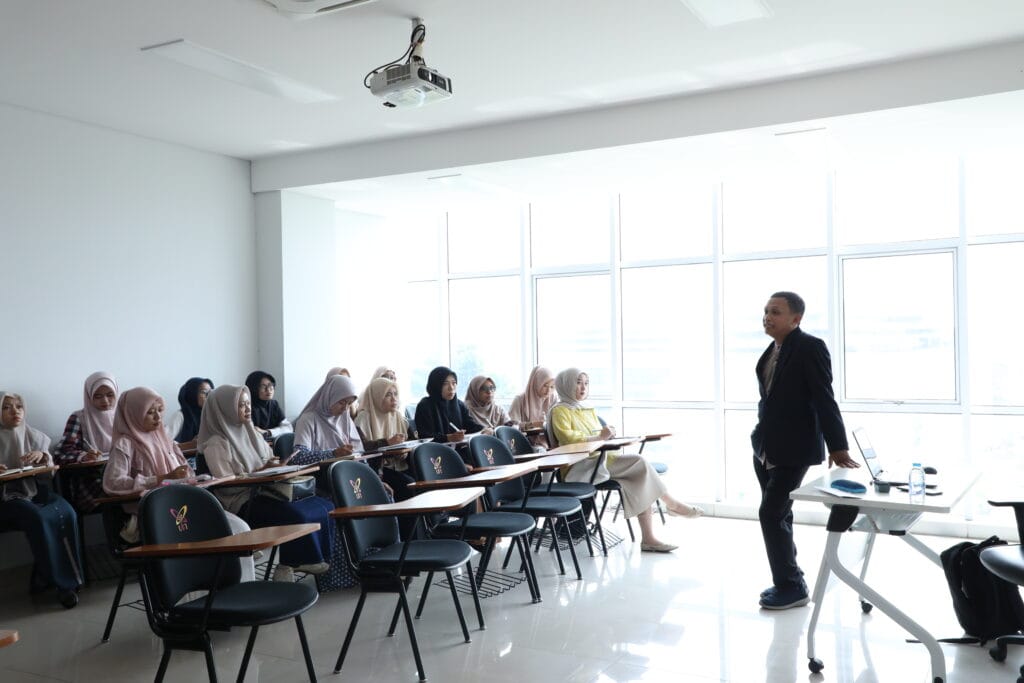
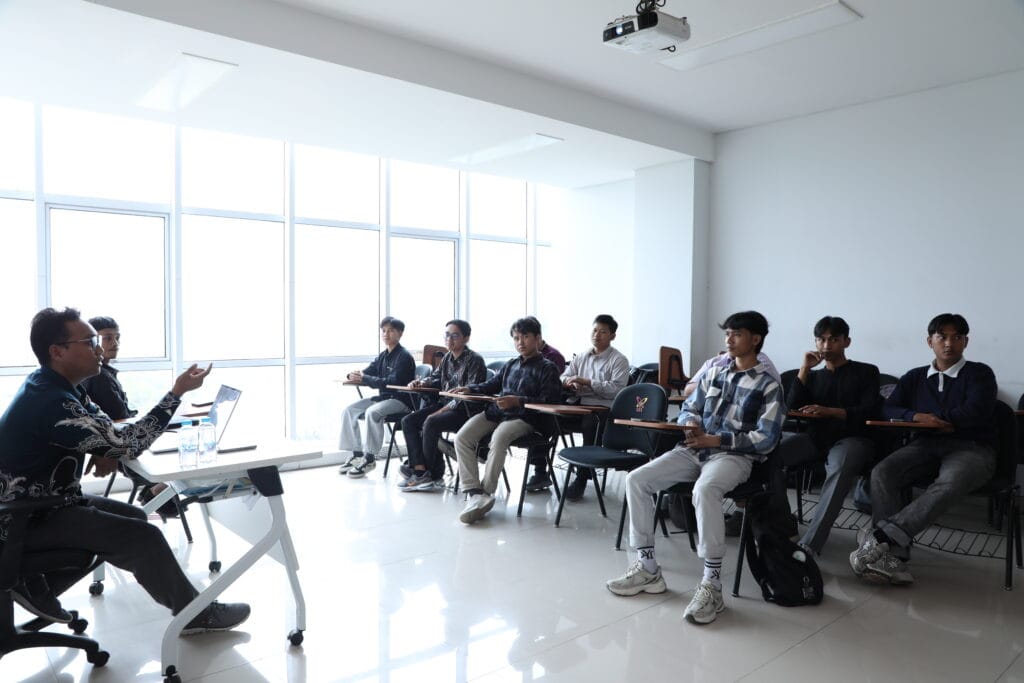
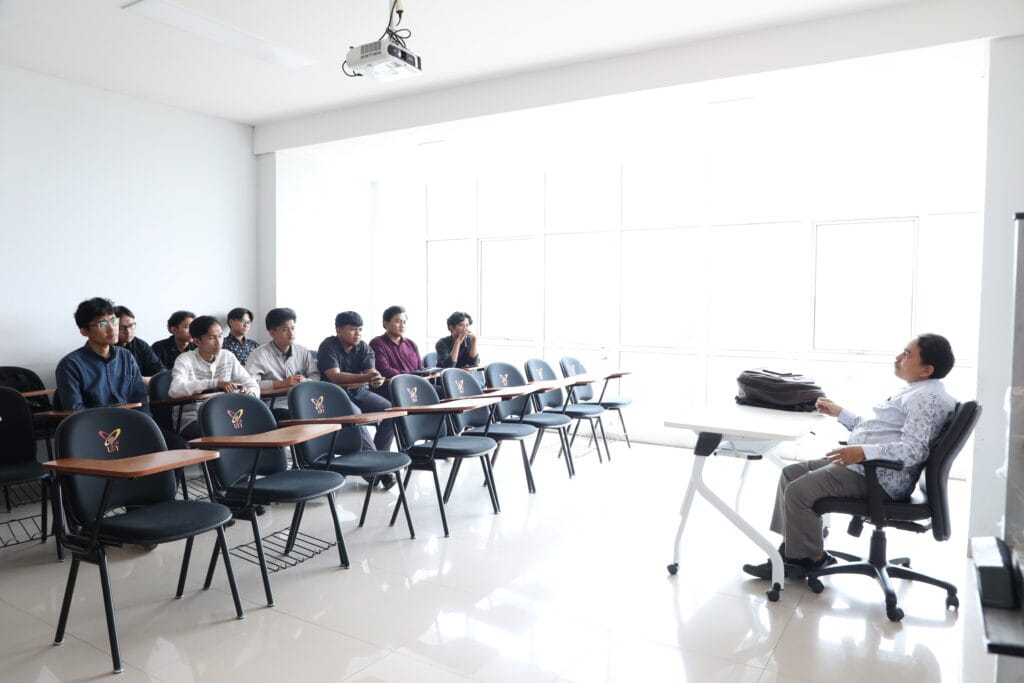
Activities Visiting Lecturer This event was filled with lectures by each guest lecturer in various classes that have been prepared. FUDA UIN SMH Banten students seemed enthusiastic in following the lectures, which were colored by interactive discussions on various current issues in the study of Ushuluddin, tafsir, and Islamic thought. Visiting Lecturer It was filled with lectures by each guest lecturer that highlighted various dimensions of Qur'anic and Tafsir knowledge.
Dr. Lukman Hakim, M.A., who presented material on Methods and Approaches in Interpretation, emphasized the importance of mastering methodology for Ushuluddin scholars. “The right method and approach are crucial in avoiding biased interpretations. We must equip students with a sharp analytical knife so that they are able to explore the meaning of the Qur'an methodologically and can be accounted for academically,” he said in front of the students.
Meanwhile, Ansor Bahary, M.A. highlighted humanitarian issues through the theme of Tafsir Maudhui in the Humanistic Quranic Frame. “Through this humanistic framed Tafsir Maudhui approach, we are invited to see how the values of the Qur'an really humanize humans. This is an important foundation to answer the challenges of the current humanitarian crisis with the guidance of revelation,” he said.
In a different class, the Qur'anic language study was deepened by Hidayatullah, M.A. through the theme of Gharib al-Qur'an. According to him, “The study of Gharib al-Qur'an is not just to explore vocabulary that is considered foreign or difficult to understand, but to take us to the depth of the extraordinary miracle of the Qur'anic language. Understanding this aspect is an important key to diving into the ocean of meaning of the sacred text.”
The relevance of the sacred text to the dynamics of modern times became the focus of Dr. Khoirul Anwar, S.Ud., M.Ag. in the material of the Qur'an and Contemporary Discourse. “The Qur'an is not a stagnant text. Therefore, we must be able to dialogue the universal messages of the Qur'an with contemporary discourse, so that its value and relevance are always present and alive in every era and social space of society,” said Dr. Khoirul.
Completing the series of lectures, Amien Nurhakim presented material on Tafsir Maqashidi. “Tafsir Maqashidi brings us to a philosophical understanding of the essence and main purpose of the revelation of sharia. This approach is very relevant to present Qur'anic solutions that are applicable, just, and always oriented towards the benefit of the people,” he explained.
Through this activity, both faculties hope to continue to build a superior academic tradition that is responsive to the challenges of the times, as well as producing a generation of insightful Muslim scholars.