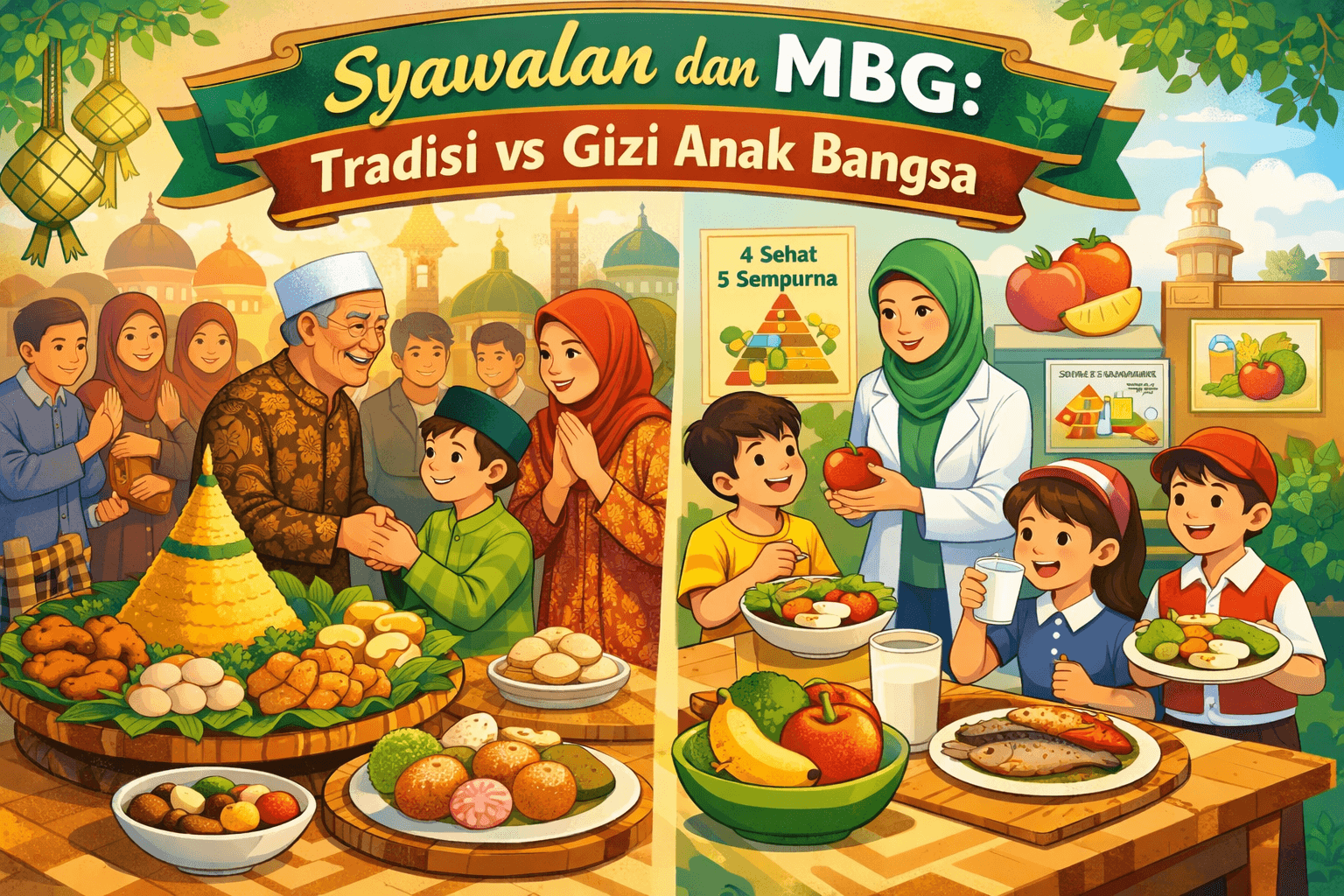
The Lebaran and Syawalan traditions in Indonesia are important moments for Muslims, which are celebrated in different ways in each region. Syawalan, which is usually held a week after Eid, is a time to give thanks, forgive and strengthen friendships. In some areas, such as Demak and Jepara, Syawalan is celebrated with Larung Sesaji (Lebaran Ketupat), while in West Lampung, Sekura is held. Generally, the tradition of Syawalan is in the form of Halal Bihalal.
However, the month-long Syawalan tradition will have an impact on the government's Free Nutritious Meal (MBG) program. The MBG program aims to improve the quality of human resources by providing free nutritious meals to school children. With the Syawalan tradition, there is likely to be an increase in unbalanced food consumption, which could affect the effectiveness of the MBG program.
Recently, there was a case of student poisoning in Jakarta, which shows the importance of monitoring food safety. Therefore, there needs to be coordination between the government and the community to ensure that Syawalan traditions do not interfere with the MBG program and maintain food safety.
According to data from the World Food Programme (WFP) in 2022, free nutritious meal programs have been implemented in many countries, including Indonesia. The MBG program in Indonesia targets 19.47 million people with a budget of IDR 71 trillion by the end of 2025. Meanwhile, the 2026 MBG program targets 82.9 million beneficiaries with a budget of IDR 268 trillion.
However, it is worth asking whether the MBG program will not hurt teacher salaries? Is it not more important to increase teachers' salaries than to provide free nutritious food to school children? Low teacher salaries can affect the quality of education, so it is worth considering increasing teacher salaries rather than expanding the MBG program.
In this context, campus academics in the Nutrition study program can play an important role in integrating the Syawalan tradition with MBG. They can conduct research on the nutritional content of traditional foods consumed during Syawalan, as well as provide recommendations on how to integrate traditional foods with the MBG program. In addition, they can also help raise public awareness about the importance of balanced nutrition and food safety.
Meanwhile, PTKI (Islamic Higher Education Institutions) academics can play an important role in translating the meaning of the Syawalan tradition into community nutrition. They can conduct research on the philosophical and spiritual meaning of the Syawalan tradition, and provide recommendations on how to integrate spiritual values with the MBG program.
Thus, campus academics of Nutrition and PTKI study programs can help improve the effectiveness of the MBG program or stop the MBG program by continuing to preserve the Syawalan tradition in a balanced and spiritually valuable manner.