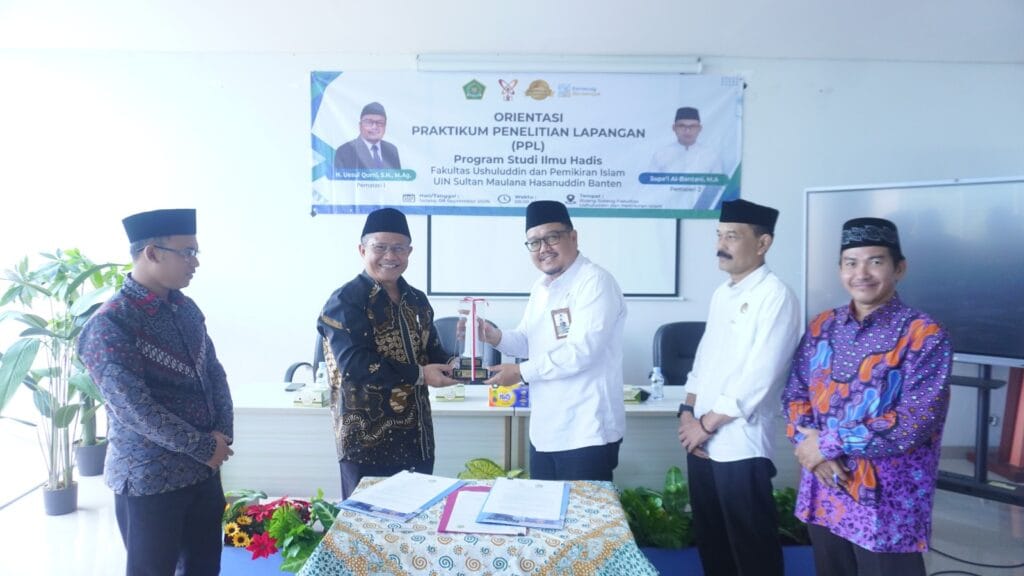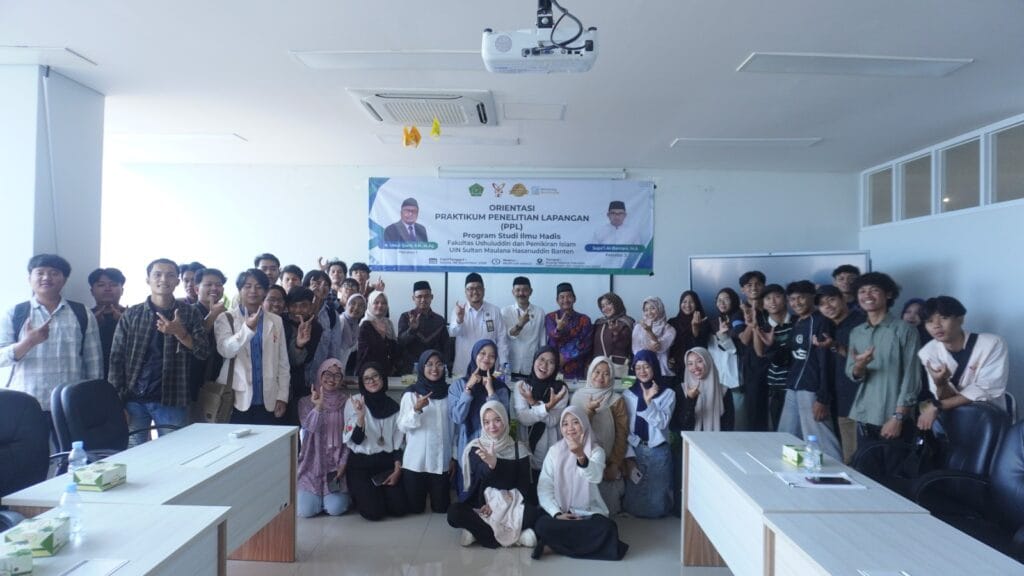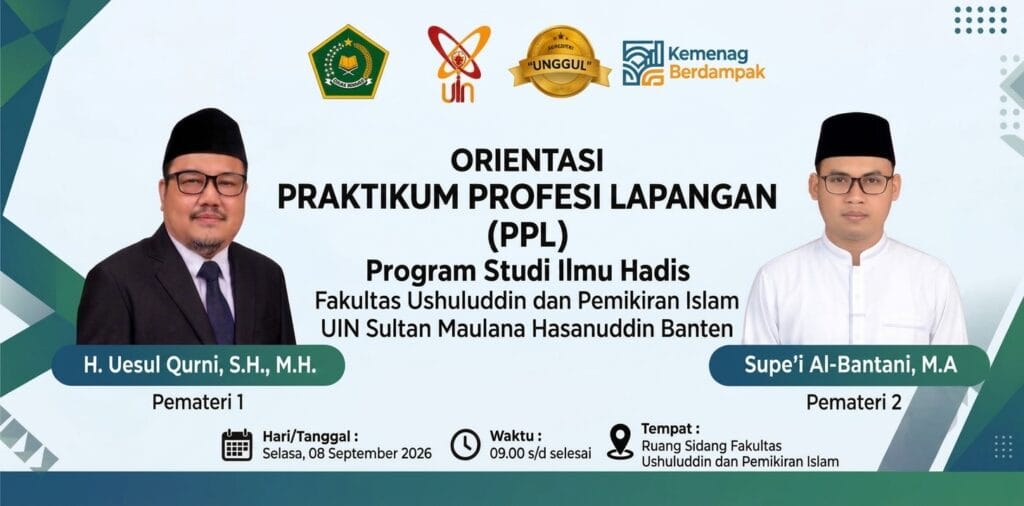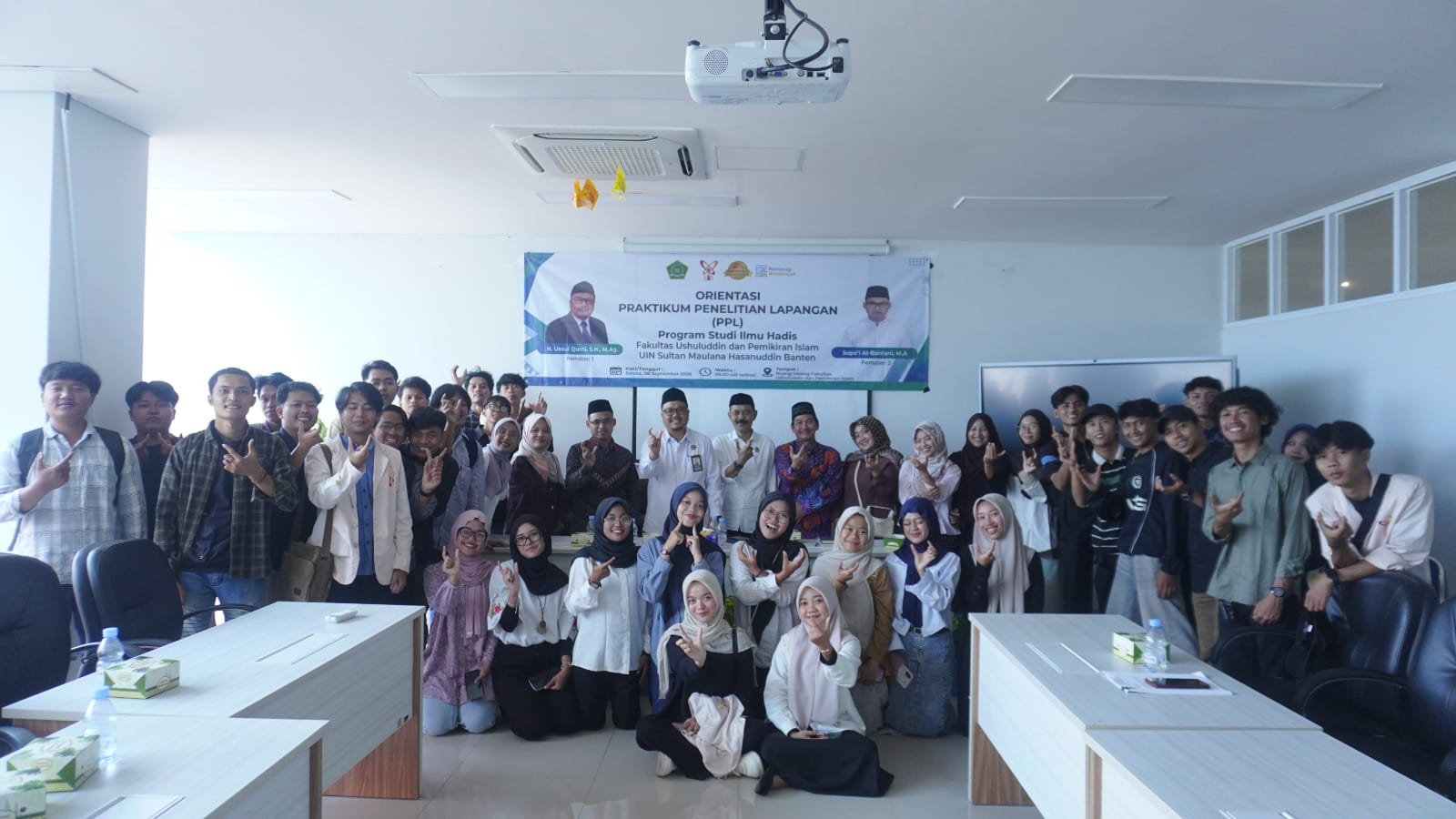
Serang, September 8— The Hadith Studies Program at the Faculty of Ushuluddin and Islamic Thought (FUSPI) at UIN Sultan Maulana Hasanuddin Banten organized an event Field Professional Practicum (PPL) Orientation as the initial stage of student internships within the Office of Religious Affairs (KUA).
This orientation program aims to help students understand the mechanisms of the PPL program, professional ethics, and the importance of connecting the academic knowledge gained in the classroom with the practice of religious service in the community.
Chair of the Hadith Studies Program, Dr. Andi Rosa, M.A, stated that the PPL program is a valuable opportunity for students to broaden their professional experience and knowledge.
“Make the most of this opportunity to complete your practical training at this KUA. This program is not only part of the academic process but also provides students with a chance to gain experience, broaden their horizons, and gain firsthand insight into the practice of religious services within the community,” he said.
According to him, field experience will be an important asset for Hadith Studies students as they enter an increasingly dynamic job market. Through the practical training program, students are expected to gain insight into how the study of hadith is relevant to social life and religious ministry.
Meanwhile, the Dean of the Faculty of Ushuluddin and Islamic Thought at UIN Sultan Maulana Hasanuddin Banten, Dr. Masykur, M.Hum., emphasized that the PPL program at the KUA plays a strategic role in developing students’ competencies and soft skills.
In his remarks, the Dean stated that the profession of marriage officiant is one area that can serve as a platform for students to develop their skills, particularly in the areas of communication and community service.
“Being a marriage officiant is an excellent profession for developing students” soft skills. A marriage officiant not only needs a thorough understanding of religion but must also be fluent in various languages, such as Arabic and local languages, in order to communicate effectively and serve the community,” he explained.
The dean also hopes that students in the Hadith Studies program will be able to see a broader range of opportunities in religious professions by developing their academic competencies and practical skills.
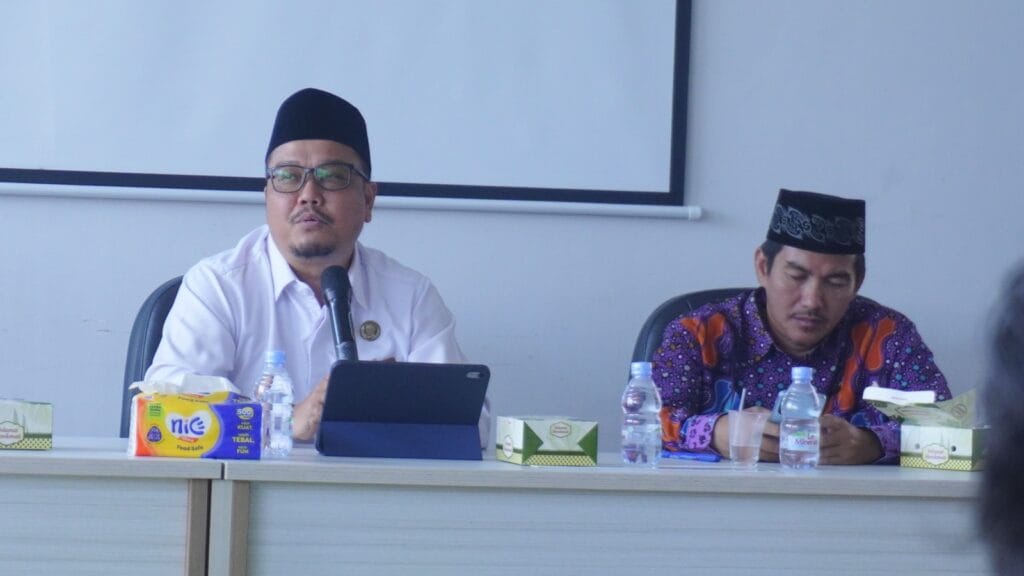
On the same occasion, the orientation presenter noted that the Hadith Studies students’ field placement at the KUA is an important step and has the potential to serve as the program’s first experience in establishing professional practice within the KUA setting.
“This activity may well be the first-ever field placement at a KUA organized by the Hadith Studies program. The students” presence will certainly be beneficial, both for the students and for the KUA, particularly in enhancing the effectiveness of services and the institution’s performance,” he said.
He emphasized that it is not enough for students to simply understand theory; they must also be able to apply that knowledge through real-world experience.
“Students shouldn’t just focus on theory; they must learn from theory and grow through experience. After all, theory that isn’t applied through experience won’t have any real value or impact,” he added.
Furthermore, the speaker urged students to adopt an adaptive attitude toward change and the evolving times. According to him, the challenges of today’s job market require graduates who are not only academically outstanding but also possess strong communication skills, creativity, and the ability to adapt.
“Students must be adaptable in responding to the changes and demands of the times, including students in the Hadith Studies program. Equipped with academic knowledge, field experience, and professional skills, students will be able to compete in the real world,” he emphasized.
Through this Field Professional Practicum Orientation, the Hadith Studies Program at FUSPI, UIN Sultan Maulana Hasanuddin Banten, hopes that students will be able to strengthen the integration between hadith scholarship, religious services, and community needs, thereby producing graduates who possess academic and professional competencies and are competitive.