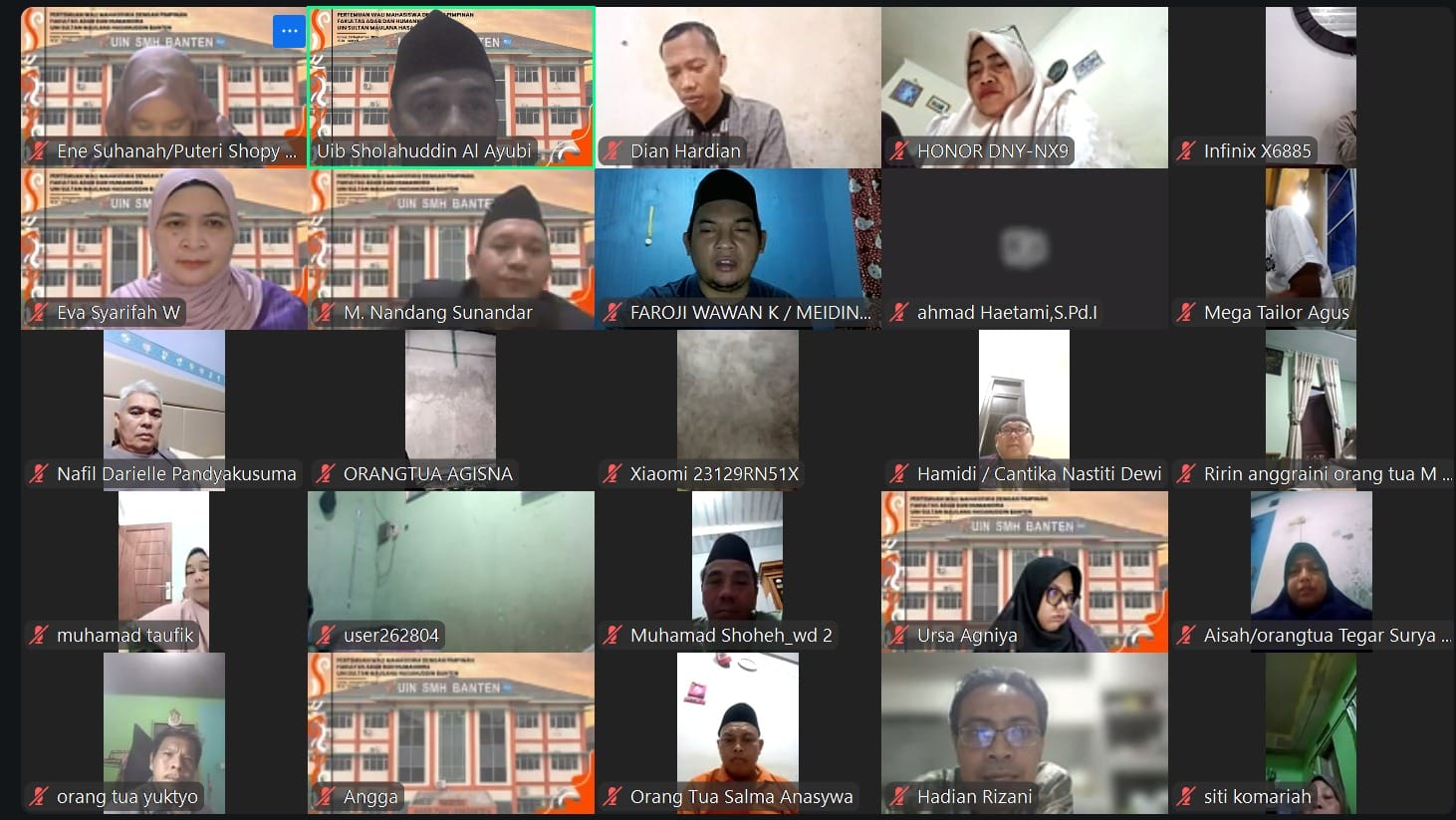
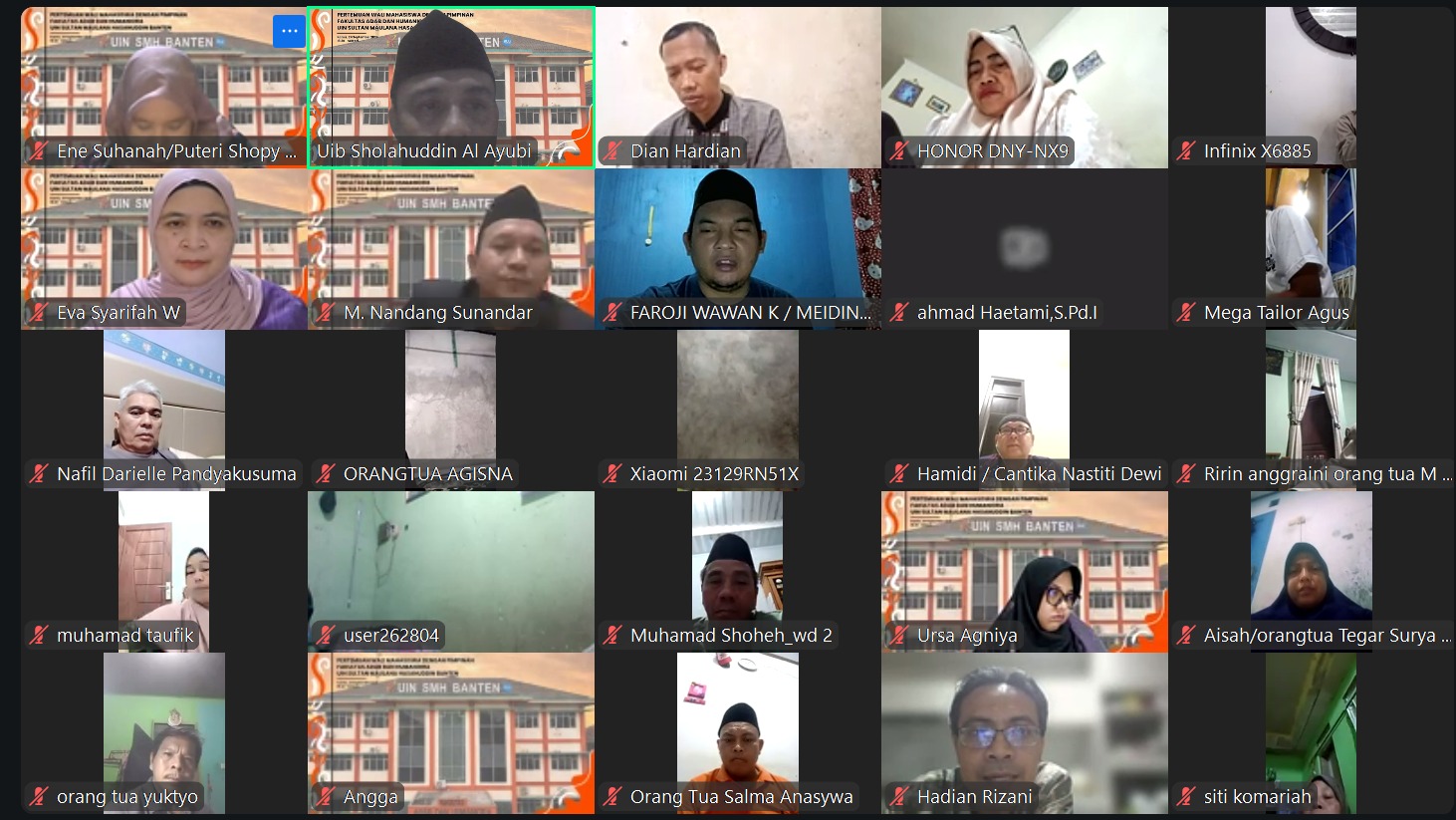
UIN Public Relations – The Faculty of Arts and Humanities (FAHUM) at UIN Sultan Maulana Hasanuddin Banten held an online meeting with students’ guardians via Zoom on Thursday, September 24, 2026. The event, attended by approximately 100 parents and guardians, served as a strategic forum for communication between the faculty, academic programs, and students’ families to strengthen academic support and student services.
The meeting was attended by the faculty leadership, namely the Dean of FAHUM, Dr. Eva Syarifah Wardah, M.Hum; First Vice Dean Prof. Dr. Sholahuddin Al Ayubi, MA, Vice Dean II Dr. Mohamad Shoheh, MA, as well as the Heads of Study Programs: Head of the Islamic Civilization History (SPI) Program Dr. Mohamad Nandang Sunandar, MA, Head of the Arabic Language and Literature (BSA) Hadia Rinjani, MA, and the Chair of the Islamic Library and Information Science (IPII) Program, Verry Mardianto, MA.
In her remarks, FAHUM Dean Dr. Eva Syarifah Wardah, M.Hum, stated that the meeting with students’ parents is part of the faculty’s commitment to fostering open communication between the university and students’ families.
“Students need not only academic support from the university, but also support and guidance from their families. Through this forum, we want to ensure that parents receive clear information regarding their children’s academic progress, various faculty services, and student development programs,” said Dr. Eva.
The dean also emphasized that FAHUM continues to strive to create an academic environment that supports students so they can successfully complete their studies, acquire academic competencies, and be prepared to face global challenges.
Meanwhile, First Associate Dean Prof. Dr. Sholahuddin Al Ayubi, MA, explained various academic policies in his presentation, including the importance of parental involvement in monitoring students’ academic progress.
“Parents play an important role as strategic partners of the faculty. Through effective communication, various academic issues faced by students can be identified early on, and solutions can be found together,” he explained.
Prof. Sholahuddin also emphasized the importance of students taking advantage of various opportunities for personal development, whether through academic activities, student organizations, research, or international programs offered by the university.
On the same occasion, Vice Dean II Dr. Mohamad Shoheh, MA, provided information regarding student services, including the appeal process for the Single Tuition Fee (UKT), various student scholarship programs, and other support services.
“The faculty is committed to providing transparent and equitable services. For students facing financial difficulties, there are mechanisms in place to appeal tuition fees and access scholarship information, which can be utilized in accordance with applicable regulations,” said Dr. Shoheh.
In addition to the information provided by the faculty leadership, each program chair also explained the characteristics of student learning and development at the program level.
The Chair of the Islamic Civilization History (SPI) Program, Dr. Mohamad Nandang Sunandar, MA, stated that SPI students are guided not only to understand history from an academic perspective but also to develop research skills, historical literacy, and the ability to contribute to society.
The Chair of the Arabic Language and Literature (BSA) Program, Hadia Rinjani, MA, explained various ways to strengthen students’ competencies through Arabic language instruction, literary studies, and opportunities to develop language skills to support a broader academic network.
Meanwhile, Verry Mardianto, MA, Chair of the Islamic Library and Information Science (IPII) Program, emphasized the importance of students possessing competencies in information management, digital literacy, and the ability to adapt to developments in information technology.
Interactive Discussion with Student Advisors
Following the presentation session, the event continued with an interactive discussion among faculty leaders, department chairs, and student guardians. During the session, the parents raised various questions and offered feedback regarding the students’ educational process.
Some of the key issues discussed included:
1. The UKT appeal process, including the application procedure, administrative requirements, and verification process for students facing financial difficulties in paying for their education.
2. Student scholarship programs, including merit-based scholarships and other forms of financial aid that support students’ continued studies.
3. International student activities, such as opportunities to participate in international seminars, student exchange programs, academic mobility programs, and activities that can enhance students’ global experience.
4. Monitoring students’ academic performance, in which parents are encouraged to actively communicate with students and regularly monitor their academic progress.
Through this forum, FAHUM UIN SMH Banten hopes to foster stronger synergy between the faculty and students’ families. This collaboration plays a vital role in ensuring that students receive optimal support throughout their educational journey until they complete their studies.
This online meeting with students’ parents is one example of FAHUM’s commitment to providing educational services that are communicative, responsive, and focused on student success. (UIB)
The post FAHUM UIN SMH Banten Holds a Virtual Meeting with 100 Parents of Students to Discuss Tuition Fees, Scholarships, and Strengthening Academic Collaboration first appeared on Spirituality, Intellectuality, Professionalism.