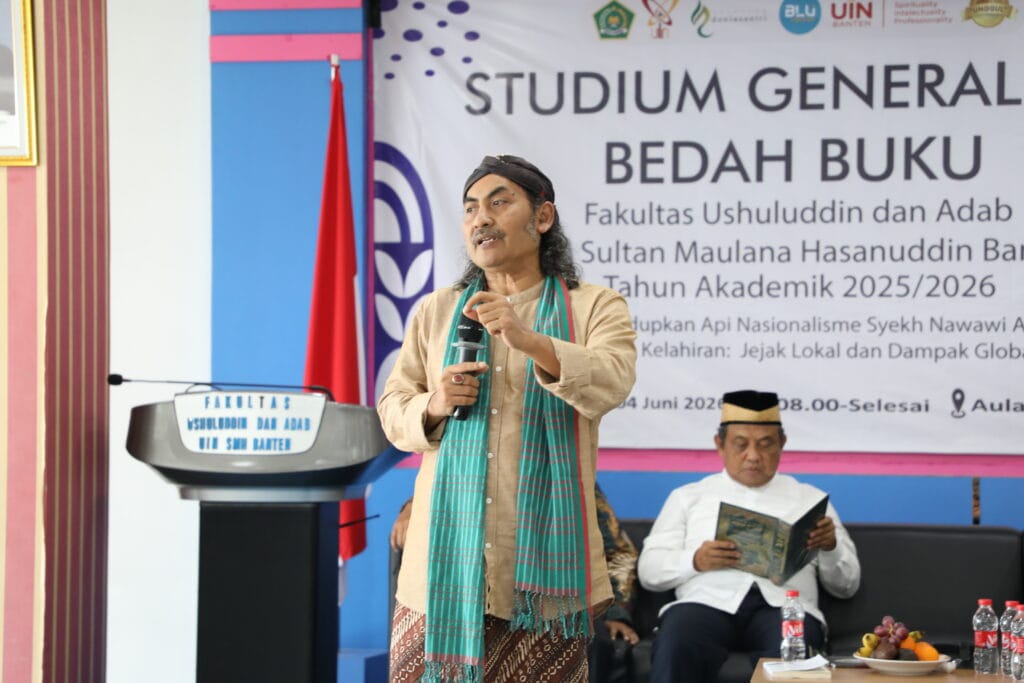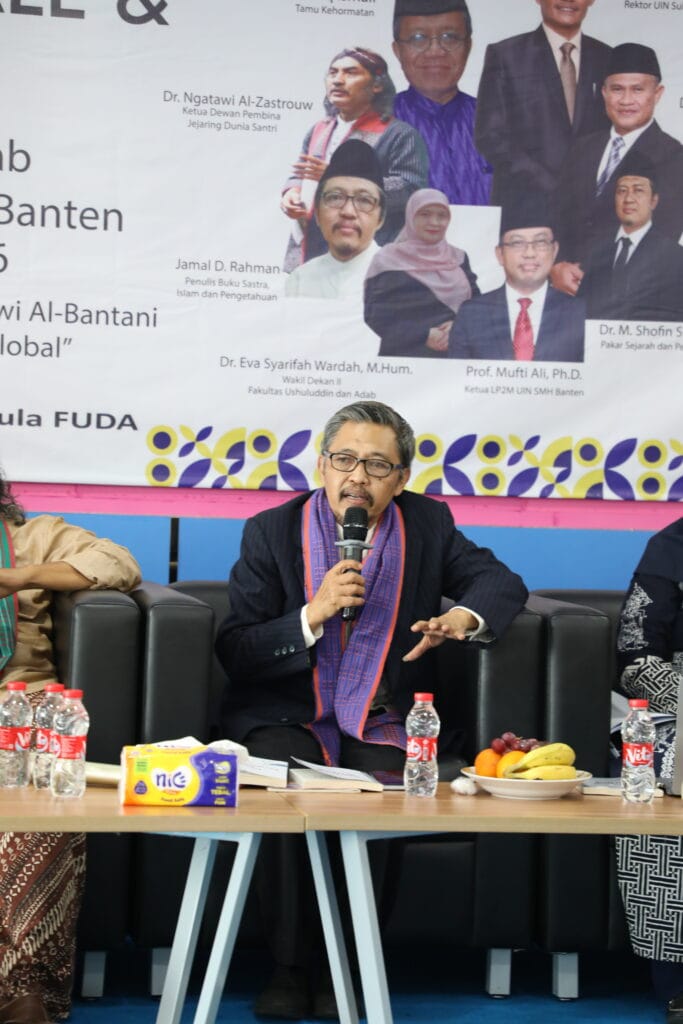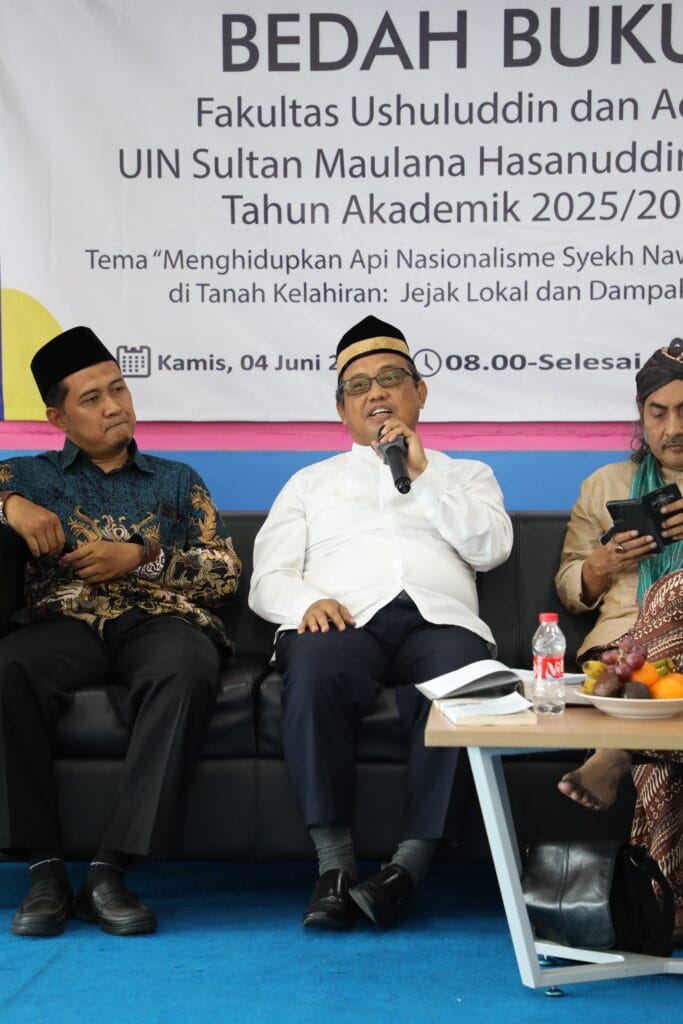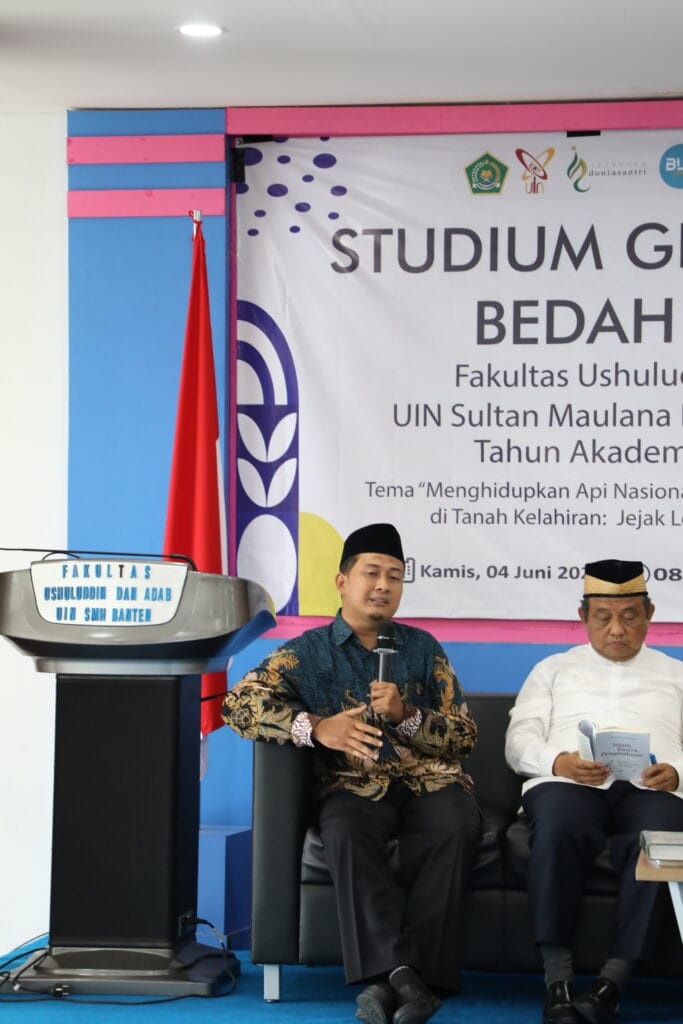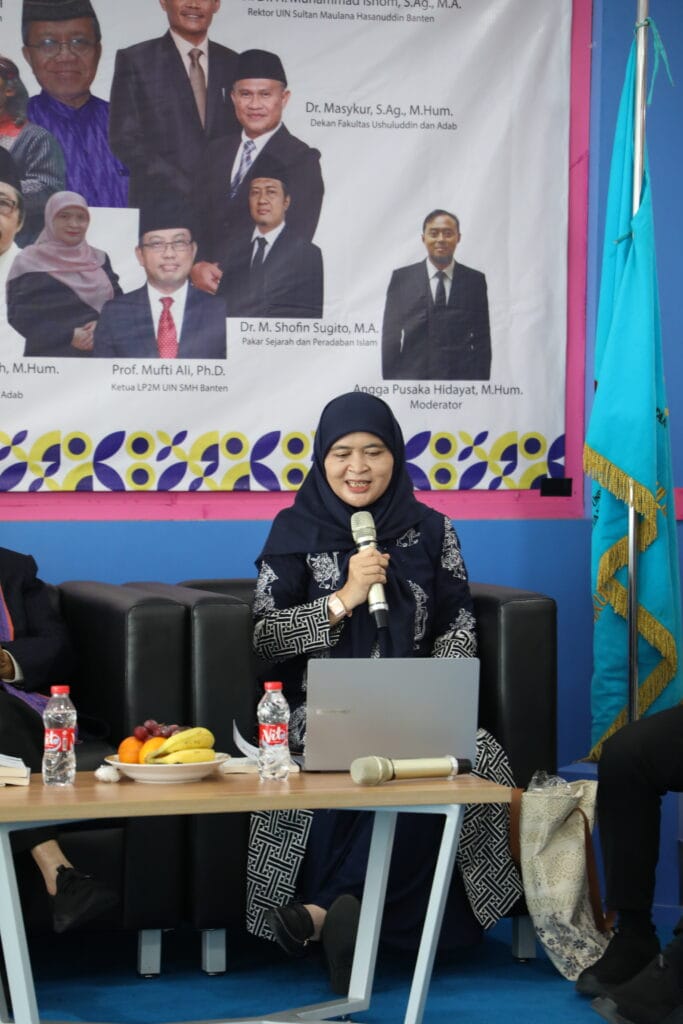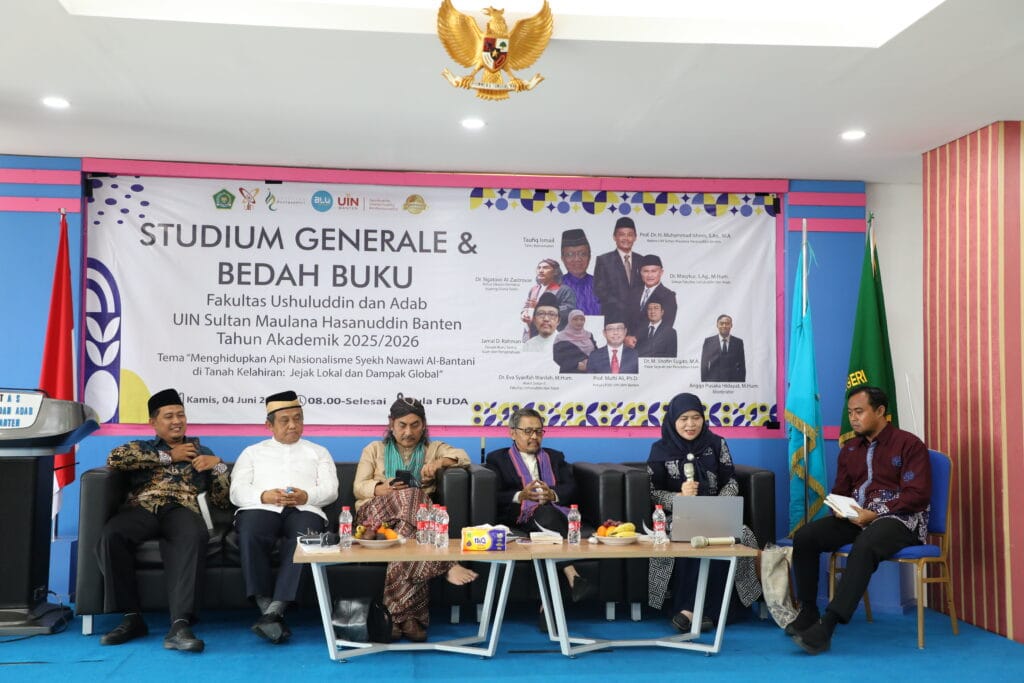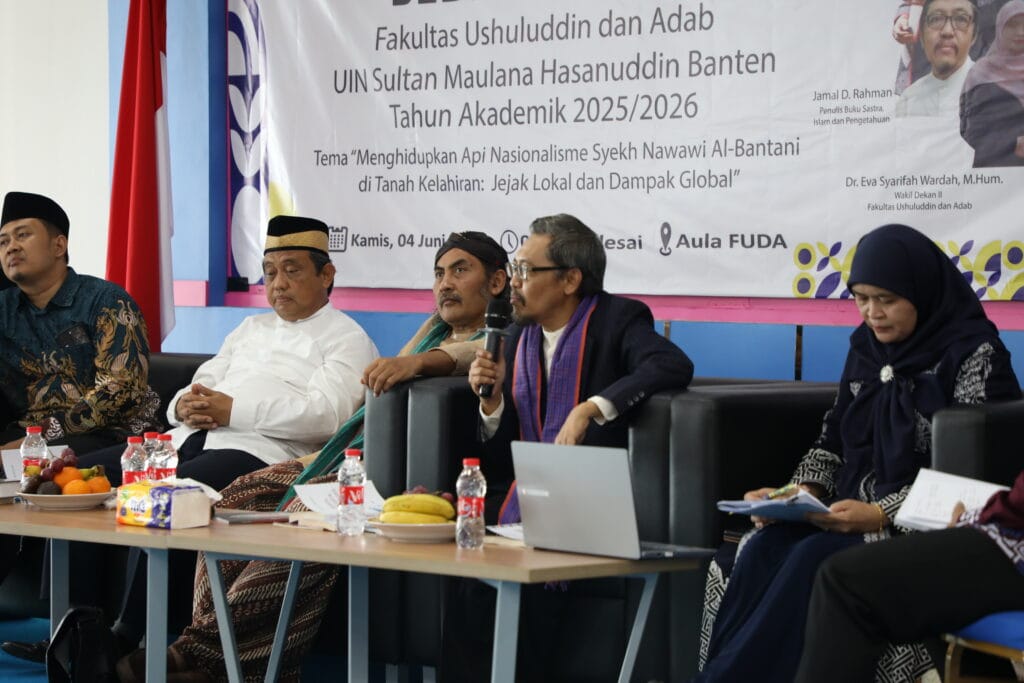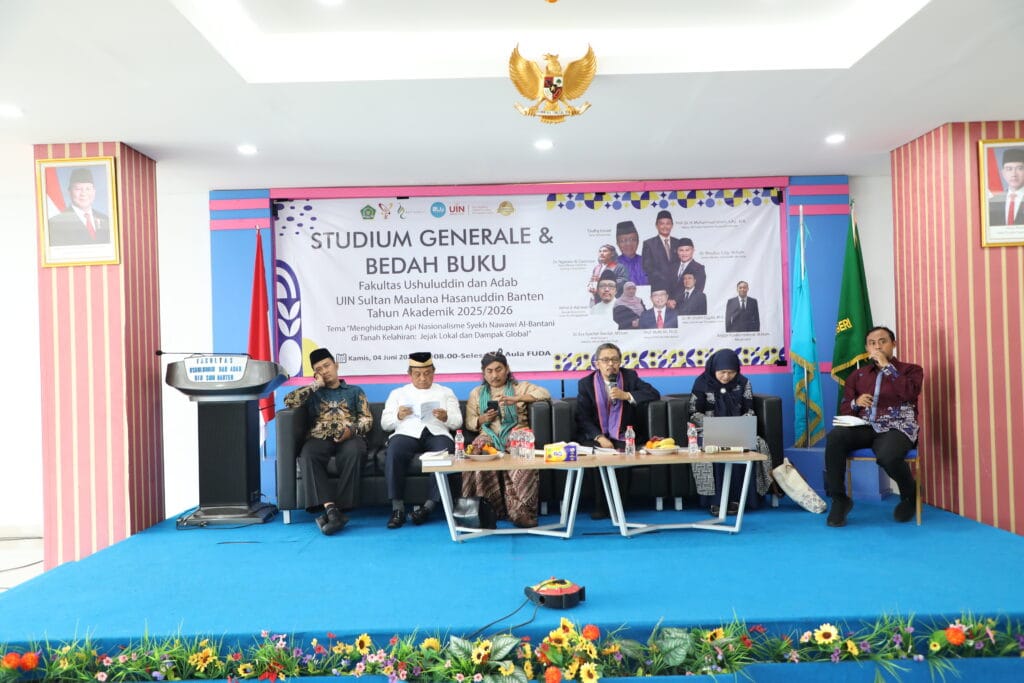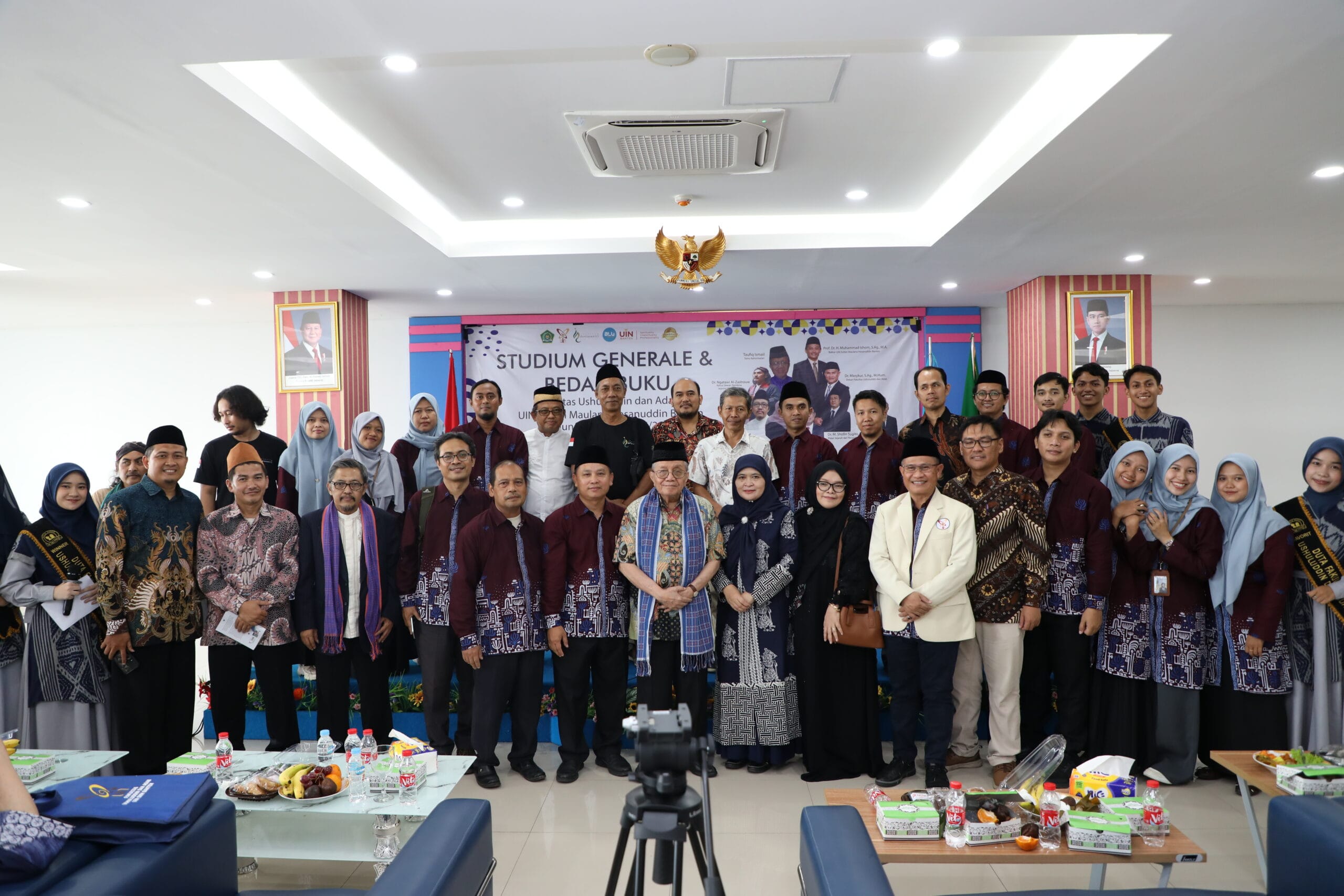
SERANG - There was a different scene in the 2nd Floor Hall of Campus 2 UIN Sultan Maulana Hasanuddin (SMH) Banten on Thursday (4/6/2026). Around 300 pairs of eyes - from academics, historians, students, to religious leaders and government officials - gathered in one frequency of historical awareness.
On Thursday, June 4, 2026, the Faculty of Ushuluddin and Adab (FUDA) UIN SMH Banten in collaboration with the Santri World Network did not only hold Studium Generale and the usual Book Review. They are dissecting the epicenter of Banten civilization through a big theme: “Rekindling the Fire of Nationalism of Sheikh Nawawi Al-Bantani in the Land of Birth: Local Traces and Global Impact”.
The forum featured high-level discourse with a cross-disciplinary lineup of experts, ranging from Jamal D. Rahman, culturalist Ngatawi Al-Zastrouw, to critical academics such as Eva Syarifah Wardah, Prof. Mufti Ali, and M. Shofin Sugito.
Deconstructing the Meaning of Nationalism: From Political Slogan to Intellectual Authority
The Dean of FUDA UIN SMH Banten, Masykur, opened the participants' thinking horizons with a sharp perspective. For him, this forum is not just an event to romanticize the stature of Syaikh Nawawi, but a crucial instrument to reignite the intellectual awareness of Banten people towards the scientific heritage of Nusantara scholars.
Masykur underlines that Syaikh Nawawi is the antithesis of superficial nationalism. The cleric is a symbol of the sovereignty of knowledge who succeeded in bringing Banten through the hegemony of the Islamic world's intellectual network.
“The fire of Sheikh Nawawi's nationalism is the nationalism of knowledge. He did not shout with slogans, but spoke through works. He did not build political power, but built moral and intellectual authority.” Masykur emphasized.
He invited the younger generation to make this heritage not just a historical fossil, but a foothold for designing the future of civilization.
Tracing Nationality Codes in Classical Texts
Interestingly, the Rector of UIN SMH Banten, Prof. M. Ishom, highlighted the reality that Syaikh Nawawi's nationalism is often missed by lay readers. With a humorous tone that sparked laughter from the audience, he said that finding the cipher of nationalism in the ulama's books requires special sensitivity.
“If the one who reads is not a clairvoyant cleric, it will not be found,” He joked.
However, academically, Prof. Ishom dismantled the findings, one of which was in his monumental work Al-Futuhat al-Madaniyah fi Shu'ab al-Iman. There, the rejection of colonialism was not manifested through the rhetoric of direct physical warfare, but through liberation theology - that submission to the colonizer was an affront to human dignity and religion.
Meeting Without Encountering: Shaykh Nawawi and Multatuli
The climax of the discourse occurs when Jamal D. Rahman, the author of the book Islam, Literature and Knowledge, Jamal's book, Syaikh Nawawi, dissects the strategy of cultural resistance in Banten. Through a fascinating sociological-literary analysis, Jamal puts Syaikh Nawawi on the same level as Eduard Douwes Dekker (Multatuli).
“Multatuli and Sheikh Nawawi are an encounter without an encounter,” Jamal said. The two never met face-to-face, but they shared the same point of convergence: absolute resistance to colonialism. If Multatuli fought back through satirical prose, Syaikh Nawawi planted the seeds of resistance subliminally through the yellow books taught to his students.
Use of local identity embedding such as At-Tanari, Al-Bantani, and Al-Jawi at the end of Shaykh Nawawi's name in his international manuscripts is, according to Jamal, a sociological proclamation indicating an unbreakable inner bond with the archipelago.
Local Roots, Universal Humanity
This discourse was further enriched by a comparative analysis from culturalist Ngatawi Al-Zastrouw who dissected the anatomy of nationality. He emphasized that the embryo of Indonesian nationalism - represented by the thought of Syaikh Nawawi - is very different from Western nationalism born from the womb of secularism and liberal humanism. Nusantara nationalism grew from a harmonious cross between religiosity, spirituality and rationality.
To conclude the discourse, academic M. Shofin Sugito provided a relevant conclusion for today's digital generation. Syaikh Nawawi has proven that openness to the global world does not require a person to experience alienation from his native culture.
“Humans do not need to lose their local identity when interacting with the world. Local identity becomes the foundation for building broader universal values.” Shofin concluded.
Through this event, FUDA UIN SMH Banten has proven its role as a crater of intellectual candradimuka, a place where classic texts and local history are not only read, but also brought to life to respond to the challenges of global civilization.
The Intellectual Engine of 19th Century Banten Resistance
The presentation got sharper when Professor of History and Historian of Banten, Prof. Mufti Ali, Ph.D., took over the lectern. He dissected the historical anatomy of the 19th century, the time when Dutch colonialism planted its hegemony nails in Banten. According to Prof. Mufti, although Syaikh Nawawi resided in Makkah, his religious ideas became the “intellectual engine” that mobilized resistance in the country.
“Syaikh Nawawi did not take up arms physically, but his network of students who returned from Haramain to the archipelago, especially to Banten, were the main actors who articulated his teacher's fatwas and ideas into an anti-colonial movement, as culminated in the 1888 Cilegon Geger,” said Prof. Mufti Ali.
He emphasized that Banten's historiography cannot be separated from the centrality of the clerical network built by Syaikh Nawawi, which proves that geographical distance cannot break the cleric's nationality to his homeland.
Cultural Defense through Literacy Tradition
From the perspective of sociology and text preservation, Dr. Eva Syarifah Wardah provides an insightful look at how Syaikh Nawawi's literature functions as a cultural bulwark for the community.
“Syaikh Nawawi's works are basically not just religious texts, but a manifestation of the social resilience of colonized peoples amidst the onslaught of Western hegemony.” Dr. Eva explained.
He emphasized the importance of recontextualizing these manuscripts so that the current generation understands that literacy in the past was the most elegant form of resistance. “Through literacy, Syaikh Nawawi maintains the sanity and social cohesion of the people. This is the methodological legacy that must be replicated by academics and students of UIN Banten today.” he added.